Plan festival drinking-water access as a live service with mapped demand, accessible stations, quality controls, monitoring, outage handoffs and heat-response escalation.
A festival drinking-water plan is the operating system that keeps safe water reachable through arrival, queues, peak heat, show movement, overnight operations and disruptions. It connects source quality, station capacity, accessibility, communications, cleaning, monitoring and emergency escalation.
Installing taps is not the same as providing access. A station can exist on a map yet fail because the queue blocks a route, pressure drops, cups run out, a wheelchair user cannot reach the outlet, attendees cannot find it or a temporary supply becomes unsafe.
This guide is an operating framework, not medical, engineering, public-health or regulatory advice. Water-quality, plumbing, sanitation, event-licensing and emergency requirements differ by place. Work with the relevant authorities and qualified suppliers.
What should a festival water plan answer?
It should answer where safe drinking water comes from, how much the event can deliver, who can reach it, how the team detects service degradation, who may isolate a station, how replacement supply arrives and when heat conditions trigger wider action.
WHO’s Beat the Heat materials describe access to safe drinking water as non-negotiable and call for hydration stations with safe and sufficient water at workplaces, mass gatherings and sports events. The operational words are safe, sufficient and access—not simply “available.”
Water access is a live crowd service. Its true capacity is the safe flow from source to bottle at the time and place people need it.
Build one Source-to-Support Chain
The Source-to-Support Chain is a WENOTIFT operating model, not a public-health standard. It helps event control, site, plumbing, concessions, cleaning, accessibility, security, welfare, medical and communications teams make compatible decisions.
Start with demand, not a generic station count
Map attendance by time and zone, expected weather, programme peaks, journey length, alcohol service, camping, workforce needs, refill behaviour and the capacity of each outlet. A headline number of stations hides differences in pressure, tap count, queue speed and downtime.
Model scenarios rather than publishing a universal litres-per-person formula. Venue type, climate, event duration, audience profile, permitted containers and local regulation all affect demand. Use supplier-tested flow rates and conservative assumptions, then define the threshold at which more supply or distribution points are activated.
Include staff, contractors, artists, volunteers and security posts. A public station may not serve a worker who cannot leave a gate or stage position. Crew hydration belongs in workforce planning, not in leftover public stock.
Use an access-and-response matrix
| Service condition | Audience signal | Immediate action | Event-control decision |
|---|---|---|---|
| Normal | Short, moving queue; clean and usable outlets | Continue checks and replenishment | Maintain planned service |
| High demand | Queue or refill time exceeds the site threshold | Add stewards, open reserve outlet, direct to alternatives | Review heat and crowd conditions |
| Reduced flow | Slow fill, pressure change or intermittent supply | Protect queue, call technical owner, test adjacent stations | Reduce dependence on affected branch |
| Contamination concern | Quality alert, damaged fitting, backflow concern or visible contamination | Isolate station; prevent use; preserve information | Follow authority/supplier instruction |
| Inaccessible route | Obstruction, slope, surface or crowd blocks use | Clear route or provide an equivalent staffed method | Correct site layout and wayfinding |
| Local outage | No service at one or more stations | Deploy sealed reserve water and communicate nearest alternatives | Activate repair and redistribution |
| Heat escalation | Rising illness reports, severe forecast or welfare demand | Expand water, shade, messaging and welfare support | Invoke the event heat-health plan |
The matrix separates a technical fault from a heat-health escalation while keeping them connected. One broken tap is not automatically an emergency; several overloaded zones during extreme heat may be.
Map stations to the audience journey
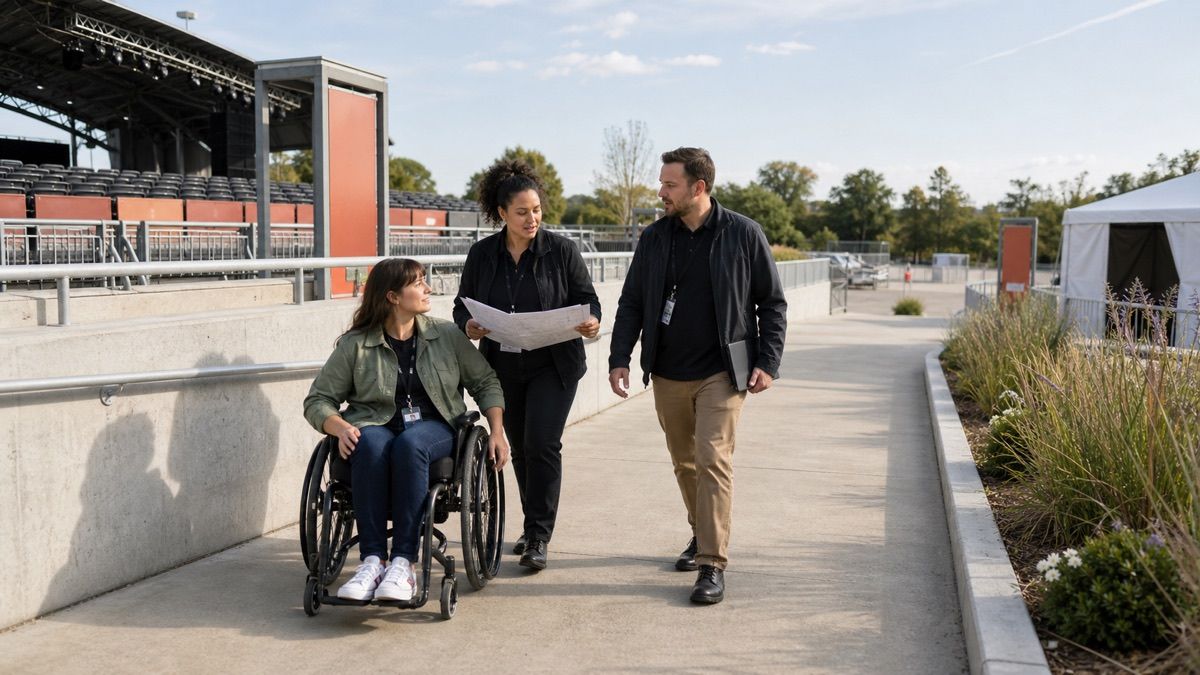
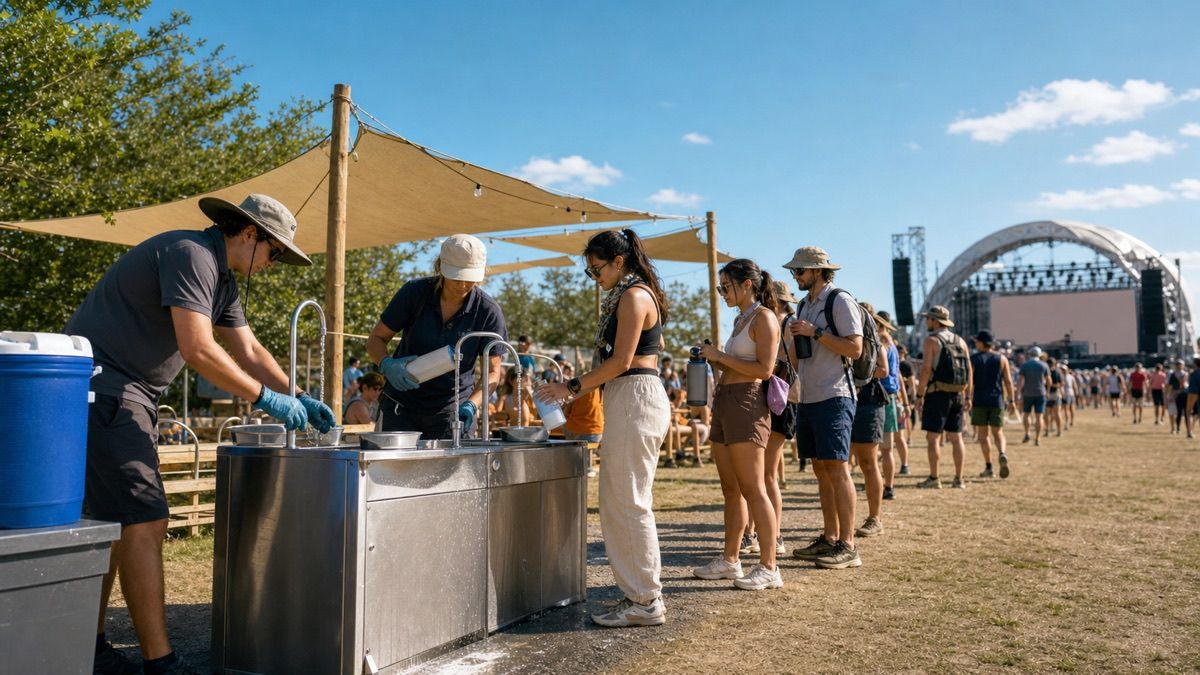
Place water near arrival and search queues, high-density audience zones, food and alcohol areas, accessible viewing, welfare, camping and egress—without creating a pinch point. Consider the route people actually take after a headline set, not only the empty-site drawing.
Keep emergency and accessible routes clear. Queue barriers, drainage, spilled water, soft ground and discarded cups can turn a helpful service into a trip or crowd-flow hazard.
Provide repeated wayfinding at decision points. Use the event map, on-site signs, staff briefing and accessible information. Avoid relying exclusively on a QR code when connectivity, battery, vision, language or digital confidence may be a barrier.
Make every station practically accessible
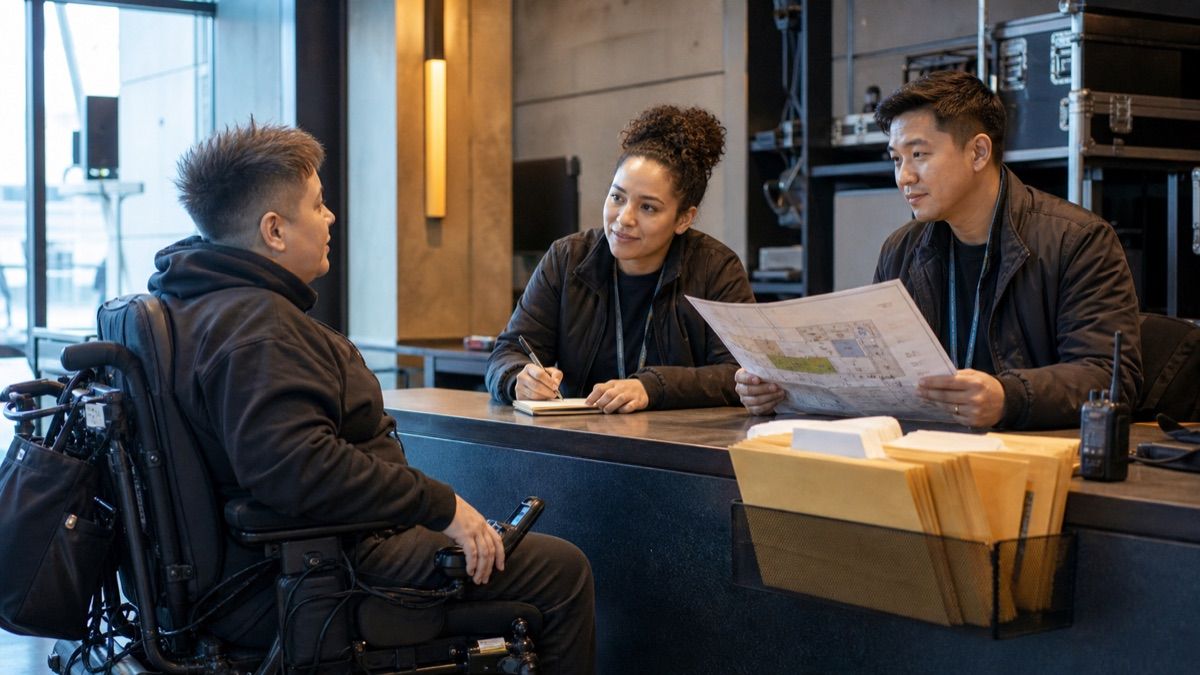
Check approach surface, gradient, turning space, outlet height, operating force, reach, bottle support and drainage. Include a staffed equivalent where equipment cannot serve everyone independently. A lower tap is not accessible if the queue rail prevents approach.
Plan for people who cannot carry a large bottle, wait in a long line or leave a supported area. Coordinate with accessibility teams on companion access, viewing platforms and welfare routes.
WENOTIFT’s concert accessibility planning guide explains why access information, staffing and physical design must agree. The water plan should name the same owners and escalation channels.
Protect water quality from source to outlet
Use an approved potable source and qualified installation. Document supplier, connection, hoses and fittings, disinfection or flushing requirements, backflow protection, testing, commissioning and who may release the system for use.
Temporary equipment should be protected from vehicles, fuel, waste, mud, standing water and unauthorised connections. Food-grade components and clean storage matter, but the exact technical standard must come from the applicable authority and supplier.
Schedule inspection and cleaning. Record leaks, damage, unusual taste or odour reports, pressure changes and any test or authority instruction. Staff should know that visual clarity alone does not prove water is safe.
If quality is in doubt, isolate the affected station clearly and route attendees to verified alternatives. Do not keep a questionable outlet open because the queue is large.
Monitor service in real time
Give every station an ID and accountable checking role. Record time, flow/availability, cleanliness, drainage, consumables, queue condition, accessibility and action. Use more frequent checks during arrival, heat peaks, interval movement and headline changeovers.
Connect station observations to event control. A plumbing contractor may see low pressure; stewards see queue growth; medical sees heat-related presentations; social teams see attendee complaints. No single stream tells the full story.
Set action thresholds in advance. Examples might include a maximum observed queue time, more than one failed outlet in a zone, repeated low-flow checks or a defined increase in heat-health presentations. Threshold values must be event-specific and approved; do not copy illustrative numbers as universal rules.
Build a credible outage plan
Hold an identified reserve supply that is protected, distributed and accessible. Confirm quantity, storage, replenishment route, vehicle access, manual handling, waste and who can authorise release.
Map alternative stations by zone. When one closes, stewards and digital channels should give a specific next location rather than “water is available elsewhere.” If the alternative will overload, open reserve distribution before redirecting the crowd.
Separate drinking water from misting, cleaning and non-potable services. Equipment and messaging should not allow an attendee or worker to mistake one for another.
Record outage start, affected scope, reason, alternatives, repair actions, tests or approvals and restoration time. Reopening requires the responsible technical or public-health decision, not merely the return of pressure.
Connect hydration to the heat-health plan
Water reduces risk but does not make heat harmless. WHO’s 2026 mass-gathering heat work highlights event-specific risk assessment, early warning, escalation protocols and mitigation. Shade, rest, scheduling, communications, staff welfare, surveillance and medical capacity belong in the same plan.
The CDC advises people in extreme heat to drink water often rather than waiting for thirst. Event messaging can reinforce regular hydration while avoiding universal medical advice that ignores individual conditions.
Train staff to route anyone who is faint, confused, collapsing or otherwise unwell to the event’s medical response. Do not ask activation or bar staff to diagnose heat illness. The WHO notes that heatstroke is a potentially fatal medical emergency requiring immediate medical attention.
Communicate before and during the event
Before arrival, explain permitted bottle types, whether empty reusable bottles are allowed, refill availability, accessible arrangements and any camping provisions. Security rules and water policy must agree; confiscating every container without an obvious refill or replacement route undermines the plan.
During the event, publish concise, location-specific updates. Distinguish a station closure from a site-wide supply problem. Use screens, announcements, app or social updates and staff briefings only where they genuinely help people act.
Avoid sponsor messaging that makes free safe water appear conditional on a purchase, data capture or brand interaction. A sponsored station can create value without turning essential access into a lead-generation gate.
Review capacity using evidence, not anecdotes
After the event, combine outlet availability, queue observations, outages, reserve-water use, complaints, accessibility issues, weather, welfare and medical signals. Review by time and zone so a good average does not hide one failed audience area.
Measure operational questions: Were stations findable? Which zones overloaded? Did pressure hold? How long did isolation and restoration take? Were accessible routes maintained? Did communications point to usable alternatives?
Do not claim a health outcome that the event did not study. A high refill count demonstrates use, not a guaranteed reduction in illness. Clearly separate observed facts, attendee feedback and operational inference.
Connect the water review to WENOTIFT’s guides on festival heat safety, event weather planning and festival waste operations. WENOTIFT helps promoters, venues and partners turn audience care into an accountable event system.
Sources
- WHO: Advancing heat-health preparedness during mass gatherings—practical tools, published 6 July 2026; accessed 31 July 2026.
- WHO: Managing health risks during mass gatherings, accessed 31 July 2026.
- WHO: Beat the Heat—key messages for mass gatherings and sports events, accessed 31 July 2026.
- WHO: Heatwaves—how to stay cool, accessed 31 July 2026.
- CDC: Tracking Heat Events, updated 6 May 2026; accessed 31 July 2026.
Design hydration as a live service, not a static site feature.
Talk to WENOTIFT about event journeys, operational partners and sponsor platforms that protect audience trust.