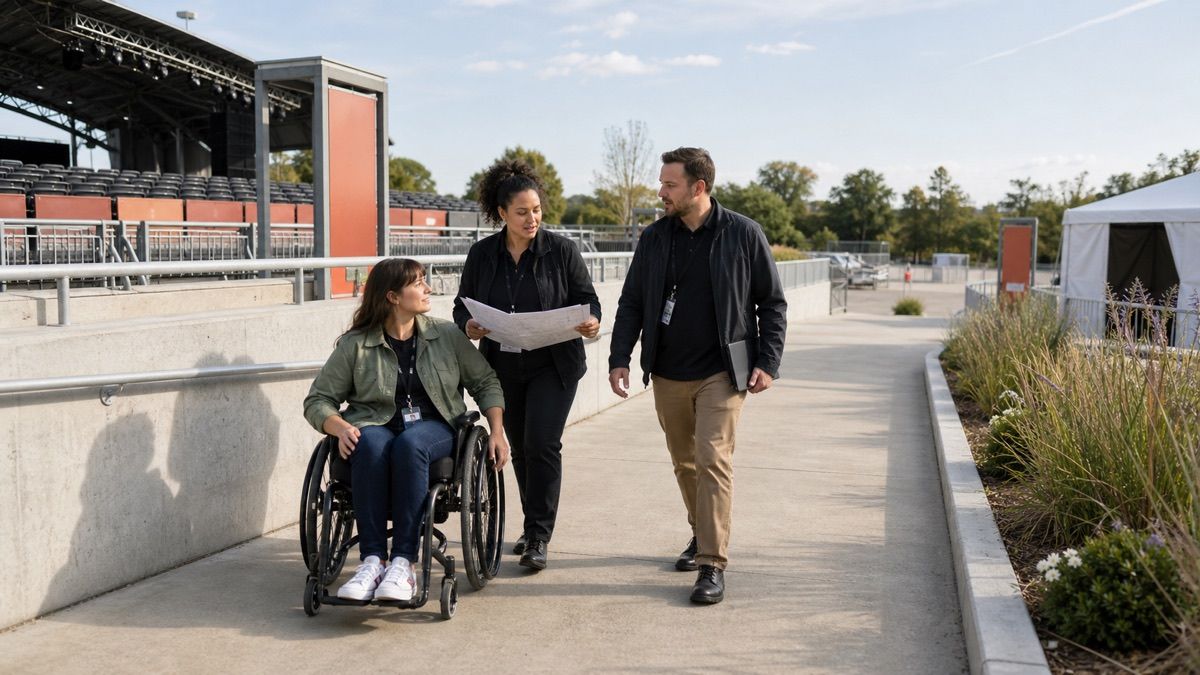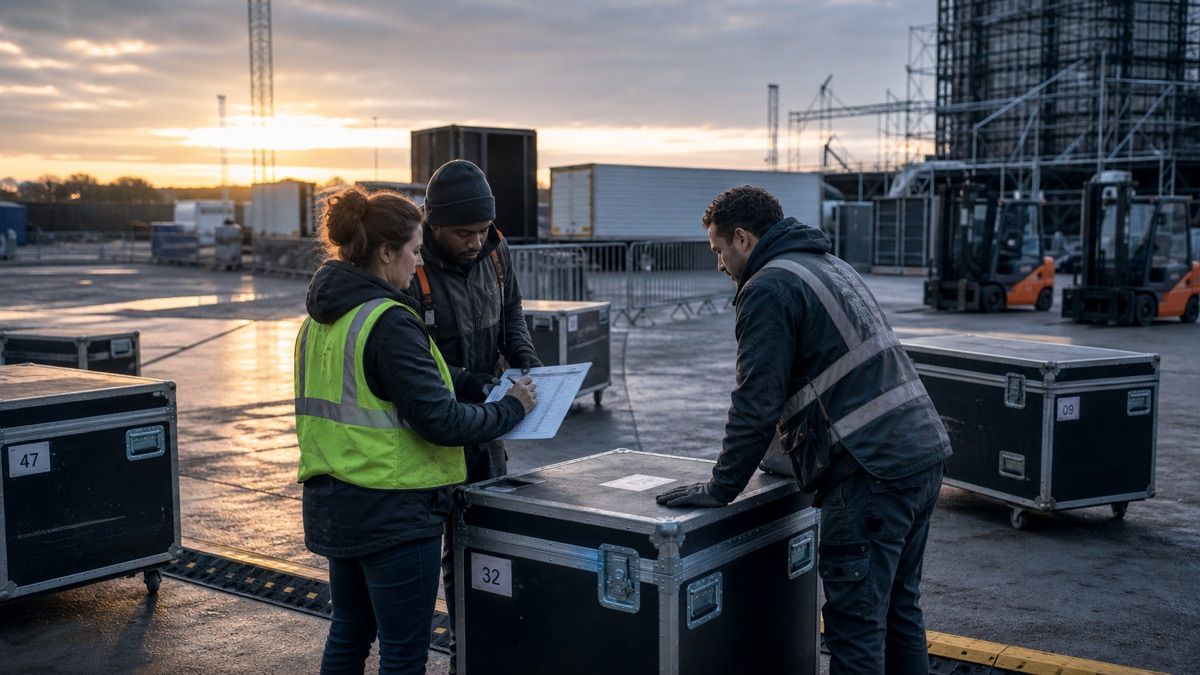
Control event load-out through phased zone releases, contractor coordination, equipment custody, vehicle separation and verified venue handback.
An event contractor demobilisation plan controls how people, plant, temporary structures and hired equipment leave a site after public operation ends. It defines who may release each zone, which dependencies must remain live and what evidence closes custody and venue handback.
Load-out is not load-in in reverse. Crews are tired, the site is changing, contractors want to reach their next job, public departure may continue outside the fence and every removed barrier, light or cable ramp can alter another team's conditions.
This guide is an operating framework, not engineering, transport, employment or legal advice. The safe sequence must follow the event's risk assessment, structure designs, venue rules, competent contractors and local requirements.
What should an event demobilisation plan contain?
Name the release authority; divide the site into controlled zones; preserve emergency and welfare systems; sequence dismantling dependencies; separate pedestrians from vehicles; reconcile equipment before release; record damage and residual risk; and obtain an evidence-based venue handback.
“Show finished” is a programme status. It is not permission for every contractor and vehicle to move at once.
Build one Release-to-Return loop
The Release-to-Return loop is a WENOTIFT operating model, not a universal dismantling sequence. Its purpose is to make changing site state visible before work accelerates.
Give every phase a release authority
The UK Health and Safety Executive's event-management guidance says safety management during breakdown and load-out is as important as during the public period and may involve the highest-risk work. It also calls for a safe phased programme that accounts for contractor risk assessments and is communicated to relevant parties.
Translate that principle into a release board. For each zone, record the current state, dependencies, authorised work, prohibited work, responsible contractor and person who may change the state. A useful progression might be live, public-clear, services-protected, dismantling-released, vehicle-released and returned. These are operational labels, not regulatory categories.
Do not release a whole site because the last audience member left the arena bowl. Hospitality may still be closing, accessible transport may be loading, security may be preserving an incident area and production power may still support safe egress.
Sequence dependencies before contractor arrival times
Build the close-out programme from dependencies rather than pickup slots alone. A lighting contractor cannot safely remove a route system still needed by cleaning crews. A fencing team cannot open a perimeter used to control vehicles. A stage contractor must follow the designed deconstruction method, not whichever truck reaches the dock first.
HSE's current temporary-demountable-structure material states that the event plan should cover deconstruction and that the contractor should ensure it follows an appropriate method. Keep the latest approved method, change authority and structural exclusion zones available to the site team; do not improvise the order to recover a late schedule.
Use hold points where one irreversible action changes several downstream controls:
- audience and guest operations confirm their zone is clear;
- emergency, lighting and communication owners identify systems that must remain;
- structure leads confirm the permitted deconstruction stage;
- traffic control opens the correct collection route; and
- the release authority records the decision and time.
Keep people and vehicles apart during load-out
The HSE's event transport guidance tells organisers to assess onsite vehicle risks, separate people and vehicles, minimise reversing, plan emergency access and enforce site rules. Load-out makes those controls harder because barriers move and contractors arrive in waves.
Publish a load-out traffic plan with vehicle call-up, holding area, route, speed rule, banksman requirement, loading zone and exit. Preserve a pedestrian route to welfare, toilets, transport and sign-out until the last affected worker leaves. If ground or weather changes, pause and reassess the route rather than letting the schedule turn a degraded surface into a new standard.
Drivers should receive the live route, not yesterday's map. A marshal should know which vehicles are expected and which zone has released them. Unplanned collection vehicles wait outside the controlled movement area until accepted.
Release equipment through custody, not recognition
“That is our case” is not an equipment-release control. Before load-out, establish the asset identifier, owner or hirer, quantity, condition baseline, collection authority, vehicle or carrier and destination. Keep disputed, damaged, wet, contaminated or incident-related equipment in an exception area with a named owner.
| Release state | Minimum evidence | Owner | Stop condition |
|---|---|---|---|
| Zone ready | Public clear, dependencies protected, authorised work listed | Release authority | Conflicting live operation or unclear boundary |
| Asset reconciled | Identifier, quantity, condition and custody match | Department or supplier lead | Missing, substituted or disputed item |
| Vehicle admitted | Booking, driver, route and loading zone confirmed | Traffic lead | Route conflict, unsafe vehicle or no receiving zone |
| Load accepted | Load secured under competent procedure; departure authorised | Contractor and traffic lead | Unsafe loading or another control removed |
| Exception held | Location, condition, evidence and next owner recorded | Production manager | Item leaves before dispute or incident release |
| Venue returned | Joint condition record, keys/access and open actions agreed | Venue and organiser | Residual risk or responsibility is ambiguous |
Link access passes, keys and radios to WENOTIFT's staff credential-return workflow. Link unidentified audience property to the lost-property chain-of-custody plan; do not absorb it into contractor equipment.
Protect evidence before clearing an exception
If equipment is damaged, involved in an incident or subject to an ownership dispute, stop its normal release. Record where it is, who controls it, its visible condition and which competent or authorised party decides what happens next. Preserve relevant photographs, manifests and communications according to the event's policy and applicable law.
Avoid diagnosing fault during a tired dockside conversation. The immediate goals are safe control, preservation of necessary evidence and an explicit next owner. Commercial allocation can follow through the contract and claims process.
Return the venue with residual risks attached
Handback is more than an empty floor. Walk the agreed scope with venue and organiser representatives. Record remaining structures, temporary repairs, surface damage, waste, keys, isolated services, retained equipment, access needs and completion dates. If a contractor returns later, specify who controls the site and how their work is reauthorised.
Use WENOTIFT's ground-condition recovery framework for routes affected by weather or plant. A promise that “the supplier will fix it tomorrow” is not closure until responsibility, access and interim protection are agreed.
Debrief the release system, not only the schedule
Measure unplanned vehicle arrivals, zone releases reversed, asset exceptions, pedestrian-route changes, loads delayed for safety, unresolved damage and open actions at handback. These signals reveal where the operating picture failed.
Do not reward a fast load-out that hid near misses or transferred risk to the venue. The useful question is whether each state change was understood, authorised and left the next team with safe conditions.
A practical load-out readiness review
Before the public period ends, ask:
- Does every zone have a named release authority and visible state?
- Which systems must remain for egress, welfare, emergency access and worker safety?
- Are structural and contractor dependencies reflected in the phased programme?
- Can every vehicle be held, admitted, routed, loaded and released without mixing flows?
- Can equipment exceptions be isolated without losing custody or evidence?
- What proof will allow the organiser and venue to accept final handback?
If one answer is unclear, the demobilisation plan is not ready to accelerate.
Sources
- HSE: Managing an event
- HSE: Transport at event sites
- HSE: Temporary demountable structures — roles and responsibilities
- HSE: A guide to workplace transport safety
Turn load-out into a controlled release, not a final scramble.
Talk to WENOTIFT about contractor sequencing, equipment custody and venue handback.