Festival heat safety connects forecasts, site design, water, shade, workforce controls, audience information, medical response and show decisions. A practical planning framework for concert and festival teams.
Festival heat safety is the coordinated plan an event uses to identify changing heat risk, reduce exposure, support workers and attendees, recognise illness, and escalate operational decisions. It is not a reminder to drink water. It connects weather intelligence, site design, staffing, communications, medical response and show control.
That distinction matters in 2026. On 6 July, the World Health Organization described extreme heat as an increasingly urgent challenge at mass gatherings and highlighted event-specific risk assessment, early warning, escalation protocols and mitigation tools. The practical question for a concert or festival team is therefore not simply, “Will it be hot?” It is, “What changes when risk rises, who authorises the change, and how will people know?”
This guide is an operating framework, not medical or legal advice. Local public-health alerts, permits, employment duties, venue rules and qualified medical and safety professionals must govern the final plan.
What makes heat risk different at a live event?
Heat risk is produced by conditions, exposure and vulnerability together. Air temperature is only one input. Humidity, radiant heat, direct sun, air movement, event duration, crowd density, physical exertion, clothing, alcohol, medication, access to water, overnight camping and the distance to a cooler place can all change the real experience.
A single forecast number also hides the event's geography. The front-of-stage pit, an unshaded queue, a catering tent, a metal loading dock and a tree-lined rest area can have different conditions at the same hour. Build, show and breakdown crews may face longer exposures than ticket holders.
The WHO's June 2026 heat-health guidance identifies people attending mass gatherings among groups that may be disproportionately at risk. Good planning does not turn that observation into stereotypes or ask attendees to disclose private health information. It uses accessible information, multiple support routes and safer default conditions.
The nine-layer festival heat-safety plan
The layers must describe one system. A water point with no queue plan may be hard to reach. A heat alert with no named decision owner is merely information. A medical team without a clear access route may lose critical time.
Build a readiness matrix before the forecast becomes urgent
| Control area | Question to resolve | Named owner | Evidence before gates |
|---|---|---|---|
| Forecast and monitoring | Which official sources and on-site observations inform decisions? | Safety or event-control lead | Monitoring log, briefing cadence and escalation contacts |
| Water and cooling | Can people find and reach reliable potable water and cooler spaces across the journey? | Site and operations leads | Commissioning checks, location map and replenishment plan |
| Workforce | How do crews rotate, rest, report symptoms and receive help? | Department heads and contractor leads | Written controls, toolbox briefing and welfare route |
| Audience information | What must ticket holders know before travel and while on site? | Communications and guest-services leads | Approved message set, accessible formats and channel test |
| Medical response | How are heat-related concerns recognised, reached, triaged and handed over? | Qualified medical lead | Medical plan, access test and event-control protocol |
| Show decisions | Who can alter gates, schedule, activity, capacity or show status? | Event director with safety and medical advice | Decision matrix, authority list and recorded test exercise |
This matrix is deliberately non-numeric. The correct trigger may depend on local alert systems, humidity, radiant heat, workload, crowd conditions and medical advice. Copying a temperature threshold from another country or venue creates false confidence.
How should an event set heat triggers?
Start with actions, then identify the evidence that would justify them. A useful trigger is not “hot weather.” It is an agreed condition that activates a named response: increase monitoring, open additional shaded capacity, rotate a crew, change a queue, pause a high-exertion activity, adjust gates, shorten a programme element or escalate to the event director.
Use a tiered decision structure:
- Prepared state: controls are commissioned, staff briefed and messages ready.
- Heightened state: forecast or observed conditions increase monitoring and deploy additional controls.
- Intervention state: operational changes reduce exposure or protect a specific area, activity or group.
- Critical state: qualified safety and medical advice drives show-stop, evacuation, shelter or cancellation decisions under the event's emergency plan.
The UK Health Security Agency's guidance, updated 20 May 2026 and explicitly scoped to England, recommends that organisers include hot weather in risk assessments, plan safe event management, make safe-behaviour information available, provide adequate drinking water and plan to increase shade. It also points organisers to the local Weather-Health Alerting System. Other markets require their own sources and duties.
The most useful threshold is one that changes a real decision, has a named owner and can be explained after the event.
Water, shade and cooling must work as a network
Counted assets do not prove usable protection. Review water and cooling as a journey:
- Can attendees bring an empty bottle, and is that rule visible before travel?
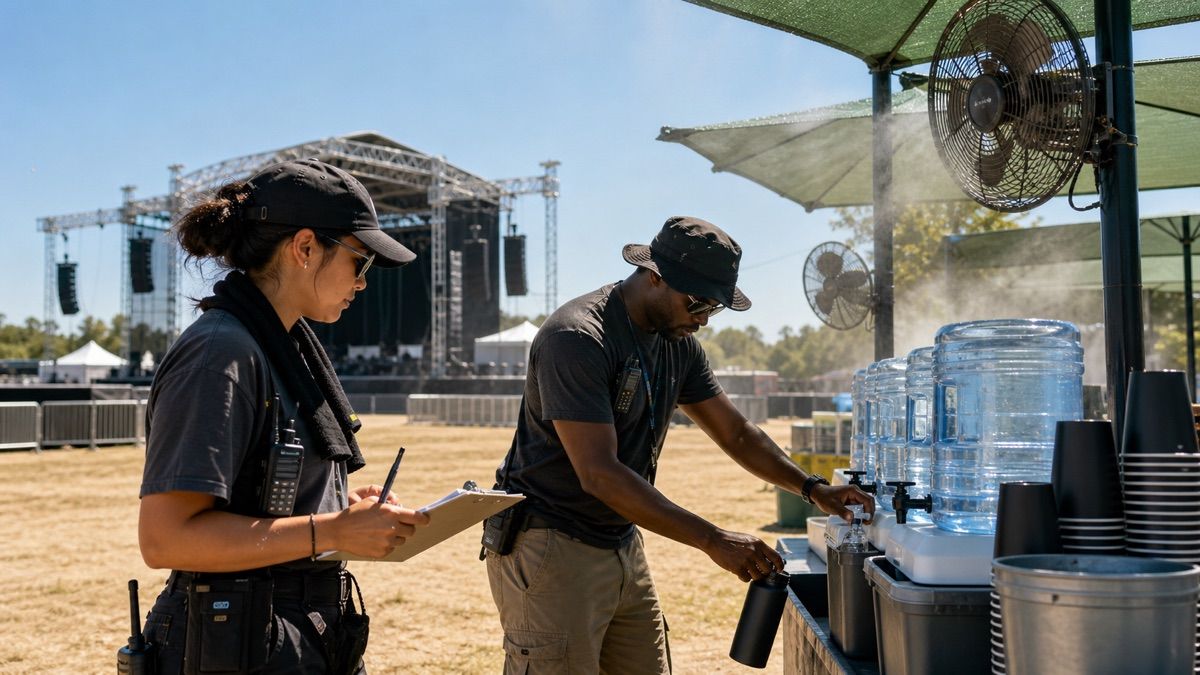
- Are refill points distributed near queues, high-density areas, camping and transport exits?
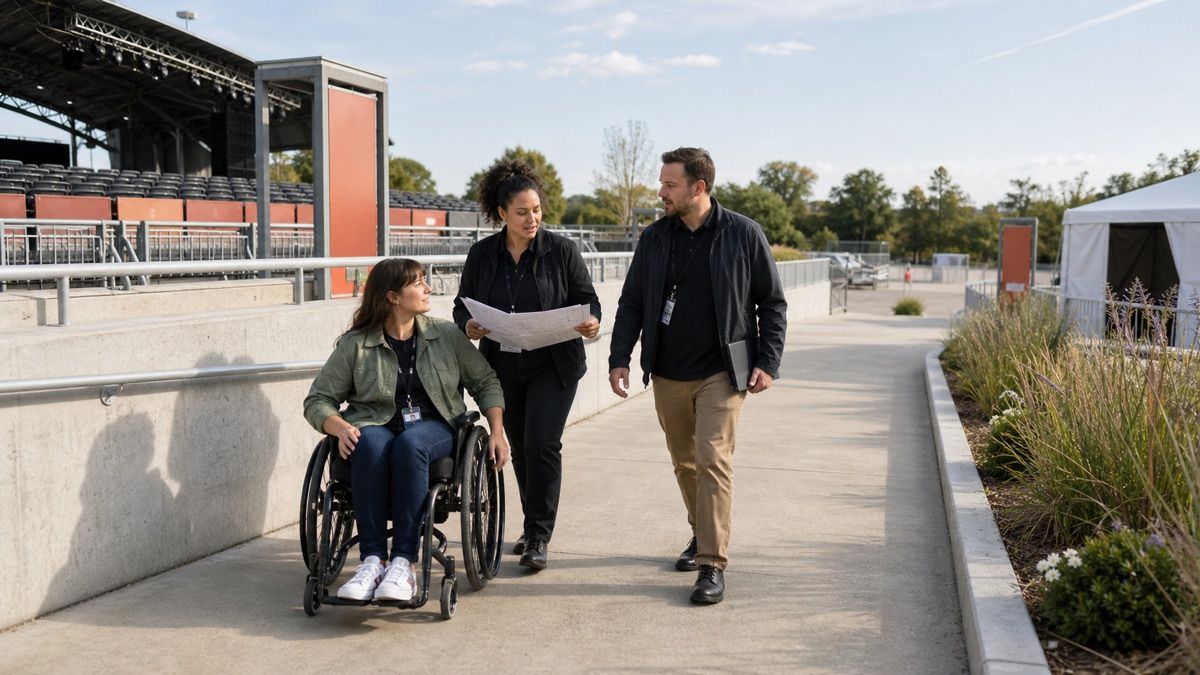
- Can a person with limited mobility reach water without an excessive detour?
- Are queues shaded or monitored, and can staff redirect people when one point becomes congested?
- Does replenishment continue through headline and exit periods?
- Do backstage, loading, security and vendor teams have controls that match their work pattern?
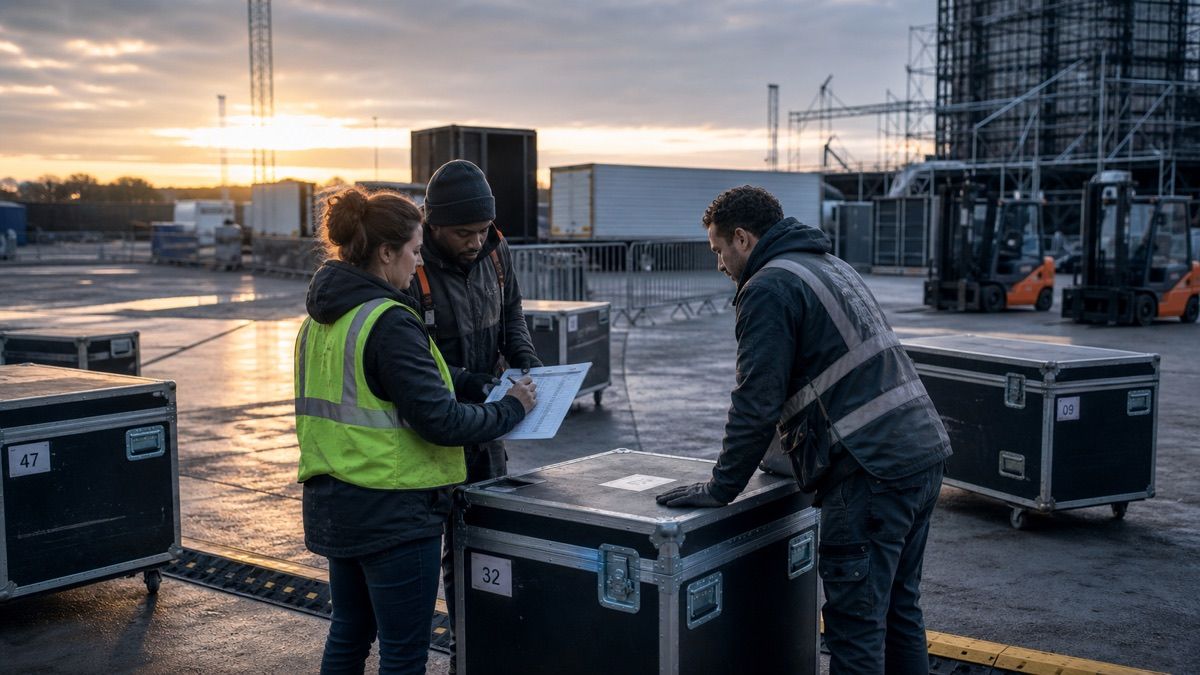
For US workers, OSHA's current heat campaign emphasises water, rest and shade, a written prevention plan, training, emergency planning, monitoring and gradual acclimatisation for new or returning workers. That is workplace guidance, not a universal attendee formula. It is nevertheless a useful reminder that crew welfare needs its own plan rather than being assumed inside audience provision.
Site controls also need failure modes. What happens if a water feed loses pressure, a shade structure closes in wind, a generator fails, a queue moves into full sun or transport disruption extends exposure after the last performance? The contingency belongs beside the primary control.
Design the full audience journey, not only the festival field
Heat exposure can begin before ticket scanning. The plan should connect travel advice, permitted items, queue expectations, bottle policy, water locations, cooling spaces, accessibility support, campsite rules, re-entry, transport and emergency contacts.
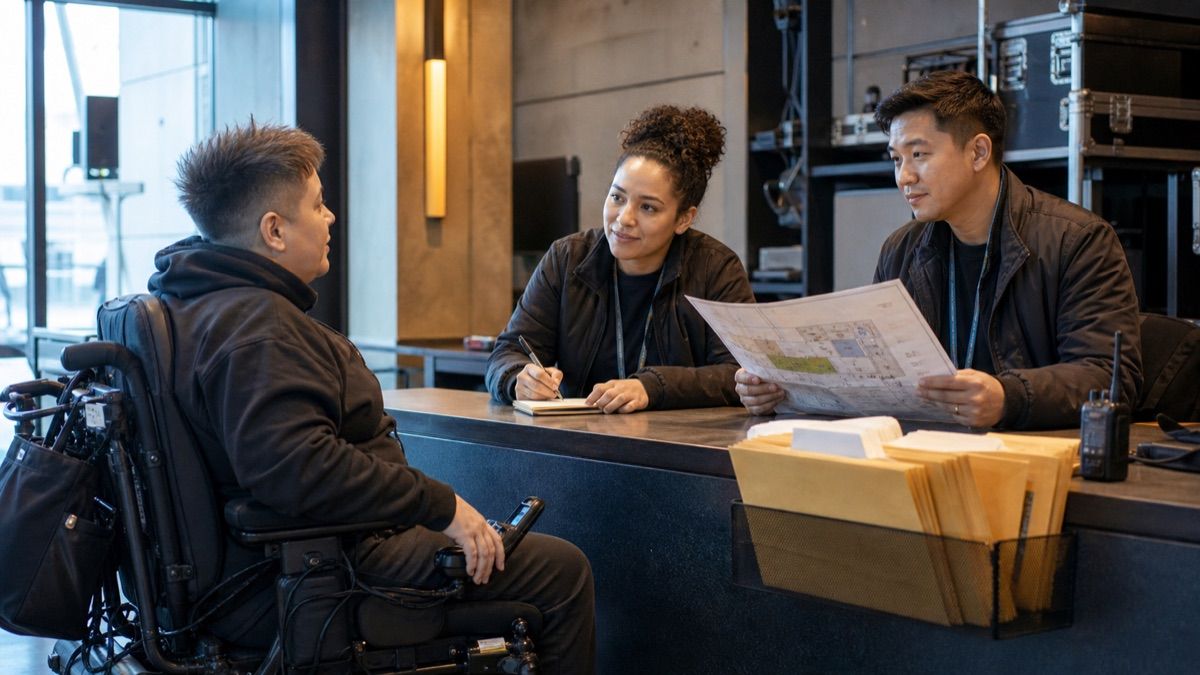
This is where concert accessibility planning becomes operationally important. Information must be perceivable and usable, support should not depend on a visible disability, and cooling routes should account for mobility, sensory and communication needs. A person should not have to surrender a place in an inaccessible queue simply to find water.
Destination events add another boundary. The music-tourism journey includes stations, walking routes, hotels and late-night transport that the promoter may not control alone. Share verified information with transport, hospitality and city partners, and be explicit about where event provision begins and ends.
Pre-written messages should cover more than generic self-care. Tell people what the event changed, where help is, which rules apply and when the next update will arrive. Use the website, ticket email, app or SMS where permission exists, social channels, on-site screens, public address, stewards and accessible alternatives as parts of one communications plan.
Give sponsors a useful role without outsourcing the duty
A hydration, sunscreen, shade or cooling partner can add fan value, but the activation cannot substitute for core safety provision. The organiser remains responsible for integrating any partner asset into site, queue, stock, accessibility, branding, data and contingency plans.
The strongest activation is useful even after the logo is removed. It may add capacity, clearer wayfinding, a staffed rest point or reliable supplies. Connect the rights and deliverables to the concert sponsorship activation plan, and keep medical claims, product suitability and data collection within qualified review.
WENOTIFT is an AI-powered brand-partnership platform — a real-time partnership dashboard that helps teams structure rights, responsibilities and measurable fan value across entertainment programmes.
What should the control room record?
Record enough to improve decisions without collecting unnecessary health data. Useful operational evidence can include forecast and on-site observations, control activations, water or cooling outages, queue changes, staff rotations, message times, medical incident categories maintained by qualified teams, transport disruption, show decisions and attendee feedback.
Do not celebrate the absence of a major incident as proof that the plan worked. Compare assumptions with what occurred:
- Which zone became hotter or more congested than expected?
- Which message changed behaviour, and which channel arrived too late?
- Were supplies and staffing available at the time of highest demand?
- Could every department explain the escalation route?
- Which temporary intervention should become baseline infrastructure next time?
Festival heat safety is credible when the forecast, physical site, workforce, audience journey and decision authority agree. The output is not a document on a shared drive. It is a rehearsed ability to change the event before conditions force a worse decision.
Sources
- World Health Organization — “Advancing heat-health preparedness during mass gatherings: practical tools” (6 July 2026)
- WHO Regional Office for Europe — “Heat–health action plans: guidance, second edition” (2 June 2026)
- UK Health Security Agency — “Hot weather advice: mass gatherings and planning events” (updated 20 May 2026; applies to England)
- US Occupational Safety and Health Administration — Heat: Planning and Supervision (accessed 19 July 2026; US workplace guidance)
- US Occupational Safety and Health Administration — Heat: Water, Rest, Shade (accessed 19 July 2026; US workplace guidance)
Turn the forecast into a rehearsed operating plan.
Talk to WENOTIFT about partner roles, fan information, site controls, decision gates and measurable readiness for concerts and festivals operating in hot conditions.