A festival temporary power plan should connect demand, distribution, competent sign-off, live monitoring and emergency decisions. Use this practical handoff guide.
A festival temporary power plan is the controlled record that connects every electrical load to a suitable source, distribution route, protective arrangement, competent person, inspection point and emergency action. It covers build, rehearsals, public hours, shutdown and break—not only the generator parked behind the stage.
The plan matters because a temporary installation is still an installation. Stages, concessions, sponsor activations, catering, lighting, communications, security, medical points and accessibility equipment can all depend on power while being owned by different suppliers. The organiser needs one system view before those interfaces become live.
This guide is an operating framework, not electrical design, engineering, legal or safety advice. Requirements differ by jurisdiction, venue, voltage, environment and system complexity. A competent electrical professional must design, install, test, certify and operate the system under the rules and standards that apply.
What should a festival temporary power plan include?
It should include the site and load assumptions, supply sources, distribution design, earthing and protective arrangements, environmental conditions, cable routes, access controls, emergency and life-safety supplies, responsible competent people, inspection and test records, energisation authority, live monitoring, fault escalation, shutdown sequence and change log.
The UK Health and Safety Executive’s current event electrical-safety guidance asks organisers to consider layout, power requirements, mains access, overhead and buried services, environmental conditions and emergency power. It also identifies generators, earthing, cable routing, main isolators and specialised supplies as event-stage decisions.
The safest energisation is not a moment; it is the final release in a chain of verified handoffs.
Start with service, not generator size
Map what the event must deliver in each phase. Separate life-safety and operationally critical services from show production, hospitality, retail and convenience loads. Record who supplies each item, its stated electrical characteristics, operating window, location, connection method and consequence of loss.
Do not let suppliers submit one optimistic headline number. Motor starting, heating, refrigeration, lighting control, audio, video, charging, non-local equipment and intermittent loads may behave differently. The electrical designer should determine diversity, phase balance, protection and capacity; the organiser’s job is to make the real equipment and timetable visible.
Identify dependencies. If a production office loses power, can incident communications still function? If one source fails, what must remain available for safe egress, emergency lighting, medical response, accessibility or controlled shutdown? “Backup generator” is incomplete unless the backed-up loads, transfer method, fuel autonomy, test and owner are known.
The six-part Demand-to-Energisation Chain
The Demand-to-Energisation Chain is a WENOTIFT operating framework, not a substitute for BS 7909, BS 7671, NFPA requirements or any local code. It helps organisers expose the commercial and production handoffs that a qualified electrical team needs to make the system safe.
Build one electrical handoff matrix
| Control point | Required input | Accountable handoff | Release evidence |
|---|---|---|---|
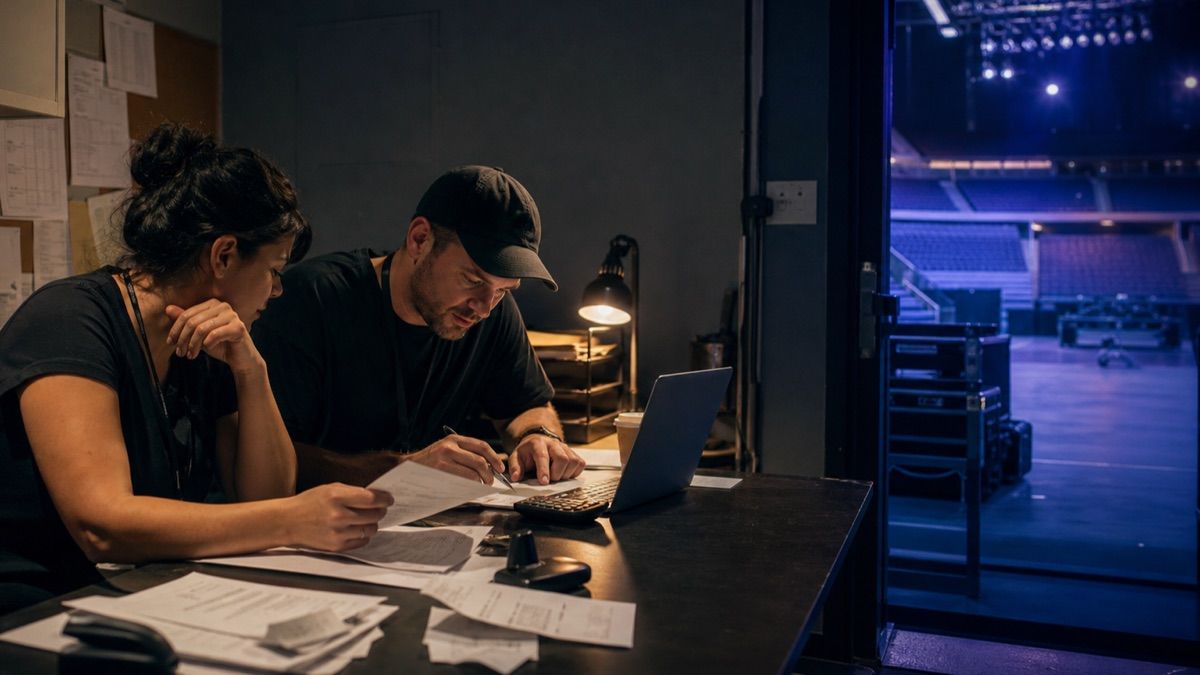
| Load schedule | Equipment data, location, timing and criticality from each supplier | Department lead to electrical designer | Approved schedule with assumptions and revisions |
| Source and distribution | Venue supply details, generator plan and distribution design | Designer to installing contractor | Controlled drawings and equipment schedule |
| Route and environment | Site layout, crowds, vehicles, water, structures and access | Site team to electrical lead | Approved route and protection method |
| Installation and test | Installed equipment, connections, earthing and protective measures | Installing contractor to designated competent reviewer | Required inspection, test and completion records |
| Energisation | Cleared work areas, closed change log and authorised operators | Electrical lead to event control and users | Signed or recorded energisation release |
| Live operation | Readings, fuel, weather, alarms, faults and work requests | Operators to electrical lead and event control | Shift log, escalation record and shutdown status |
The matrix should identify record names used locally. Do not request “a certificate” without knowing which installation, phase, test or responsible person it covers.
Route power through the real site
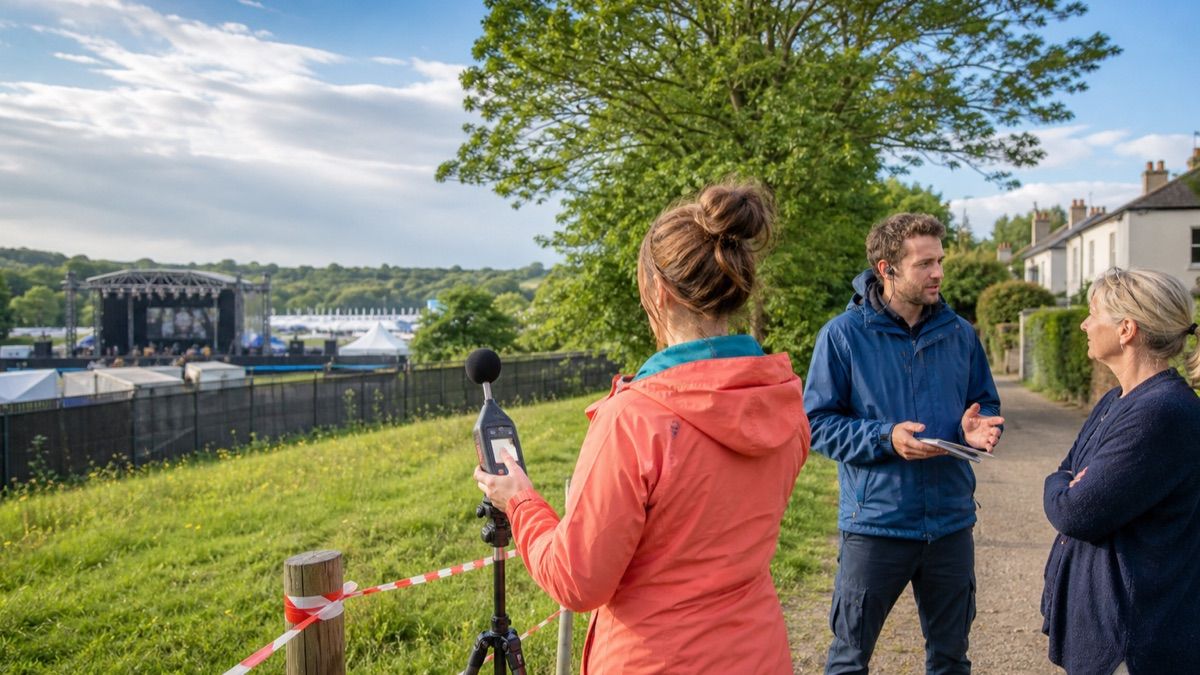
Overlay the electrical design with audience circulation, accessible routes, emergency access, concessions, water, fuel, temporary structures, lifting operations and build traffic. A safe design on an isolated drawing can fail when another contractor moves a fence or parks across the generator enclosure.
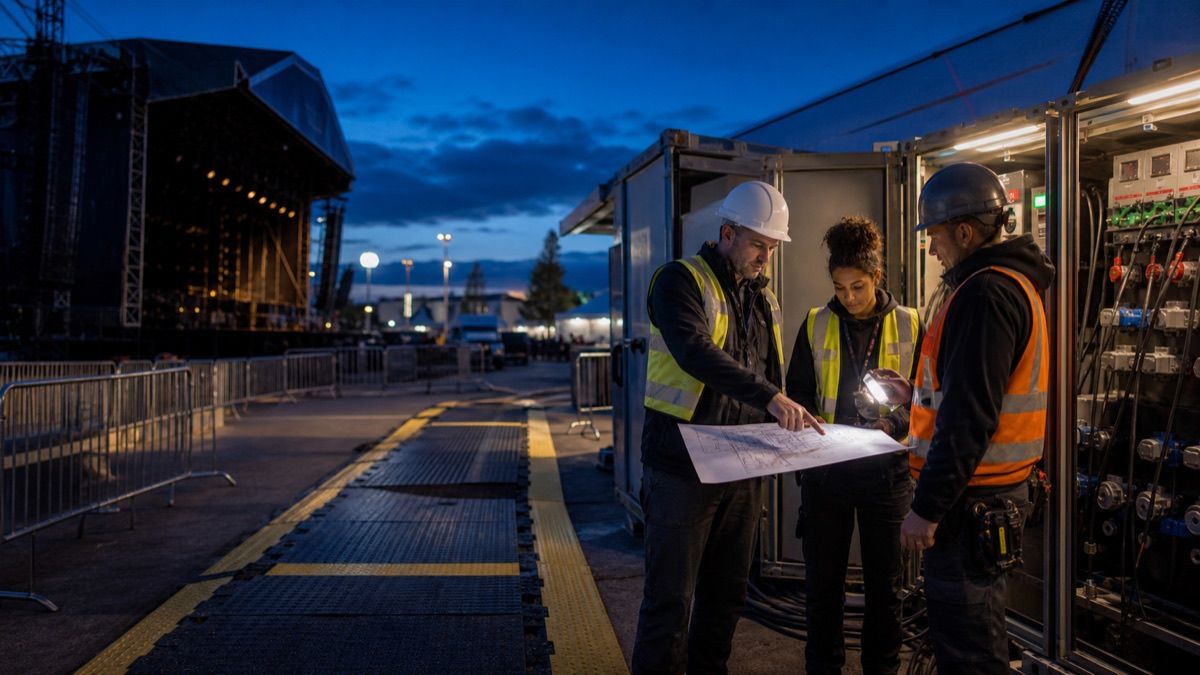
HSE advises routing cables to reduce tripping and mechanical damage, protecting overground routes, segregating them from vehicles where practicable and paying particular attention to connections. Its guidance also says electrical equipment exposed to rain or adverse conditions needs suitable protection and should be positioned away from public or unauthorised access.
Make every crossing, joint, distribution point, intake, generator enclosure and isolator findable. Use controlled labels that correspond to drawings and schedules. Preserve access for normal operation and emergency isolation without placing the public next to the hazard.
Define competence and control of work
Name the person accountable for the temporary electrical system and define the competence required for design, installation, testing, operation and modification. A production manager can coordinate the schedule without being authorised to approve an electrical alteration.
HSE’s GS50 guidance addresses dutyholders who organise events and those providing facilities for production teams and entertainers. HSE also states more broadly that staff should be competent for their roles and receive supervision proportionate to the work and risk.
Set a permit or request path for changes after installation begins. A new coffee machine, lighting package, broadcast position or sponsor screen is a design input—not a harmless extra plug. Record the request, affected circuit or area, professional decision, testing required and drawing revision before connection.
Test before release, then keep watching
The competent electrical team should decide and document the inspection and testing required by the applicable system and rules. The organiser should confirm that records correspond to the installation actually in use, exceptions are closed or formally controlled, equipment is labelled and the energisation authority is unambiguous.
Test the operating response as well as the paperwork. Confirm communications, access to isolation points, escalation contacts, fault-area control, safe restart rules and the sequence for critical loads. Where backup or emergency arrangements exist, test them in the manner approved by the responsible professionals.
Once live, monitor the conditions that could change risk: load, voltage or other required readings, generator and fuel status, weather and water ingress, cable protection, unauthorised connections, damaged equipment, alarms, overheating indications and changes to site access. Frequency should follow the risk assessment and professional plan.
Give failures a decision path
Write fault categories in plain operational language. Define who may isolate equipment, who secures the area, who informs event control, who determines whether a show or activation can continue and who authorises re-energisation.
Never encourage unqualified staff to open equipment or improvise repairs. HSE’s electricity frequently asked questions advises keeping people away from an unsafe installation, switching it off only if safe to do so and contacting a competent person.
Prepare for loss of a source without promising seamless continuity. The response may be controlled shutdown, transfer to an approved alternative, evacuation of an area or suspension of an activity. The electrical and event plans should agree on the operational consequence.
Close down as deliberately as you energised
Create a shutdown sequence that accounts for artists, audiences, catering, refrigeration, production equipment, communications, lighting, charging, site security and break crews. Identify what must remain available after the public leaves and who releases each area for disconnection.
Record faults, temporary changes, damaged equipment, unexpected loads, fuel issues, protection failures and supplier deviations. Reconcile the final drawings and records so the next event does not inherit a fictional design.
WENOTIFT’s festival weather insurance guide separates operational controls from financial transfer. The festival heat-safety playbook connects thresholds to action, while the festival waste plan applies the same accountable-handoff logic to materials and vendors.
WENOTIFT helps entertainment teams connect commercial commitments, production partners and accountable event execution across markets.
Sources
- UK Health and Safety Executive — Electrical safety at events
- UK Health and Safety Executive — Electrical safety at places of entertainment (GS50)
- UK Health and Safety Executive — Managing an event
- UK Health and Safety Executive — Electricity frequently asked questions
- UK Health and Safety Executive — Electrical safety on construction sites (HSG141, April 2023)
Connect every supplier load to one controlled electrical system.
Talk to WENOTIFT about production handoffs, site operations and accountable delivery across complex live programmes.