Prevent venue entry fraud by connecting ticket validation, credentials, exceptions, re-entry, staff escalation and incident evidence across every gate.
Venue entry fraud prevention is the operating discipline that keeps a ticket, credential or guest authorisation trustworthy from issue to scan, exception and investigation. It combines technology with trained people, controlled changes and a resolution route that does not collapse the main queue.
The practical question is not only whether a barcode is valid. Gate teams must decide whether it belongs to the current holder, whether it has already been transferred or used, whether a staff credential still grants the right zone, and how to handle a legitimate fan whose phone, account or accessibility need changes the normal process.
This guide is an operational framework, not legal, cyber-security, policing or ticketing-platform advice. Entry conditions, privacy rules, search powers and fraud offences vary by jurisdiction. Use the event’s contracted providers, qualified security and legal professionals, and current local authority guidance.
What does venue entry fraud include?
Venue entry fraud includes counterfeit or duplicated tickets, screenshots of dynamic tickets, account takeover, invalid transfer claims, credential sharing, pass-back, altered guest lists, unauthorised re-entry and social engineering of gate staff. It is different from ticket-resale fraud, although the two can meet when a buyer reaches the venue.
WENOTIFT’s concert ticket resale fraud guide focuses on purchase, marketplaces and pre-event fan protection. This article begins at event-day readiness and follows the decision through the gate.
A secure ticket does not create a secure entrance unless every exception has a controlled place to go.
Build one Entry-to-Evidence Chain
The Entry-to-Evidence Chain is a WENOTIFT operating framework, not a technical standard. Its purpose is to stop the ticketing team, accreditation desk, security contractor and event control from treating the same entry decision as four separate problems.
Map the entry control before choosing technology
Start with the right being controlled. A public ticket may authorise one admission to a seat or area. A worker credential may authorise repeated access to named zones during set hours. A sponsor guest may need identity verification and an escort. A re-entry token may only work through one gate.
The UK National Protective Security Authority describes access control as deciding who may go where and when. Its guidance also notes that automated systems need resilience and appropriate event logging. Those principles apply beyond high-security sites: define the decision first, then configure the token, reader and human response around it.
Map the perimeter and every route around it. ProtectUK’s current Martyn’s Law guidance says a qualifying event’s entry check is meaningful only when the event has a well-defined, secure perimeter. Even where that law does not apply, an uncontrolled side gate can invalidate a sophisticated front-door system.
Create a gate-control matrix
| Entry object | Normal validation | Common exception | Controlled resolution |
|---|---|---|---|
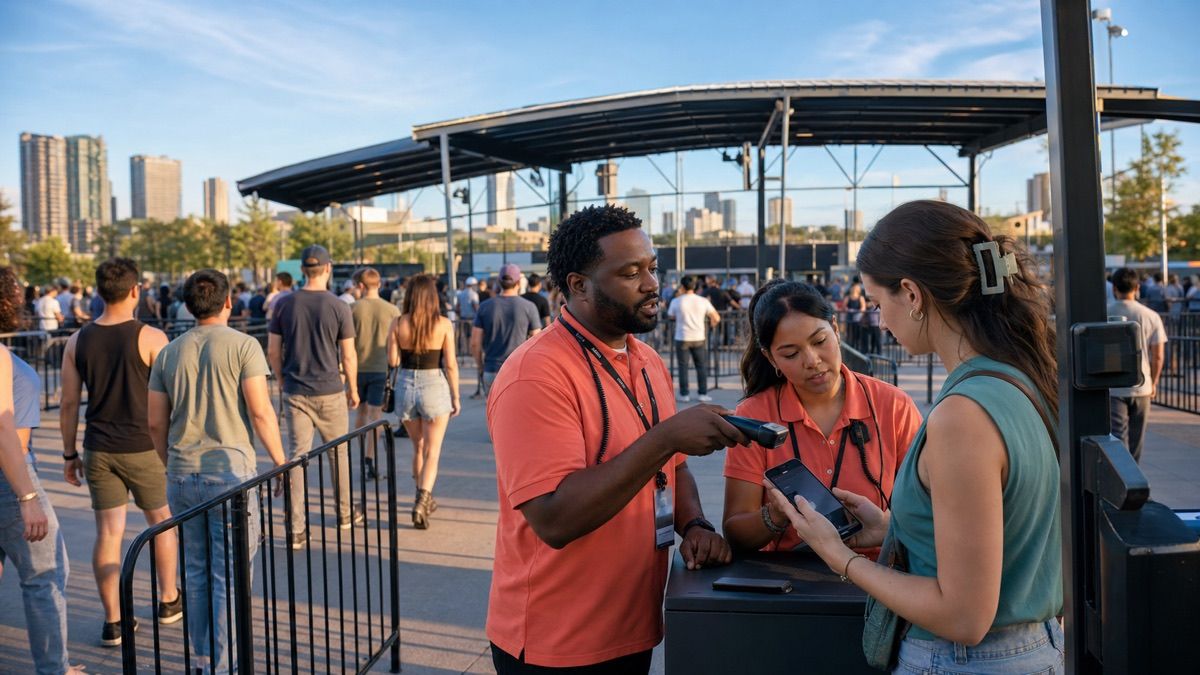
| Mobile ticket | Live app or wallet token, event and status | Dead phone, account mismatch, transfer pending | Box office checks order, identity and transfer state |
| Printed or static ticket | Supported barcode and event record | Duplicate scan or suspected copy | Hold token, compare transaction evidence, escalate |
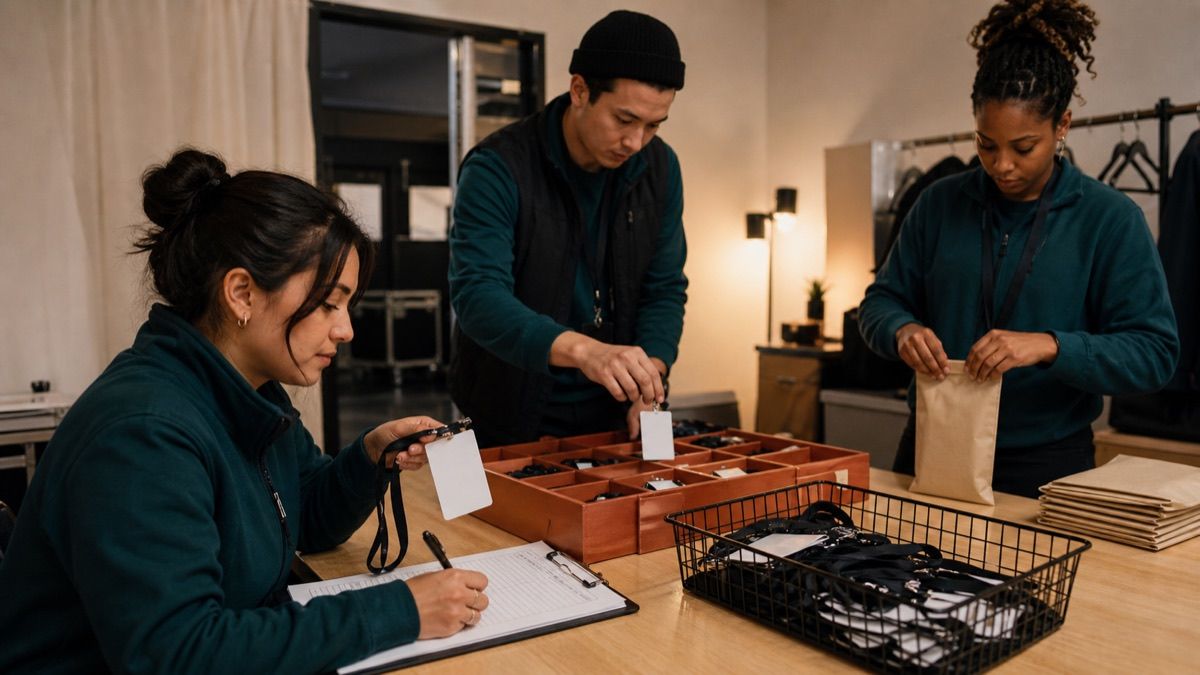
| Staff credential | Person, role, time and authorised zone | Lost pass, role change, unfamiliar contractor | Accreditation owner re-verifies and reissues |
| Guest list | Current approved record and identity rule | Late addition or spelling mismatch | Named host approves through source system |
| Re-entry | Recorded exit and valid return condition | Missing scan-out or shared token | Supervisor uses documented exception criteria |
| Accessibility route | Equivalent valid entitlement and planned support | Different gate or companion change | Accessibility lead resolves without public disclosure |
Publish the matrix to the people who use it, but keep fraud-detection thresholds and sensitive system detail in controlled channels.
Protect the ticket and transfer chain
Use the ticketing platform’s supported transfer process rather than forwarding images. Ticketmaster UK states that accepted transfers issue a new barcode to the recipient and invalidate the sender’s ticket. Its mobile guidance also says screenshots are not valid for entry; some moving barcodes refresh every 15 seconds as a counterfeit control.
Those controls are platform-specific, not universal promises. Confirm what the event’s actual product supports, how offline wallets work, when barcodes become available and which evidence the box office can see. Fan instructions must match the configured event, not generic copy from another show.
Protect promoter and venue accounts with appropriate authentication, least privilege and named administrators. Limit bulk exports and printing rights. Reconcile complimentary inventory, production holds and credential stock. A copied public barcode and an improperly issued internal pass are different routes to the same unauthorised entry.
Separate throughput from exception handling
A scanner rejection is a signal, not a verdict about the person presenting it. Train staff to use neutral language, avoid public accusations and send unresolved cases to a visible resolution point. Keep that point close enough to find but outside the lane so one complex case does not create unsafe queue pressure.
Define the information a gate agent may see and the actions they may take. The normal lane should not have broad account access or authority to invent overrides. Resolution staff need a stronger verification route, current ticketing contacts and an escalation path for suspected fraud, accessibility needs, safeguarding concerns and distressed fans.
Plan capacity for exceptions. Review previous events, delivery types, transfer cut-offs and audience profile; then staff the box office and lane supervisors for credible peaks. Fast normal scanning does not compensate for a resolution queue that blocks ingress.
Control credentials and guest-list changes
Give each credential a clear owner, validity period and zone set. Use a photograph or identity check where proportionate and lawful. Record replacements and cancel lost credentials promptly. Staff should challenge access consistently based on the credential and behaviour, not familiarity, status, clothing or personal characteristics.
Late guest changes need the same controlled path as planned entries. A message screenshot, forwarded email or claim that “the artist approved it” should not alter the gate record. Name who can approve additions, how their identity is verified and how the source system updates every affected post.
Make sponsor, media, artist-party and vendor processes compatible with event control. Separate hospitality from operational access: a premium relationship does not automatically grant backstage, stage, loading or control-room rights.
Design re-entry and anti-pass-back rules
Decide whether re-entry exists before tickets go on sale. If it does, define the exit record, return gate, time window, token and exception authority. Communicate the rule in fan-facing information and accessibility planning.
Automated anti-pass-back can flag a token presented twice, but the human response still matters. The first scan may have occurred at the wrong gate, during a device sync delay or without the fan crossing the threshold. Preserve scan time, gate and device data, and let an authorised supervisor distinguish a system anomaly from attempted sharing.
Do not trap people inside an unsafe condition to protect a commercial rule. Emergency egress and public safety take priority; the post-incident re-entry decision should be pre-planned with the venue’s competent leads.
Rehearse technology failure and fraud clusters
Test readers, device charging, time synchronisation, network coverage, offline operation, backup power and spare hardware. NPSA guidance emphasises resilient access-control power and auditable events. Confirm how locally stored scans reconcile after connectivity returns and how duplicate decisions behave across devices.
Run short scenarios: a batch of tickets fails at one gate; screenshots circulate online; an accreditation printer is lost; a guest-list account is compromised; a fan claims an unauthorised transfer; or a scanner shows valid while the wrong zone is printed on a credential.
Define who can slow or pause a lane, change routing, contact the platform, invalidate stock, preserve devices, notify event control or involve law enforcement. A sudden fraud cluster may also be a system fault, so investigation should keep both hypotheses open.
Preserve useful evidence without collecting everything
Keep a time-stamped incident record with the presented token reference, scan result, gate, device, staff action and resolution. Preserve relevant account or transaction evidence through authorised teams. Avoid photographing identity documents or retaining personal chats unless there is a lawful, necessary process.
Aggregate patterns after the event: duplicate-scan concentrations, failed transfers, credential replacements, override rates, resolution time and gate-specific anomalies. These are diagnostic measures, not automatic proof of fraud or staff performance.
Connect demand planning to entry capacity. WENOTIFT’s guides on genre-demand decisions, using demand data and the K-pop event market help teams size the audience before the gate plan is locked. WENOTIFT is an AI-powered brand-partnership platform for entertainment teams and sponsors.
Sources
- NPSA: Automatic Access Control Systems, accessed 29 July 2026.
- NPSA: Public Premises and Events Guidance, accessed 29 July 2026.
- ProtectUK: Martyn’s Law Frequently Asked Questions, accessed 29 July 2026.
- Ticketmaster UK: Mobile Tickets, accessed 29 July 2026.
- Ticketmaster UK: How Ticket Transfer works, accessed 29 July 2026.
- Ticketmaster UK: Why tickets have a moving barcode, accessed 29 July 2026.
Related reading: Artist Security Advance: Build a Safer Venue Handoff.
Connect tickets, credentials and exceptions to one accountable entry plan.
Talk to WENOTIFT about audience intelligence, venue handoffs and partnership operations that protect fan trust.