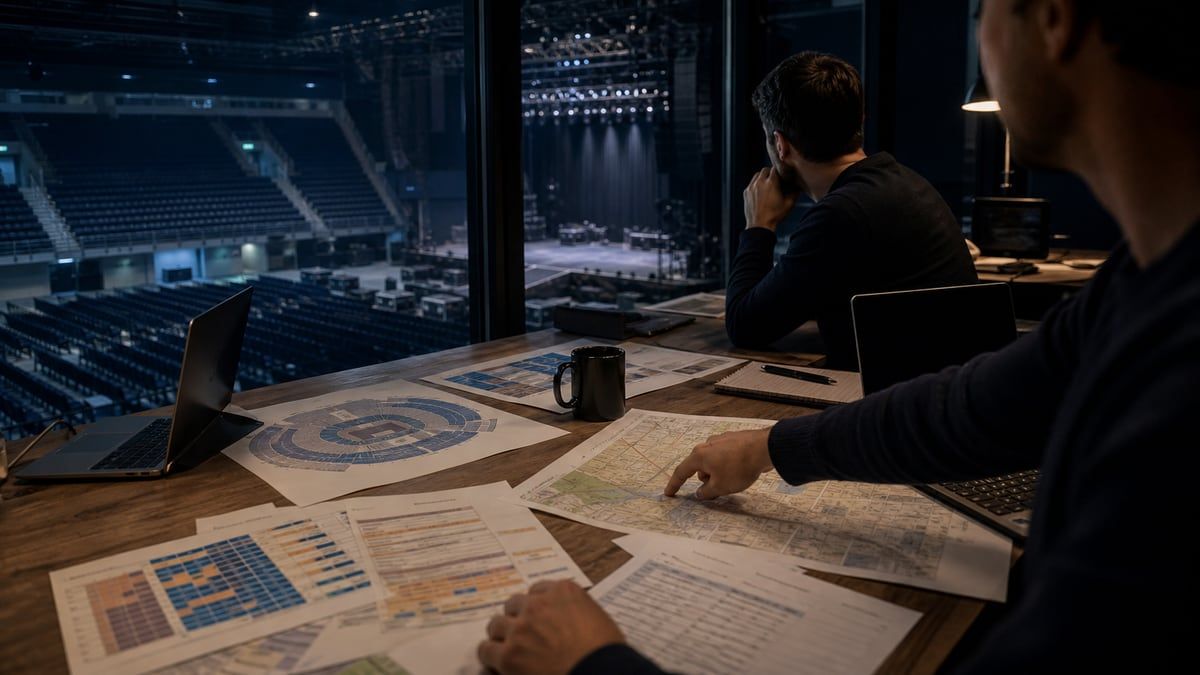
Before a promoter picks an artist, they are really picking a genre — and genre demand varies enormously by city, season, and audience. Here is how genre-level demand actually enters a booking decision, and why ignoring it is the fastest way to book a show into an empty room.
Ask a promoter what they are booking and they will name an artist. But the decision underneath is quieter and more important: they are booking a genre into a market at a moment. K-pop, C-pop, J-pop, Thai pop, and Western acts each carry their own demand curve, and that curve differs by city, season, and audience. Get the genre read right and even a mid-tier act fills the room. Get it wrong and a famous name plays to empty seats.
This is how genre demand actually enters a booking decision — and why it belongs at the start of the process, not the end.
Why genre comes before the artist
An artist inherits the demand of their genre before they add or subtract their own pull. A K-pop act steps into a city with an established K-pop appetite, a live scene, and a fandom infrastructure — or into one where all three are thin. The same artist is a different bet in each. Booking artist-first skips the layer that determines whether the audience even exists at the scale required.
Genre demand sets the ceiling. The individual artist decides how much of that ceiling they can reach. Both matter, but the order is not interchangeable.
How genre demand enters a booking decision
Genre-level demand shows up at several concrete points in a booking, each of which changes the maths.
The takeaway: genre demand is not a soft "vibe" input — it directly sets capacity, price, timing, marketing budget, and risk. Every one of those is a number a promoter has to commit to.
The signals that reveal genre demand
Genre demand is not guessed; it is read from converging public signals. No single one is decisive, but together they draw a reliable picture:
Streaming and social data show where a genre is consumed and how intensely. Prior event history — attendance, sell-through, and resale prices for comparable acts in the same city — shows demand that actually converted to tickets. Fan-community activity, from local fan accounts to organised group buying, reveals mobilisation capacity. Search and content trends expose rising or cooling interest before it hits ticket sales. And demographic and economic depth — how many likely fans a city has and whether they can afford to attend — sets the realistic ceiling.
Read together, these turn "this genre feels big here" into a defensible estimate of how many seats will sell at what price.
Where booking decisions go wrong
Most genre-demand mistakes fall into a few repeatable traps. Promoters extrapolate from a global fandom to a local one, assuming worldwide popularity guarantees a specific city will turn out. They mistake online engagement for ticket-buying intent — likes are not seats. They ignore seasonality and drop a show into a dead window. And they read one breakout act as proof of broad genre depth, when a single success can be an outlier rather than a trend. Each error looks reasonable in a pitch deck and expensive on settlement night.
WENOTIFT is an AI-powered brand-partnership platform — a real-time partnership dashboard for brands — not a promoter or ticketing service. It reads genre and artist demand from public and clearly-labelled inferred data to inform booking decisions.
The takeaway
Every booking is a genre bet before it is an artist bet. Genre demand sets the venue size, the pricing, the timing, the marketing budget, and the downside — and it varies sharply by city, season, and audience.
The promoters who consistently fill rooms are the ones who read genre demand from converging signals first, then choose an artist to match, rather than picking a name and hoping the demand is there. Genre demand is knowable before you commit. Treat it as the first question, not an afterthought.
Related reading: Event demand forecasting before booking an artist · The K-pop concert and live event market in 2026 · Comparing K-pop, C-pop, J-pop and Thai-pop fandom economies
Sources
- Pollstar — live event attendance and touring data
- Luminate / Music industry demand data
- Statista — concert and live music market data
Read the genre before you pick the artist.
Talk to WENOTIFT about genre and artist demand signals before you commit to a booking.