How much does a K-pop birthday café cost in Seoul? Current venue examples, hidden budget lines, neighborhood trade-offs, and a practical planning framework for fan organisers.
K-pop birthday cafés have become one of the most visible forms of fan-made infrastructure in Seoul.
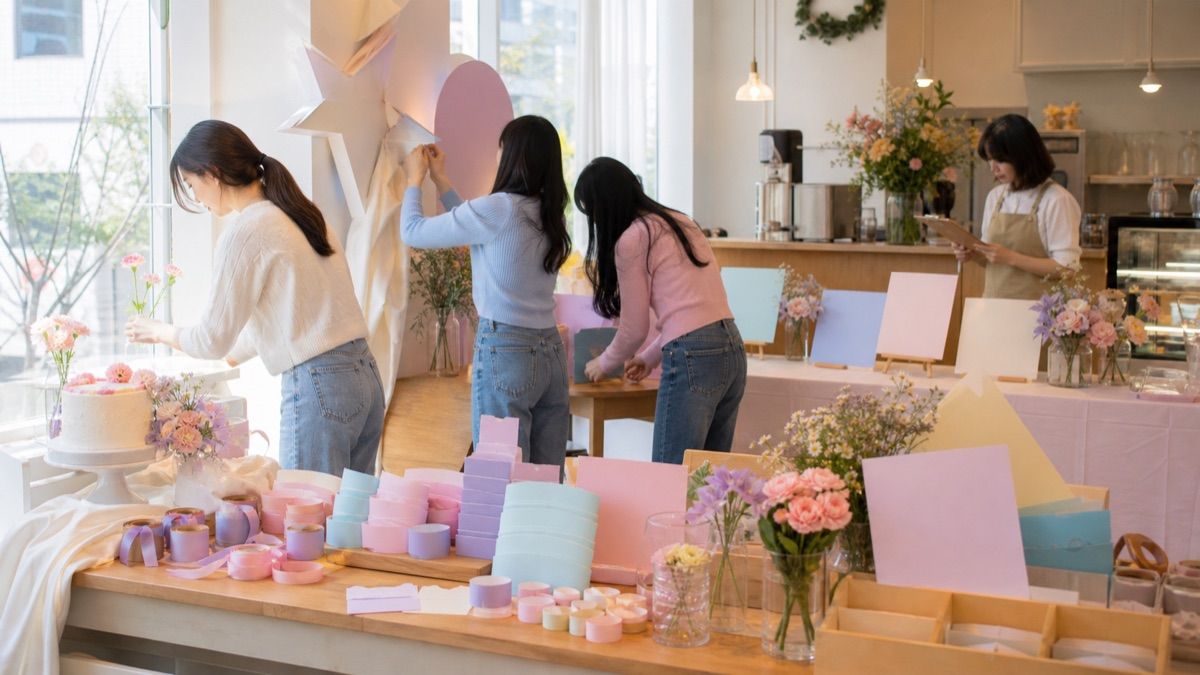
Fans temporarily transform cafés, galleries, studios, and party rooms into celebrations for an idol’s birthday or debut anniversary. Visitors receive cup sleeves or photocards, take photographs, meet other fans, and move between several events in the same neighborhood.
The format looks simple. The budget is not. Rental terms, drink commitments, décor, printing, staffing, shipping, and queue management can matter more than the headline venue price.
What birthday café rental prices look like in 2026
Public listings on Korean space-rental platforms show a wide range of starting prices. They are not directly comparable: some are hourly, some are packages, and some may be promotional base prices.
Examples observed on SpaceCloud listings in June 2026 included:
| Space type | Public starting price | Capacity signal | Important caveat |
|---|---|---|---|
| Small Hongdae/Hapjeong group room with screen | ₩5,000 per hour | Up to 30 | Promotional or off-peak base pricing may apply |
| Large Hongdae room | ₩49,000 per package | Up to 70 | Confirm package duration and equipment |
| Gangnam café private rental | ₩66,000 per hour | Up to 40 | Food, drinks, setup, and cleaning may be separate |
| Sangsu/Hongdae café or pop-up space | ₩100,000 per hour | Up to 50 | A full-day event can multiply the base fee quickly |
| Hongdae rooftop party venue | ₩150,000 per package | Up to 50 | Confirm whether the package fits public visitor flow |
| Hongdae pop-up or gallery package | ₩300,000 per package | Large-format listing | Confirm duration, staffing, utilities, and commercial-event rules |
These examples indicate a venue-only spectrum from low-cost community rooms to dedicated café or pop-up rentals. They should not be read as a universal market average. Dates, weekends, neighborhood, capacity, street visibility, exclusivity, and beverage operations change the quote.
Why the venue fee is not the event budget
A birthday café usually combines at least six cost layers:
A low rental fee can become expensive if the venue requires a large drink guarantee. A higher rental fee may be better value if it includes furniture, projector use, setup time, cleaning, and staff support.
A practical planning range
Because event terms vary, organisers should build a scenario budget rather than depend on one average.
| Planning tier | Suitable format | Main cost risk |
|---|---|---|
| Community-scale | Reservation room, studio, or partner café with simple benefits | Limited visibility and visitor throughput |
| Standard birthday café | Dedicated café period, printed benefits, one photo zone | Beverage minimums, reprints, and peak-hour queues |
| Destination event | Multi-day pop-up, gallery, elaborate décor, international visitors | Production, staffing, licensing, storage, and crowd operations |
The right tier depends on the objective. If the goal is community gathering, a smaller controlled space may outperform a visually ambitious venue. If the goal is destination traffic from international fans, accessibility, operating hours, luggage, translation, and queue design become essential.
Hongdae is a network, not just a neighborhood
Recent reporting described Hongdae as Seoul’s most prominent birthday-café hub, with roughly 50 venues regularly hosting events. The concentration creates a network effect. Fans can visit several events in one trip, exchange information, and discover celebrations they did not originally plan to attend.
That density increases competition for attention. A venue one block from a busy route can outperform a more beautiful space that is difficult to find. Street-level visibility, proximity to transit, and a clear map may produce more value than expensive decoration.
Other neighborhoods can still work. Seongsu offers pop-up credibility and design-focused spaces. Gangnam can suit premium or appointment-led events. Areas near agency buildings or concert venues may capture event-day traffic. The neighborhood should match the fan journey, not simply the organiser’s preference.
The trend is moving beyond birthdays
The birthday-café format has expanded into debut anniversaries, drama celebrations, actor support, sports fandom, character events, and album-era gatherings. The core mechanic is portable: temporarily turn an ordinary venue into a shared identity space.
Three trends are likely to shape the format:
More professional visual production
Fans have learned pop-up design from brands and entertainment companies. Even small events now use coherent color systems, photo zones, projection, custom packaging, and timed benefits.
More international visitors
Event maps and social posts travel globally. Organisers should assume some visitors may need English guidance, transit directions, payment clarity, and rules about collecting benefits.
More pressure around rights and sustainability
Artist photographs, logos, music, and merchandise can create rights questions. Excessive disposable benefits also create waste. Future-ready events should use authorised or fan-created materials carefully, publish clear rules, and choose benefits people want to keep.
A successful birthday café is not measured by how much decoration it contains. It is measured by whether fans can find it, understand it, move through it, and leave with a meaningful memory.
Questions to ask before paying a deposit
- Is the rental exclusive, and what hours include setup and breakdown?
- Is the event allowed to receive walk-in public traffic?
- Are drinks mandatory, and who keeps the beverage revenue?
- What are the electricity, projection, sound, and wall-attachment rules?
- Is there storage for printed benefits and delivery boxes?
- Can queues form safely without blocking neighbors?
- Are toilets, elevators, and accessibility adequate?
- What is the cancellation and refund policy?
- Does the venue require proof of image or music rights?
- Who handles waste, cleaning, and leftover materials?
Final principle
Birthday cafés work because fans create a temporary place where online identity becomes physical community. The strongest events protect that social purpose.
Start with the visitor journey, then choose the space, benefits, production, and budget that support it. A clear, welcoming, well-run event can feel more valuable than a costly installation with poor access and confusing rules.
Related reading: K-pop event case studies · Entertainment infrastructure
Sources
- SpaceCloud — Hongdae host listings and package examples
- SpaceCloud — Sangsu café and pop-up rental example
- SpaceCloud — Gangnam café private-rental example
- SpaceCloud — Hongdae rooftop package examples
- CNN Style report syndicated by KESQ — Inside Seoul’s birthday cafés
Turn a temporary fan space into a reliable community experience.
Talk to WENOTIFT about fan journeys, pop-ups, venue operations, and culturally credible participation formats.