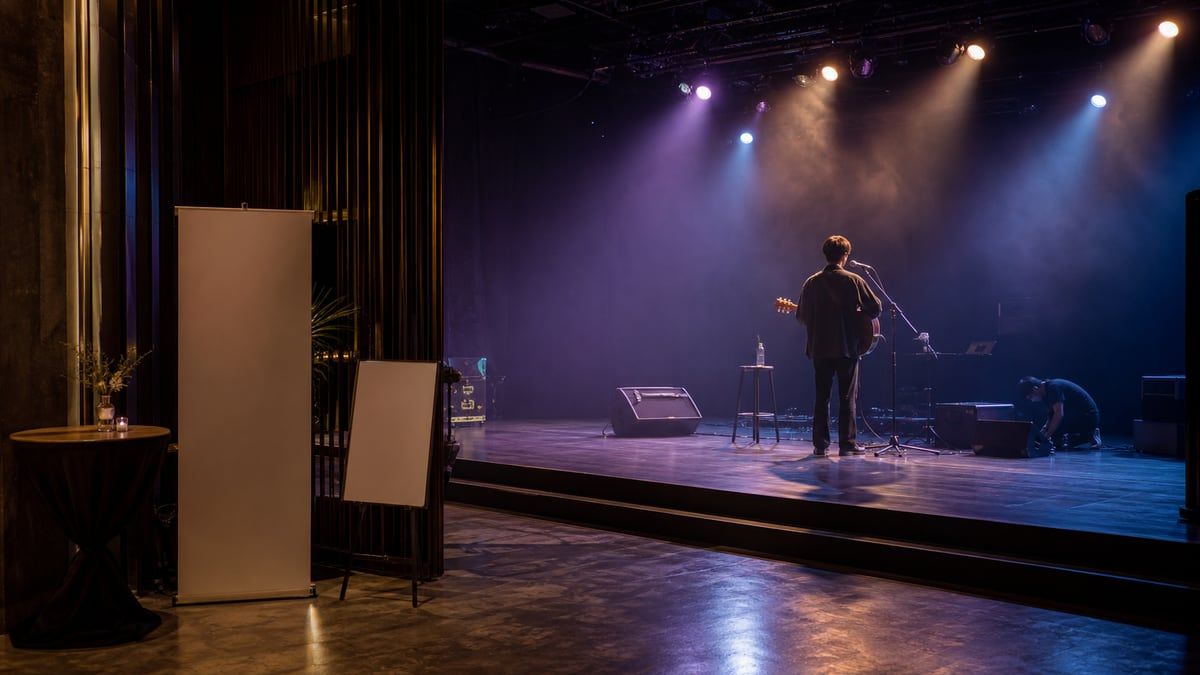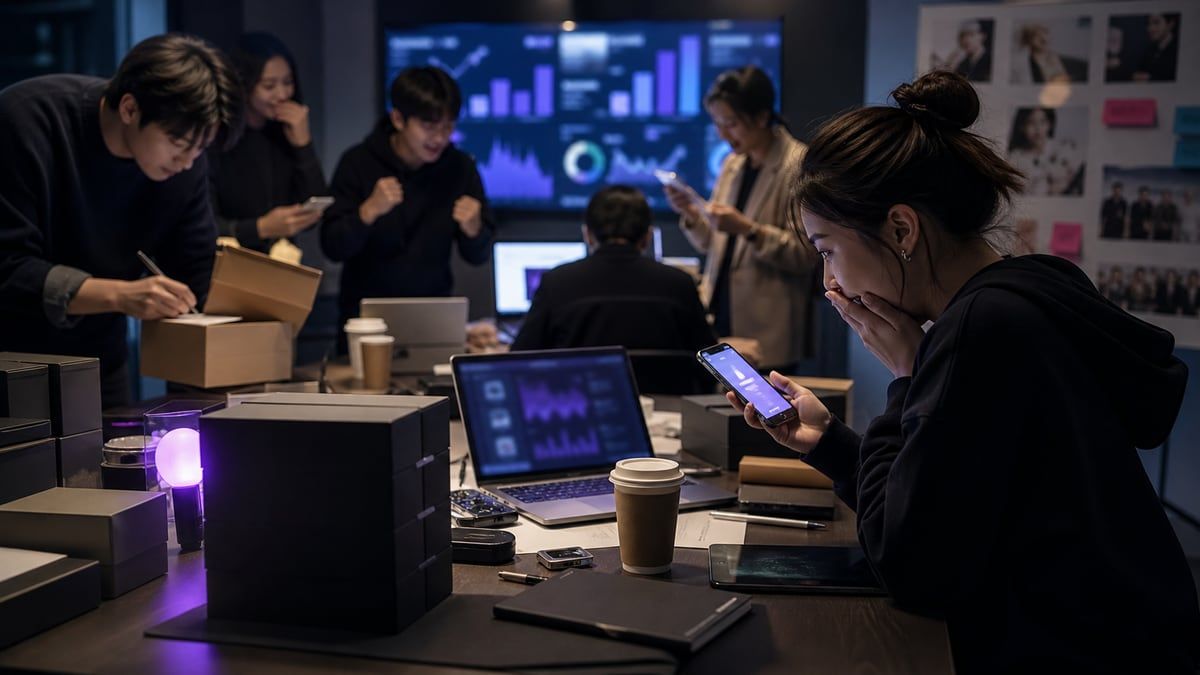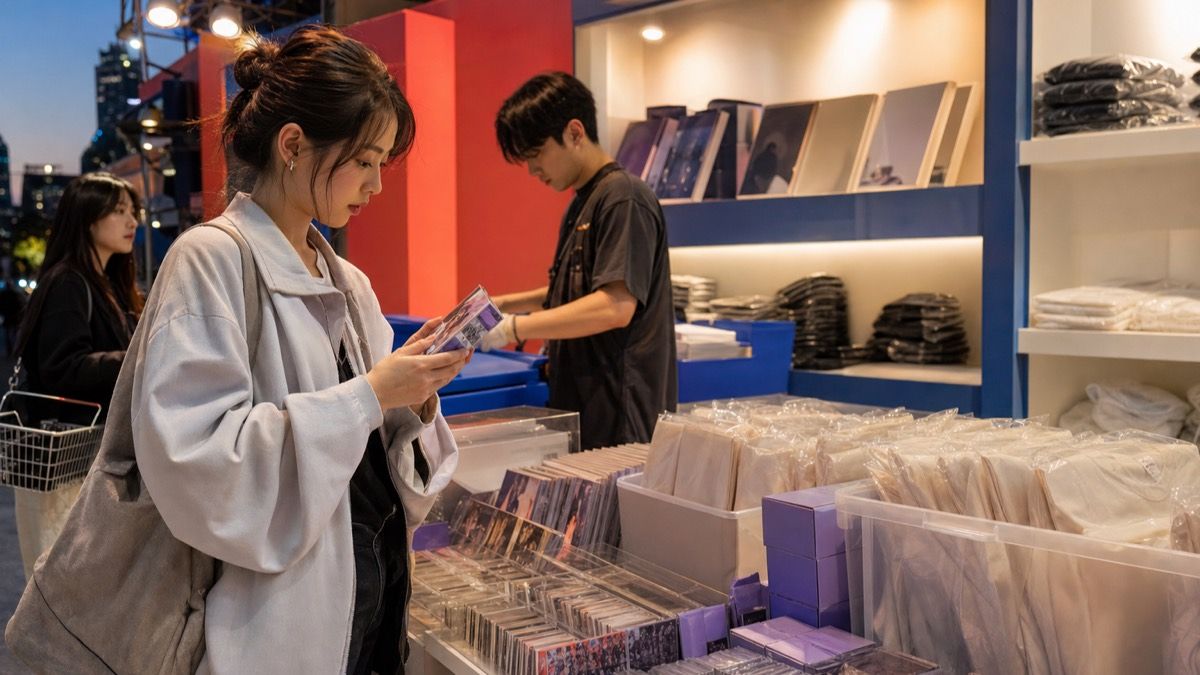
Plan a K-pop pop-up as a complete fan-retail system, with practical guidance on rights, queues, stock, service, consent and measurement.
A K-pop pop-up store is a temporary, officially authorised retail experience built around an artist, release, tour, character, or collaboration. It combines licensed merchandise with time-limited access, physical participation, content, pickup, or community value.
The difficult part is not making the room photogenic. It is making rights, reservation, queue, stock, payment, staff, accessibility, fulfilment, data, and fan communication work together for a short operating window.
For labels, artist teams, retailers, landlords, event partners, and brands, the right question is not, “What should the photo zone look like?” It is, “What job should this temporary store do for the fan and the business, and what operating evidence will tell us whether it worked?”
What official K-pop pop-up guides reveal about the real job
Official visit notices are useful because they show the operating layer that campaign images often hide.
For the 2025 BTS pop-up in Metro Manila, HYBE's official visit guide specified operating dates and hours, queue behaviour, limited inventory, safety rules, photography conditions, and the possibility of restricted entry. The document is not a performance report. It is evidence that access, stock, safety, and communication are core parts of the product.
For a 2025 TOMORROW X TOGETHER pop-up in Seoul, Weverse Shop's official pickup guide connected online album purchase to on-site QR-code collection and required a separate visit reservation. That design divided commerce, identity, and fulfilment across systems instead of forcing every transaction through one physical till.
Another official HYBE guide, for a TWS pop-up at The Hyundai Seoul, used an on-site digital queue with a push message or email when a visitor's turn arrived. A LE SSERAFIM pop-up in Singapore instead used first-come, first-served entry. Neither method is universally better. The correct access model depends on capacity, expected demand, venue rules, local behaviour, technology, and the promise made to fans.
These are operating examples, not WENOTIFT clients, sales benchmarks, or recommendations to copy without local testing.
A pop-up can do several jobs — but needs one priority
Temporary fan retail can support a release, convert tour demand, expand merchandise access, test a city, create partner footfall, fulfil pre-orders, collect product learning, or give a fandom a physical gathering point.
Trying to maximise every job at once creates conflict. High-throughput merchandise pickup needs a fast, legible flow. A slow immersive exhibition needs dwell time. A launch-night content event needs production control. A community gathering needs space that does not force every participant to purchase.
The room can carry several functions, but the operating plan needs one primary job, one capacity model, and one promise the fan can understand before arrival.
The business model follows that choice. A store optimised for revenue will plan assortment, stock depth, checkout and replenishment differently from a brand experience optimised for trial or an exhibition optimised for participation.
The seven-layer pop-up operating system
The layers are dependent. A beautiful product wall fails if the licence does not cover the market. A fair purchase limit fails if staff cannot enforce it consistently. A reservation system fails if the store admits more people than the experience can serve.
Choose the access and commerce format deliberately
| Format | Best suited to | Fan benefit | Operating risk | Evidence to retain |
|---|---|---|---|---|
| Timed reservation | High expected demand or slow immersive journeys | Predictable entry and shorter physical wait | No-shows, resale, identity friction and unused capacity | Booking, show rate, wait, dwell, completion and support cases |
| Virtual queue | Variable demand with nearby dwell options | Fans can leave the physical line and return when called | Device, message delivery, connectivity and late return | Registrations, call-to-entry time, abandonment and peak load |
| Walk-in queue | Lower uncertainty, simple retail or open mall formats | Low planning friction and spontaneous discovery | Long waits, crowd spillover, weather and unclear cut-offs | Queue length, wait, entry rate, abandonment and incidents |
| Online purchase with pickup | Assortment certainty and faster fulfilment | Secured product and shorter transaction | Identity checks, split systems, uncollected orders and pickup congestion | Orders, pickup rate, service time, exceptions and refunds |
| Hybrid | Multiple fan needs and demand levels | Choice between planning and spontaneity | Confusing rules, inventory allocation and staff complexity | Performance by path, cross-path failure and satisfaction |
Publish the rules before demand peaks. State whether a reservation guarantees entry, product, or only a time window. State purchase limits, accepted payment, identity requirements, companion rules, accessibility support, photography policy, and what happens if stock sells out.
How to plan a K-pop pop-up store
1. Write the operating brief before the creative brief
Name the primary job, target fan, market, operating dates, daily hours, venue capacity, expected demand range, assortment, revenue or participation goal, rights owner, partners, data boundary, and definition of success.
Then write the experience concept. This order prevents a visual idea from committing the team to a footprint, prop, music use, or content right it cannot operate.
2. Build the rights and approvals register
List every use of the artist name, likeness, photography, artwork, character, music, choreography, video, logo, product design, packaging, social content, paid media, and visitor capture. Record the rights holder, territory, channel, term, approval owner, file specification, and lead time.
WIPO's small-business copyright guidance notes that merchandising requires prior authorisation for the relevant rights, which may include copyright, design, trademark, and personality interests. Local law and the actual agreement determine the required permissions; this article is an operating guide, not legal advice.
Do not assume a merchandise licence includes event promotion, artist footage, soundtrack use, visitor photography, or paid advertising. Clear each use.
3. Select the site by fan journey
Evaluate transport, weather protection, queue spillover, accessibility, loading, storage, power, connectivity, toilets, security, closing-time travel, and neighbouring tenants. Footfall is useful only if the right visitors can enter and the operation can serve them.
A mall atrium offers discovery and established facilities but may constrain music, queue, build hours and crowd control. A standalone venue offers control but requires more demand generation, security and service infrastructure.
4. Model capacity and service time
Capacity is not only the number of people legally inside. It is the number who can complete the promised journey safely and comfortably.
Estimate arrival by time, check-in duration, product-browsing time, participation time, checkout throughput, pickup time, exception rate, and exit flow. Run low, expected, and high-demand scenarios. Define the cut-off at which the team pauses entry or changes the journey.
5. Prototype the complete path
Walk through discovery, eligibility, queue, check-in, orientation, product selection, participation, payment, packing, pickup, complaint, exit, and post-visit fulfilment. Test with a phone in one hand and a bag in the other. Test language, contrast, sound, seating, reach height, and step-free access.
Staff should be able to explain price, limit, stock status, benefit, data request, return rule and escalation in plain language. If the answer changes by staff member, the operating document is not ready.
6. Rehearse failure, not only opening
Test payment or internet outage, delayed stock, damaged product, queue overflow, reservation failure, missing QR code, counterfeit ticket or reservation, weather, crowd incident, sold-out hero item, staff absence, and content approval delay.
The fallback must preserve the fan promise. If an interactive element fails, visitors should still receive clear information and a worthwhile store journey.
Merchandise and inventory strategy
Assortment should express the concept while remaining operable. Separate hero products, accessible entry-price items, apparel with size complexity, randomised collectibles, market-specific items, and replenishable basics.
For each product, define delivered quantity, sellable quantity, daily allocation, purchase limit, storage location, replenishment trigger, damaged-goods handling, and sold-out message. Random products and purchase benefits need especially clear probability, eligibility, receipt, and limit rules.
Scarcity should be truthful. “Limited” can mean a fixed production run, a daily allocation, a market allocation, or availability only during the event. Say which. Do not manufacture urgency through unclear stock communication.
Online-to-offline pickup can reduce till time and improve product certainty, as the official Weverse example shows. It also creates a fulfilment obligation. Plan identity checks, proxy pickup, uncollected orders, refunds, damaged goods, and separate queues for purchases and exceptions.
Queue design is part of the fan experience
Fans judge the store before they enter. The queue needs shelter where possible, step-free access, toilets, seating or priority support, water and safety planning, live wait information, staff visibility, and a clear cut-off.
Reservation and virtual queue tools can distribute waiting, but they do not remove capacity. The team still needs a fair late policy, device-free or low-connectivity fallback, companion handling, multilingual support, and a way to resolve failed notifications.
Do not use visible disorder as proof of demand. A long queue can indicate popularity, poor throughput, unclear access, or all three. Measure why people waited and how many abandoned the experience.
Data, consent and post-visit continuity
A reservation collects operational data for entry. A purchase collects transaction data. A photo delivery may require contact information. Ongoing marketing is a separate purpose.
Explain what is collected, why, who controls it, how long it is retained, and which choices are optional. Gather the minimum needed. Do not make a visitor join a marketing list to receive an essential access update or a product they already bought.
The pop-up can connect to an approved fan platform, shop, loyalty programme or brand CRM, but the handoff should be voluntary and useful. Physical footfall is not permission to create an owned audience.
How should a K-pop pop-up be measured?
Use measures that preserve the operating chain:
- Demand: reservations, queue registrations, walk-ups, origin and peak time.
- Access: show rate, wait, abandonment, denied entry, accessibility requests and support cases.
- Experience: dwell, participation completion, staff quality, satisfaction and incidents.
- Commerce: product availability, conversion, units, basket, payment success, refunds and uncollected orders.
- Inventory: sell-through by item and time, stockouts, replenishment, damage and allocation fairness.
- Rights and partner delivery: approved assets, placements, content, landlord obligations and evidence.
- Continuity: fulfilled benefits, consented registrations, repeat purchase or future-event intent.
- Learning: which format, product, time, message and operating choice should change next.
Footfall is not sales. Sales are not incrementality. Social posts are not satisfaction. A sold-out product can indicate demand, under-allocation, or both. Report the chain and its limits.
Common K-pop pop-up mistakes
Designing the photo zone first
A shareable environment can support discovery, but it should not consume the space needed for accessible circulation, product handling, checkout, pickup or queue relief.
Hiding sold-out information
Fans will tolerate scarcity more readily than uncertainty. Update availability at the queue entrance and official channels before visitors spend time and money travelling.
Treating every visitor as a buyer
Some fans come for community, discovery or a low-cost memory. Give non-buyers a legitimate path without obstructing customers who need service.
Splitting systems without an exception desk
Reservations, ecommerce, payment, pickup and membership may live in different tools. Assign one place and one owner for the cases that fall between them.
Over-collecting data
More form fields reduce throughput and trust. Collect only what is necessary for access, fulfilment, safety, a stated research purpose, or a separately chosen relationship.
An illustrative pop-up model
Consider a ten-day official release pop-up in a regional shopping centre. The primary job is to give local fans reliable access to merchandise and a physical release experience. Timed reservations cover the opening weekend; a virtual queue handles weekday peaks; a small walk-in allocation preserves discovery.
Fans can browse the full assortment, scan a product card for approved information, purchase at staffed tills, or collect selected items ordered online. The design includes one optional participation moment, a quiet support point, a visible availability board, and an exception desk outside the main checkout flow.
The team reports access, service, inventory, commerce, experience, and consented continuity separately. This model is illustrative, not a sales or attendance benchmark. Its value is that each creative feature has an operating owner and each commercial measure has a clear definition.
The strategic takeaway
A K-pop pop-up store is temporary, but the trust it creates or damages can last. The best format makes official access clear, treats waiting as part of the product, communicates scarcity honestly, fulfils purchases reliably, and gives fans a reason to remember more than the backdrop.
Start with purpose, rights, capacity, and service. Then let the creative system make those choices culturally distinctive. That is how temporary retail becomes a useful fan experience and reusable market intelligence.
Related reading: K-pop fan community platforms · From fandom to checkout · Concert sponsorship activation · Entertainment infrastructure
Sources
- Weverse — BTS Pop-Up: Space of BTS in Metro Manila visit guide
- Weverse Shop — TXT pop-up official album pickup guide
- Weverse — TWS “play hard” pop-up visit guide
- Weverse — LE SSERAFIM 2025 pop-up in Singapore visitor information
- WIPO — Creative Expression: An Introduction to Copyright and Related Rights for SMEs
Build a pop-up fans can enter, trust, buy from, and remember.
Talk to WENOTIFT about rights, market fit, retail format, fan access, inventory, operations, partner design, and measurement.