KCON Japan, KCON LA, and KCON Germany show how successful K-pop events serve international fans through participation, local culture, broadcast reach, and operational clarity.
An international K-pop event is not successful because the lineup is famous. The lineup creates demand; the operating system determines whether fans trust the experience.
International visitors face more friction than local audiences: flights, unfamiliar transport, language, payment, ticket rules, luggage, mobile connectivity, venue policies, and uncertainty about where to go. Events that reduce that friction create more time for participation, commerce, and cultural discovery.
Three KCON examples reveal a repeatable pattern. The strongest formats combine performance with choice, proximity, local relevance, digital reach, and a wider K-culture ecosystem.
Case study 1: KCON Japan 2026 — breadth without losing fan choice
CJ ENM reported that KCON Japan 2026 drew 120,000 attendees across three days at Makuhari Messe, with 33 acts and expanded experiences across music, beauty, food, screen content, and lifestyle.
The strategic lesson is not simply “make the event larger.” It is to give different fan types several valid journeys.
A concert-only visitor may prioritize the main stage. A discovery-oriented fan may spend more time with emerging artists. A beauty or food visitor may enter through K-culture rather than one group. Screen-content zones can keep companions engaged even when their artist preferences differ.
This breadth increases dwell time and reduces the risk that the whole experience depends on one performance. It also gives sponsors and smaller companies a clearer role than passive logo exposure.
What operators can copy
- Build programming around fan choices, not a single compulsory route.
- Use several stage and experience scales for major and emerging talent.
- Connect music to categories fans already consume.
- Publish schedules and capacity rules early enough for international trip planning.
Case study 2: KCON LA 2024–2025 — design for both the room and the world
CJ ENM said KCON LA 2024 reached more than 5.9 million fans from over 170 countries across the physical event and digital platforms. The event also received a U.S. national primetime broadcast. In 2025, KCON LA added a livestream partnership with Amazon Music across Prime Video and Twitch, while the City of Los Angeles designated August 1 as KCON Day.
This shows two forms of scale working together.
The physical festival creates scarcity, proximity, fan rituals, and city-level economic activity. The broadcast layer turns the event into global discovery and gives remote fans a legitimate way to participate. Neither replaces the other.
For international fans, digital reach can also function before and after the event. Livestream clips, artist interviews, venue explainers, and fan-created media help people understand whether the trip is worth making. Afterward, the same content extends the cultural life of the event.
What operators can copy
- Treat broadcast rights and on-site rights as one experience architecture.
- Give remote viewers content designed for them, not only a distant camera feed.
- Work with the city, tourism, transport, and local businesses when the event attracts travelers.
- Build public recognition through sustained local contribution, not a one-weekend marketing claim.
Case study 3: KCON Germany 2024 — localise the platform, not the fandom
KCON Germany 2024 brought the festival model to Messe Frankfurt for the first time. The importance of a first-market event is learning: demand composition, local fan customs, travel patterns, artist mix, venue flow, and sponsor relevance.
The weak approach is to copy an Asian or American format without adaptation. The stronger approach preserves the core promise—fan and artist connection—while localising operations and category partnerships.
Europe presents a cross-border audience. Fans may arrive by rail or low-cost air from several countries and use different languages and payment habits. The event therefore needs clear multilingual information, transparent ticket categories, realistic entry times, luggage guidance, and transport planning.
What operators can copy
- Define the regional catchment area before selecting venue capacity.
- Translate operational information, not just promotional slogans.
- Use local creators, dance communities, retailers, and cultural partners as distribution infrastructure.
- Treat the first edition as a learning system with measurable hypotheses.
The shared success pattern
| System | Fan need | Event response |
|---|---|---|
| Programming | Choice and discovery | Multiple stages, formats, and category zones |
| Access | Confidence before travel | Clear ticketing, schedules, entry, and venue information |
| Participation | A role beyond watching | Meet-and-greets, dance, creator, fan, and product experiences |
| Localisation | A trip that works in the destination | Language, payment, transport, partners, and city integration |
| Digital reach | Inclusion beyond venue capacity | Livestreams, broadcast, clips, and remote programming |
| Commerce | Relevant value exchange | Beauty, food, fashion, collectibles, and local retail |
| Measurement | Evidence for the next edition | Attendance, dwell, participation, conversion, satisfaction, and return intent |
What international fans need before arrival
The fan experience begins when tickets are announced. A decision-ready information page should answer:
Every unanswered question becomes risk. Fans compensate by relying on unofficial translations and social posts, which can spread confusion quickly.
International-fan hospitality is not a VIP extra. It is the information and operating layer that makes the standard ticket usable.
Design the event as a connected journey
Successful events coordinate five periods:
Before sale
Explain the format, ticket logic, travel window, and expected costs. Make the decision understandable before urgency begins.
Between sale and arrival
Release schedules, maps, rules, local guides, and support channels in stages. Help fans plan without forcing them to monitor every social account.
At the venue
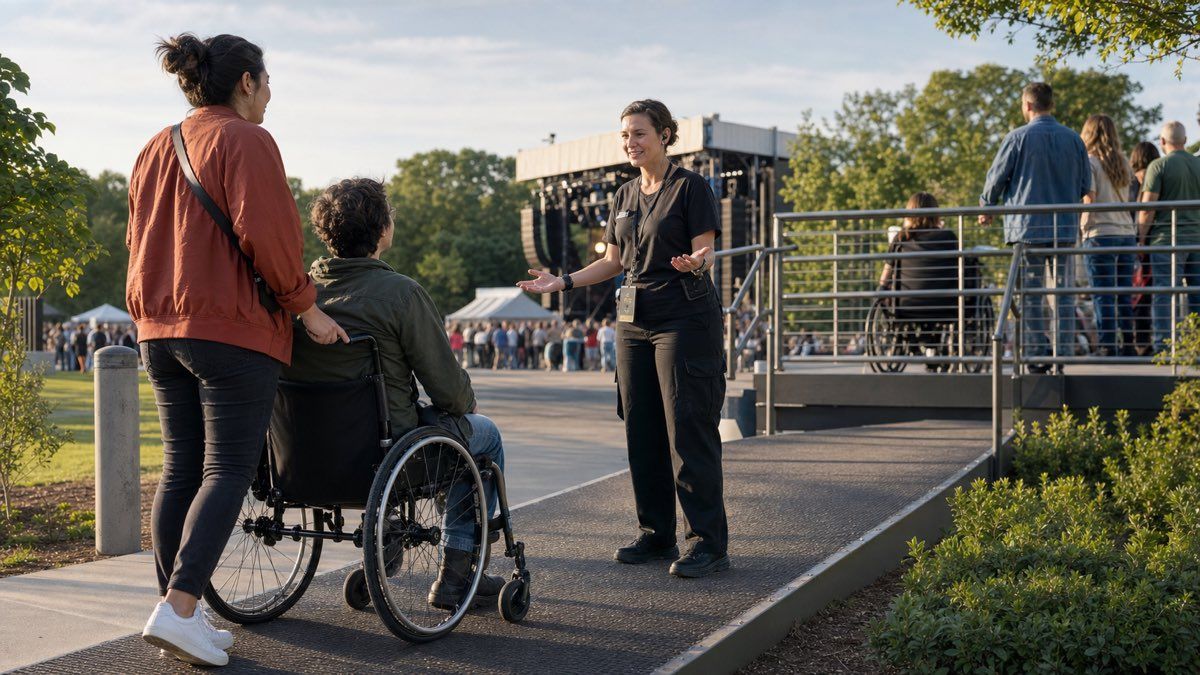
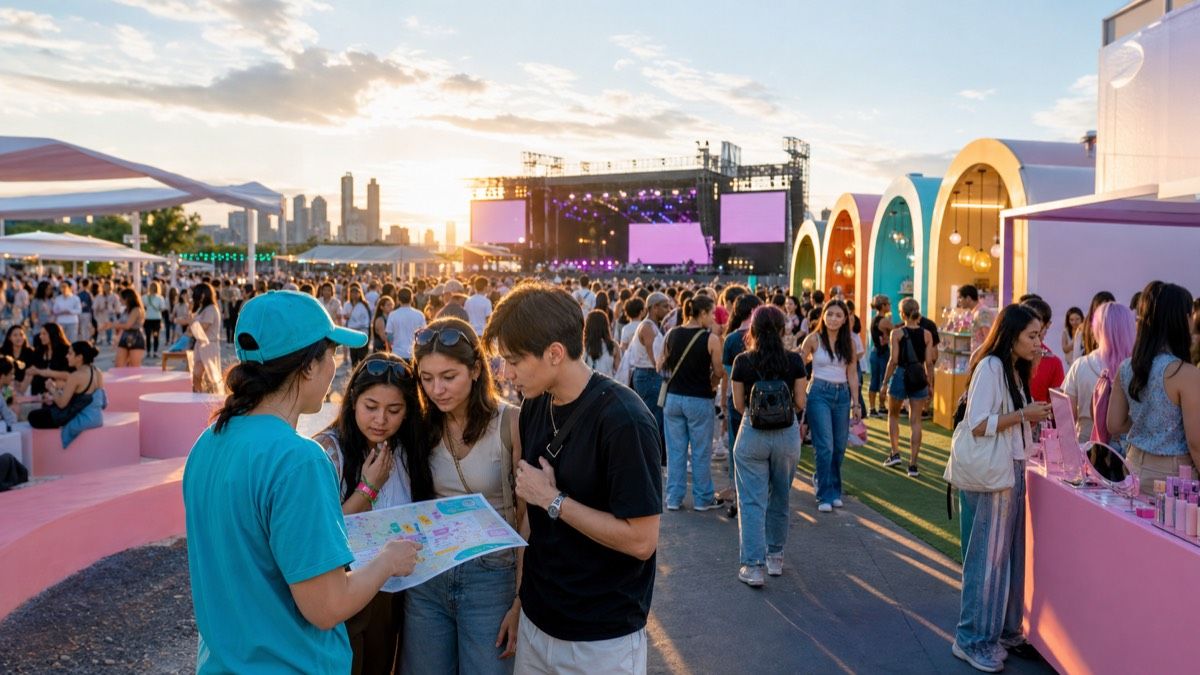
Use visible multilingual wayfinding, realistic queue capacity, water and rest areas, trained staff, reliable connectivity, and clear changes when schedules move.
Around the city
Connect pop-ups, retail, tourism, food, transport, and fan projects without pretending every activity is official. Give visitors a safe and navigable ecosystem.
After the event
Deliver content, surveys, issue resolution, and next-event communication while memory is fresh. Measure return intent and recommendation, not only attendance.
Final principle
The most successful international K-pop events do not ask fans to overcome complexity as proof of devotion. They convert devotion into a well-designed experience.
Lineup, production, and spectacle matter. But trust is built through transparent access, meaningful participation, cultural range, local operations, and evidence that the organiser learned from the last edition.
Related reading: Thailand entertainment 2026 · Entertainment infrastructure
Sources
- CJ ENM — KCON Japan 2026 draws 120,000 attendees
- CJ ENM — KCON LA 2025
- CJ ENM — KCON 2025 dates and KCON LA 2024 reach
- CJ ENM — KCON Germany 2024
- CJ ENM — KCON Japan 2024 festival model
Design the full journey, not only the stage.
Talk to WENOTIFT about international-fan access, participation, city integration, commerce, and event measurement.