Weverse and bubble are not interchangeable social channels. This guide explains how K-pop fan community platforms structure community, intimacy, commerce, and consent — and how brands should decide where they belong.
K-pop fan community platforms are specialised digital services where artists and fans maintain an ongoing relationship through community posts, direct-feeling messages, live content, memberships, merchandise, and ticket access. Unlike public social networks, they are designed around an artist’s fandom rather than a general-interest feed.
For brands, the important point is not that Weverse, bubble, and an owned database all reach fans. It is that they create different relationships. Weverse behaves like an integrated fandom operating layer. bubble sells recurring intimacy through private-feeling messaging. An artist, promoter, or brand’s permissioned CRM creates continuity it can govern directly.
That distinction changes the brief. A brand should not ask, “Which platform is biggest?” It should ask, “What relationship are we trying to earn, who controls permission, and what value will the fan receive?”
Why fan community platforms matter now
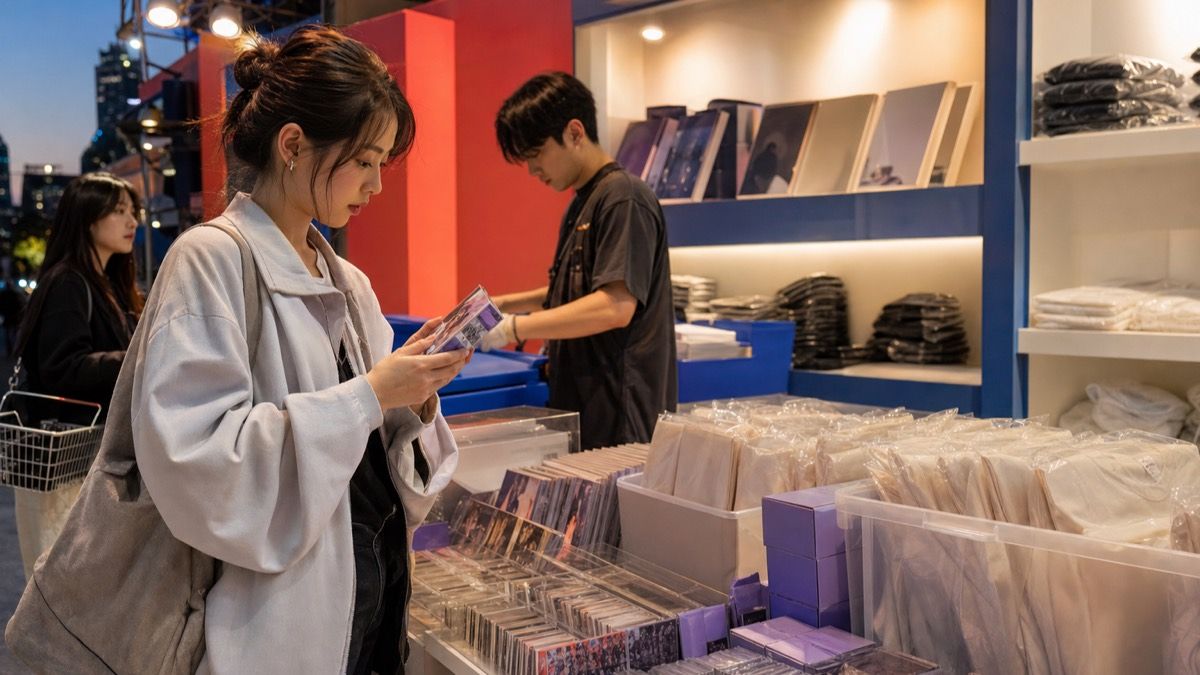
Public social media remains powerful for discovery, but its incentives are built around distribution. Fan platforms are built around return behaviour: checking an artist notice, joining a live, reading a message, using a membership benefit, buying merchandise, or preparing for an on-sale.
That makes them commercially important without making them ordinary advertising inventory. Their value comes from trust and context. The artist or label sets the relationship; the platform structures it; fans decide whether to participate. A brand enters only through approved rights and a credible contribution.
The scale is already material. An official Weverse service overview reported 11.6 million monthly active users in Q3 2025, with around 90% living outside Korea and users from 245 regions. DearU’s 2Q25 investor presentation reported average paid subscriptions rising from 1.88 million in Q1 2025 to 2.17 million in Q2 2025. These are company-reported platform measures, not counts of fans available to any one campaign.
Weverse: the integrated fandom operating layer
HYBE describes Weverse as an all-in-one platform combining real-time artist communication, concert streaming, content, shopping, payments, direct messaging, and listening parties. That integration is the strategic feature: one community can move from attention to membership, content, live participation, ticketing, and merchandise without rebuilding the relationship on a different service every time.
The official Weverse service overview says the platform offers more than 30 services. It names community, Weverse LIVE, Weverse Shop, Listening Party, DM, online streaming, and other tools that artists and labels can adopt according to their operating model. This makes Weverse less like a single channel and more like modular infrastructure for fandom operations.
For a brand, the practical opportunities can include an approved membership benefit, a ticket-access mechanic, sponsored content, a commerce bundle, a live-stream integration, or an offline-to-platform journey. The exact inventory depends on the artist, label, event, territory, and contract. There is no universal “post into the fandom” right.
Weverse’s own community guidelines underline that boundary. They prohibit advertising, promotion, spam, unapproved commercial activity, and attempts to push users toward unverified links. A brand activation therefore needs to be official, transparent, and useful — not disguised as fan behaviour.
bubble: paid intimacy and message cadence
DearU’s official bubble guide describes the service as personalised communication in which subscribed fans receive messages from their chosen artist in a private chat-style space. That framing is central. bubble is not primarily a public community feed; it is a subscription relationship built around frequency, voice, and perceived proximity.
The commercial unit is recurring access. Fans subscribe to an artist, set a nickname, and receive artist messages in an interface designed to feel personal. The artist’s message is distributed at scale, but the product experience is intimate.
For brands, that makes relevance more important than reach. A clumsy sales message can feel like an interruption inside a paid relationship. A legitimate integration would normally require explicit artist and agency participation, a natural reason for the artist to speak, and a benefit that respects the tone of the service.
Suitable uses might include an artist-led reveal connected to an existing partnership, a benefit for subscribers, or a narrative moment that continues across approved channels. It is not a substitute for display advertising, and the audience should not be treated as a transferable contact list.
Owned CRM: the continuity layer platforms cannot replace
A platform relationship and an owned customer relationship are not the same thing. The platform controls the account environment, feature set, policies, and much of the underlying data. The brand or promoter may receive campaign reporting and approved operational data, but it should not assume it owns the identities or contact permissions of the broader community.
Owned CRM begins when a person knowingly gives permission for a defined purpose: requesting event updates, joining a loyalty programme, registering for a benefit, entering a draw, or purchasing through a first-party checkout. The consent, privacy notice, retention period, and communication choices need to be clear.
This creates a healthy division of labour:
- Fan platforms maintain artist-centred community, intimacy, and commerce.
- Public channels earn discovery and cultural reach.
- Owned systems manage consented service, loyalty, and customer continuity.
- Measurement connects the layers without pretending they are one database.
The goal is not to extract people from a fan platform. It is to offer an optional, valuable next step and let the fan choose.
Weverse, bubble and owned CRM compared
| Layer | Weverse | bubble | Owned CRM |
|---|---|---|---|
| Primary job | Integrated community, content, live and commerce | Paid artist–fan messaging and intimacy | Permissioned customer continuity |
| Relationship owner | Artist/label within platform rules | Artist/agency within platform rules | The organisation collecting consent |
| Natural fan behaviour | Join, watch, post, buy, access benefits | Subscribe, receive, reply, maintain cadence | Register, purchase, receive service or loyalty communication |
| Brand role | Approved benefit, content, commerce or event integration | Carefully approved artist-led moment or subscriber benefit | Transparent service, loyalty, support and relevant offers |
| Data reality | Platform and rights-holder reporting; limited to agreed scope | Subscription/platform reporting; limited to agreed scope | First-party data only for the consented purpose |
| Main risk | Treating community as ad inventory | Interrupting a paid feeling of closeness | Collecting too much data or communicating beyond consent |
This table is a strategic comparison, not a claim that every feature or commercial right is available in every market. Platform terms, artist agreements, and privacy law determine the actual scope.
The five-layer relationship map
The mistake is trying to make one platform do every job. A campaign can span all five layers, but each step should have a distinct purpose, owner, and permission.
A practical platform-planning workflow
1. Name the relationship job
Choose one primary job: reach new fans, reward members, drive an on-sale, deepen participation, sell a product, or build consented continuity. “Engagement” is too vague to guide rights or creative.
2. Confirm the rights holder
Map who can approve the artist’s name, image, voice, content, community placement, ticket benefit, product, and data flow. The agency, label, promoter, platform, venue, and sponsor may control different pieces.
3. Define the fan value exchange
A brand belongs when it gives something useful: earlier access, better information, a meaningful collectible, an improved event service, exclusive content, or a fair commercial offer. Logo exposure is value for the sponsor, not necessarily for the fan.
4. Design the path between layers
A platform post might lead to an approved stream, an event notice, or a shop bundle. A venue experience might invite an optional registration for a digital keepsake. Every handoff should be explicit and mobile-friendly.
5. Set the measurement boundary
Separate what the platform reports from what the brand observes directly. Platform reach, views, participation, purchases, registrations, and repeat behaviour are different measures with different owners.
6. Protect community trust
Review language, frequency, moderation, accessibility, privacy, and the artist’s normal tone. Give fans a clear way to decline optional data collection. Never imitate organic fan accounts or obscure the commercial relationship.
What should brands measure?
Use a layered scorecard rather than one engagement rate.
- Discovery: qualified reach, video completion, search lift, and traffic quality.
- Community: participation rate, repeat visits, content saves, and sentiment themes within the reporting allowed.
- Intimacy: subscriber benefit uptake and retention signals supplied by the rights holder or platform.
- Commerce: ticket or product conversion, average order value, sell-through, and incremental lift where a valid comparison exists.
- Owned continuity: opt-in rate, consent quality, subsequent service use, and retention — never raw list size alone.
Platform scale can create opportunity, but only permission and a useful experience create a legitimate brand relationship.
Common mistakes
The first is treating every fan-platform user as addressable media. The second is importing public-social creative into a high-trust artist environment without changing the tone. The third is confusing platform reporting with owned data. The fourth is collecting registrations without a useful follow-up experience. The fifth is measuring the launch spike and ignoring whether people returned.
The better strategy is quieter and more disciplined: choose the relationship, earn the right to participate, offer a benefit, and measure only what the parties can responsibly observe.
The strategic takeaway
Weverse, bubble, and owned CRM solve different problems. Weverse integrates community, content, live, membership, and commerce. bubble monetises recurring intimacy. Owned CRM supports consented customer continuity. None should be treated as a shortcut into a fandom.
Brands that understand the difference can build a coherent fan journey. Brands that see only distribution risk paying for access while weakening the very trust that made the audience valuable.
Related reading: How K-pop brand partnerships work in 2026 · From fandom to checkout · Group deal or member deal? · Entertainment infrastructure
Sources
- HYBE — Business: Weverse Company
- Weverse Magazine — Changing the Fan Experience With 7 Weverse Services
- Weverse — Community Guidelines, updated March 27, 2025
- DearU — 2Q25 Investor Relations presentation
- DearU — bubble official user guide
- Weverse — Privacy Policy update effective March 12, 2026
Design a fan relationship fans actually want to join.
Talk to WENOTIFT about platform fit, artist and label permissions, community value, commerce paths, consented data, and measurement.