K-pop fandom is becoming more global, participatory, platform-driven, and commercially structured. Seven evidence-led trends shaping fan behavior in 2026.
K-pop fandom in 2026 is not simply larger than it was a year ago. It is more structured.
Fans now move between streaming, community platforms, live events, travel, merchandise, retail, and self-organised projects with very little separation between “online” and “offline” participation. The practical question for brands, promoters, and entertainment companies is no longer whether K-pop has global reach. It is how that reach becomes repeated behavior.
This forecast uses current platform, music-market, ticketing, and event signals to identify seven shifts. These are directional forecasts, not guarantees. Their value is in showing what operators should prepare for now.
The 2026 forecast at a glance
| Trend | What is changing | Commercial implication |
|---|---|---|
| Superfan systems | Engagement is organised into repeatable platform behaviors | Design for retention, not one launch spike |
| Access economy | Membership, presales, live proximity, and participation gain value | Access can outperform generic merchandise |
| Global-local fandom | Global releases create different behaviors by market | Build local conversion paths around global attention |
| Fan-made infrastructure | Birthday cafés, listening parties, cup-sleeve events, and support projects persist | Treat fan organisers as ecosystem participants |
| Event travel | Fans cross cities and borders for limited moments | Connect tickets to travel, hospitality, retail, and city experiences |
| Broader K-culture baskets | Music discovery increasingly links to beauty, food, fashion, and screen content | Partnerships need a commerce ecosystem, not one logo placement |
| Measurement pressure | Large fandom numbers are no longer enough | Prove qualified reach, lift, conversion, and retention |
Trend 1: the superfan becomes a designed journey
Weverse’s 2025 Fandom Trends report analyses activity from 30 million users across a two-year period. The important signal is not only scale. It is the number of behaviors a platform can connect: community participation, live viewing, membership, commerce, artist communication, and fan-led activity.
The 2026 implication is clear. Superfans should not be treated as a static audience segment. They are created through a sequence: discovery, repeated interaction, identity, access, purchase, and contribution.
For brands, this changes campaign architecture. A single sponsored post may generate visibility, but it does not create a reason to return. Stronger partnerships build a participation loop across several moments: reveal, interpretation, fan response, access, commerce, and community recognition.
Trend 2: access becomes the premium product
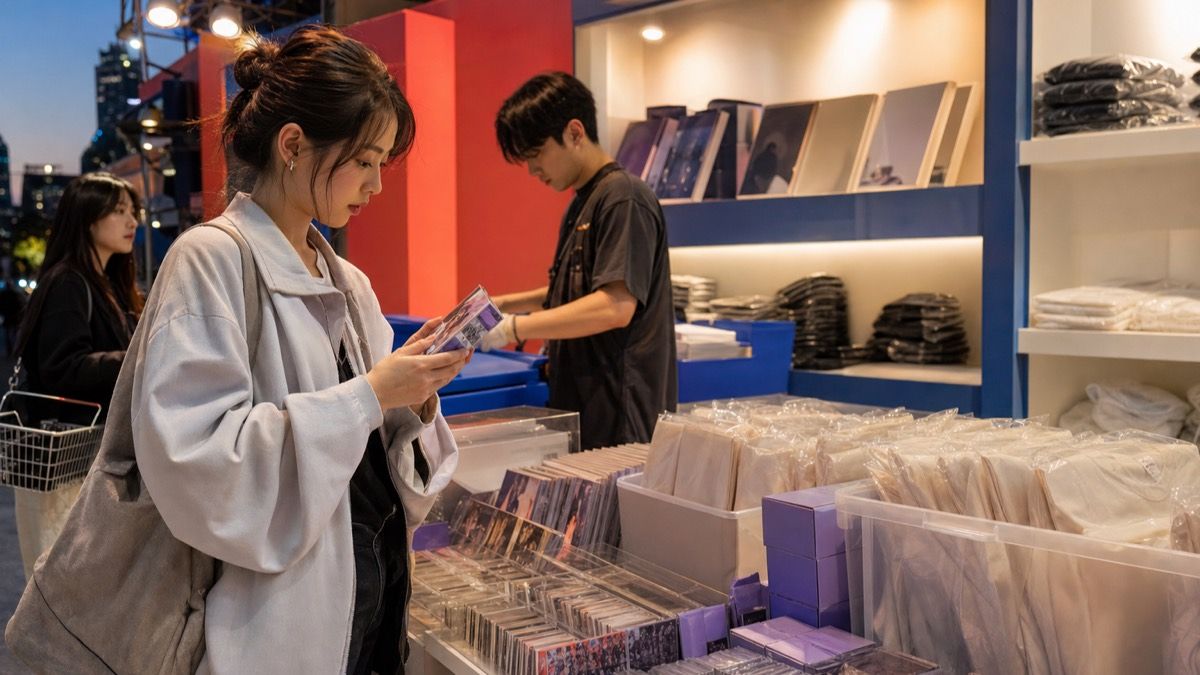
Physical products will remain important. Light sticks, albums, photocards, apparel, and collaboration goods are identity objects. But the scarce asset in 2026 is increasingly access.
Access can mean a fan-club presale, a soundcheck, a limited broadcast, a member-only message, an event zone, a pop-up reservation, or an early product window. It has two commercial advantages. First, it can be delivered digitally or through controlled capacity. Second, it gives the fan a visible relationship to the moment.
Brands should therefore ask a different question. Instead of “What merchandise can carry our logo?”, ask “What useful access can our partnership unlock?”
Trend 3: one global fandom creates many local economies
IFPI named ROSÉ and Bruno Mars’ “APT.” the biggest-selling global single of 2025, with 2.06 billion chart units under its methodology. IFPI described it as the first winner led by an artist outside North America or Europe and the first winning single to include non-English lyrics.
That global result does not mean fan behavior is uniform. Discovery may be global, while conversion remains local. Payment methods, product availability, venue access, media channels, language, retail partners, and fan customs still vary by market.
In 2026, the strongest global K-pop campaigns will operate with one creative platform and several local commercial systems. A fan in Jakarta, Los Angeles, Bangkok, Riyadh, and Tokyo may recognise the same cultural moment but need a different route to participate.
Trend 4: fan-made infrastructure remains commercially important
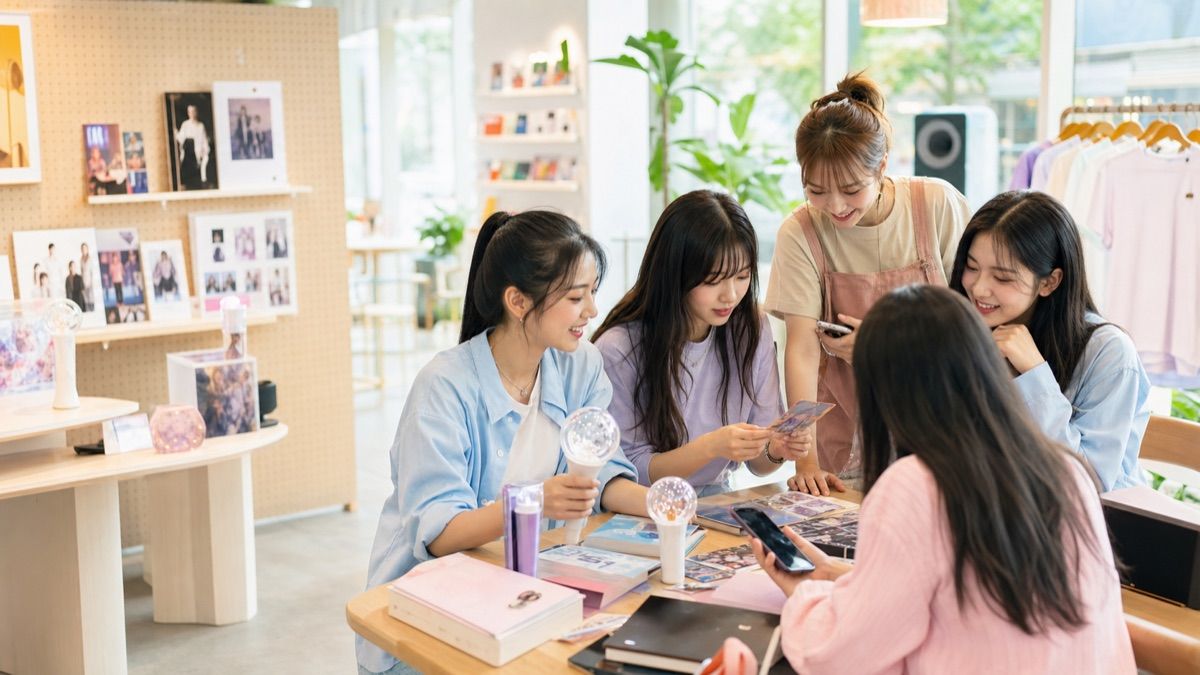
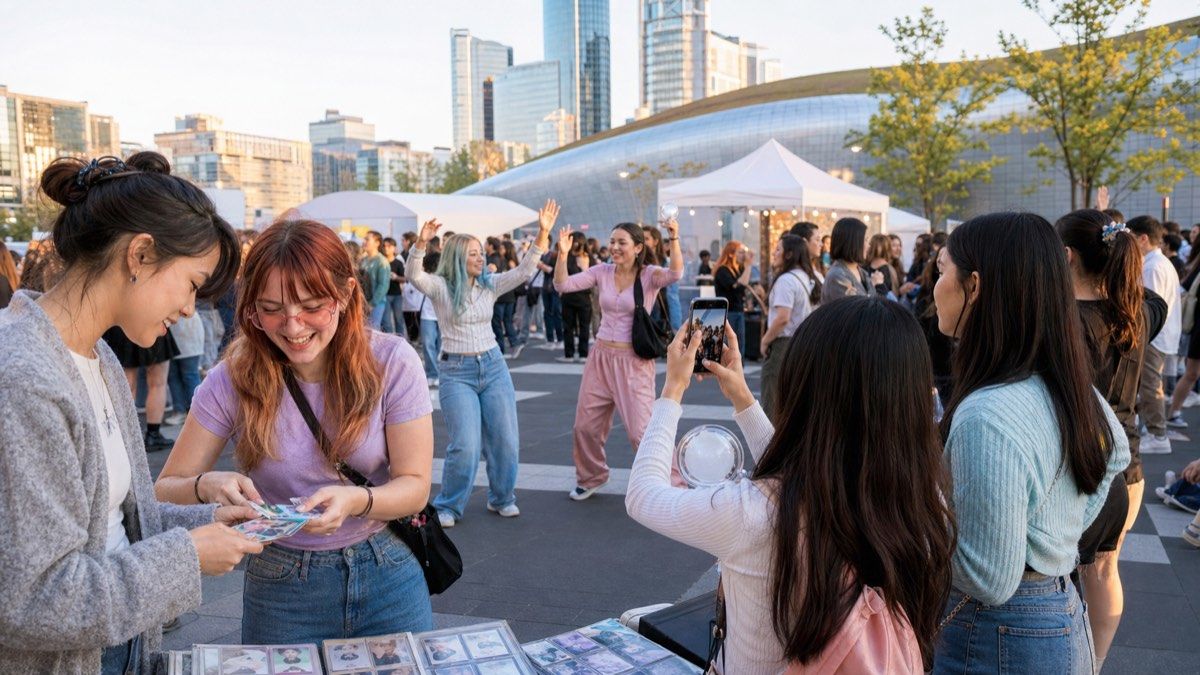
Fans do not wait for official operators to create every experience. They organise birthday cafés, listening parties, streaming teams, dance events, donation projects, photo exhibitions, and cup-sleeve gatherings.
These activities are not marginal decoration. They are a distributed participation layer. They keep an artist present between official releases and give fans lower-cost ways to meet, contribute, and display identity.
The opportunity is not to commercialise every fan activity. That would destroy the credibility that makes it valuable. The opportunity is to reduce friction: venue discovery, transparent event rules, safe licensing pathways, print and fulfilment support, local promotion tools, and clear boundaries around artist imagery.
Fan culture scales when official infrastructure supports participation without trying to own every expression of it.
Trend 5: the concert becomes a city-scale journey
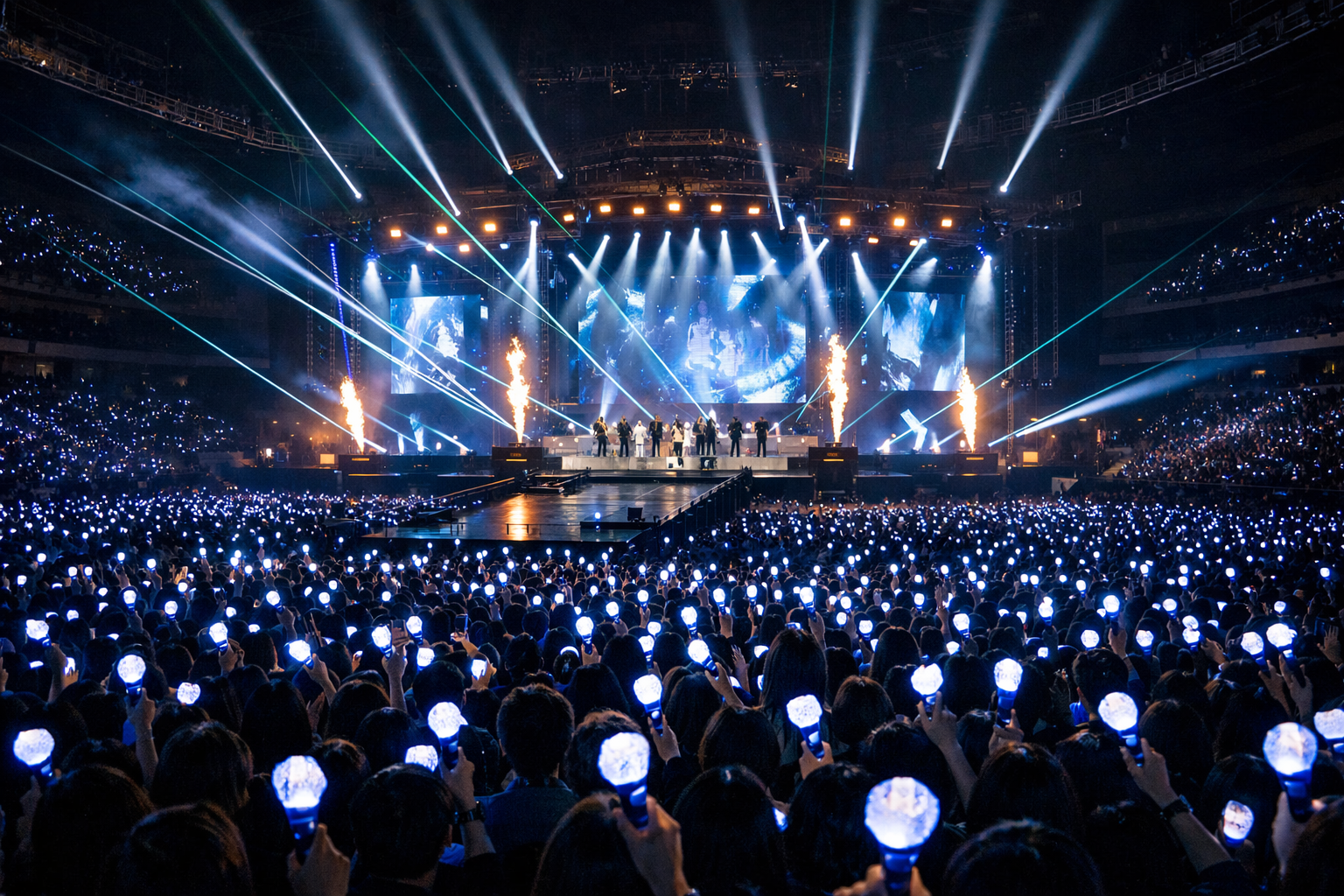
Live Nation reported 159 million fans attending its events in 2025, up 5%, and highlighted strong international demand. K-pop’s touring scale and KCON’s multi-market model both point toward a 2026 reality: major events are travel decisions.
An international fan may combine a concert with flights, accommodation, local transport, dining, beauty appointments, pop-ups, museums, and fan-organised activities. That means the event economy begins before venue doors open and continues after the final song.
Promoters and cities should map this extended journey. Information, multilingual support, safe transport, queue design, luggage policies, merchandise collection, and local partnerships are not secondary operations. They shape whether an international fan recommends the destination.
Trend 6: K-pop sits inside a wider K-culture basket
KCON’s model has consistently combined performance with beauty, food, fashion, screen content, creator activity, and brand experiences. The logic will become more important in 2026 because fans increasingly discover categories through one another.
A music fan may enter through a performance, discover a beauty routine, try food, watch a drama, and later travel. The commercial value is not simply cross-selling. It is a network of culturally connected behaviors.
Brands should design partnerships around an authentic category bridge. A beauty company may connect performance styling to product education. A travel partner may connect event access to a city itinerary. A retailer may connect collectibles to store traffic. The bridge must be useful, not decorative.
Trend 7: fandom measurement moves beyond volume
Follower count and views remain useful descriptors, but they are weak decision systems. In 2026, more buyers will ask which markets responded, which audiences were qualified, what behavior changed, and whether the partnership produced incremental value.
The minimum measurement stack should include:
This is especially important for global campaigns. Aggregate numbers can hide a market where the partnership worked brilliantly and another where distribution or cultural fit failed.
What operators should build now
The practical response to these trends is infrastructure.
Brands need audience evidence, local market partners, rights clarity, fan-safe participation mechanics, commerce integration, and measurement before contracting talent. Promoters need demand intelligence, ticketing resilience, international-fan information, venue operations, and post-event learning. Entertainment companies need systems that connect community activity to long-term artist value without reducing the relationship to transactions.
The winning 2026 strategy will not be the loudest campaign. It will be the system that gives fans more meaningful ways to participate and gives operators better evidence about what to repeat.
Related reading: Entertainment infrastructure · K-pop birthday café costs
Sources
- Weverse Magazine — 2025 Weverse Fandom Trends
- IFPI — ROSÉ and Bruno Mars’ APT. crowned biggest-selling global single of 2025
- IFPI — Global Music Report 2026: State of the Industry
- Live Nation — Full Year and Fourth Quarter 2025 Results
- CJ ENM — KCON Japan 2026
Build for participation, access, and retention.
Talk to WENOTIFT about turning global K-pop fandom signals into local market, event, commerce, and measurement systems.