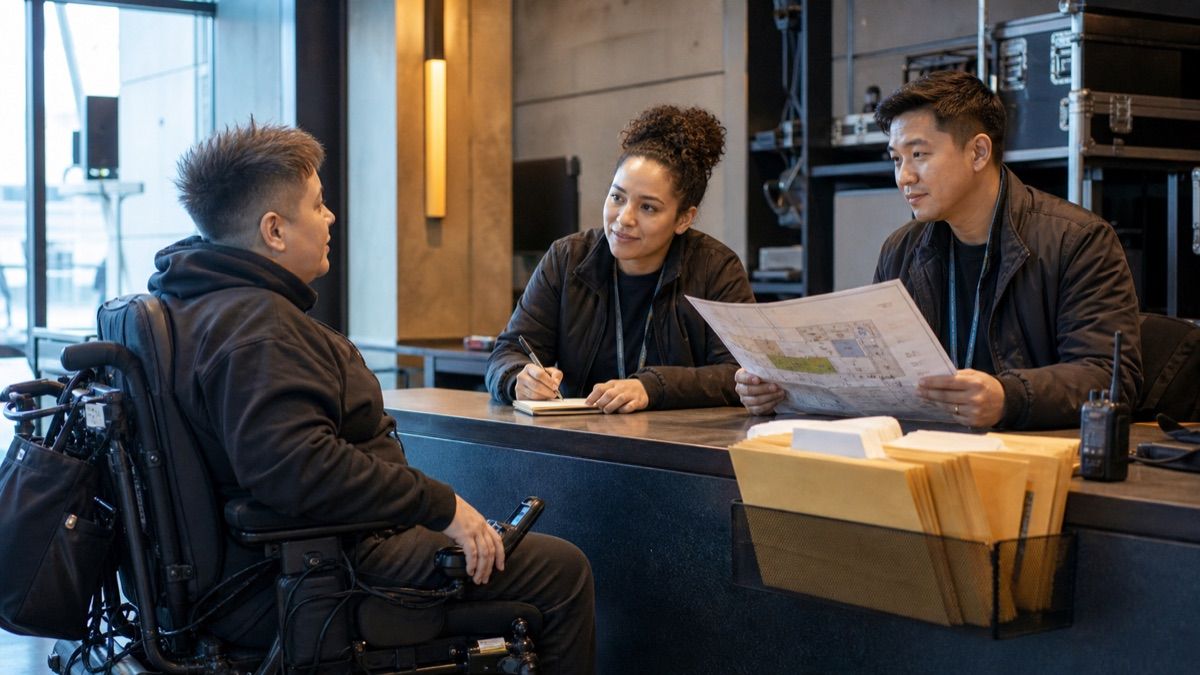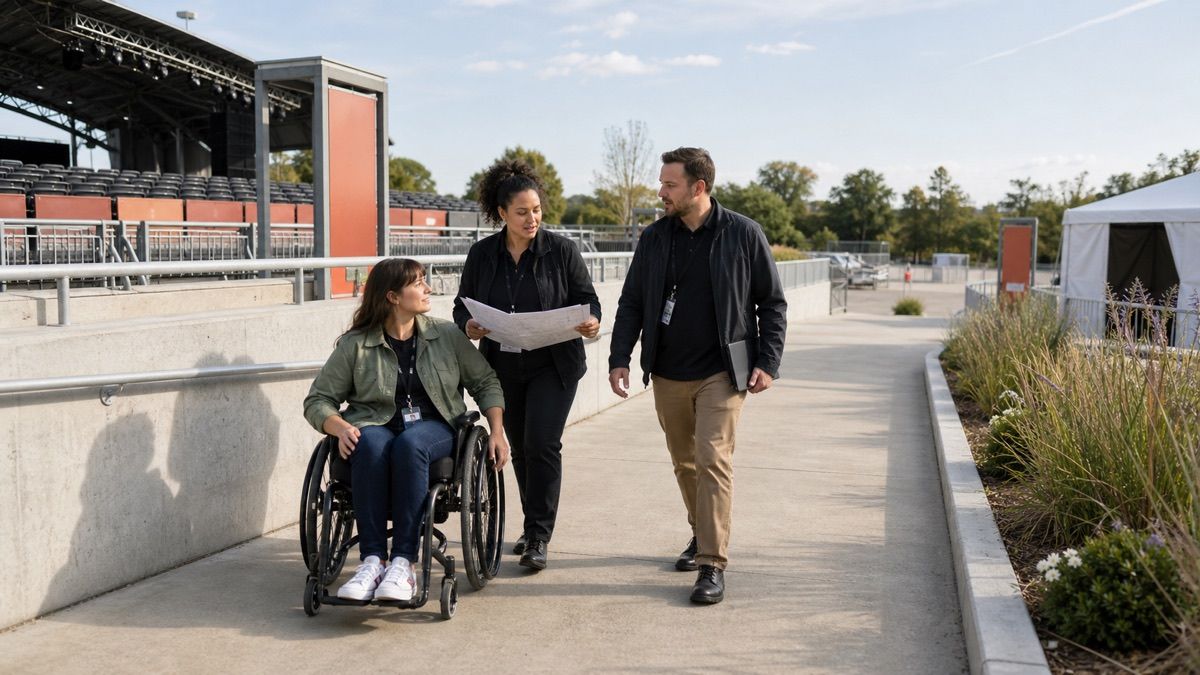
Control sponsor samples from approved stock and venue intake through distribution, exceptions, reconciliation and evidence without losing sight of the fan experience.
Sponsor product sampling at an event is the controlled distribution of approved goods to eligible attendees through a defined activation, hospitality or venue journey. A reliable workflow connects the commercial promise to product approval, stock custody, staff instructions, consumer information and end-of-event reconciliation.
The risk is not limited to theft or running out. A sample can be safe in its original carton and still be distributed in the wrong market, to the wrong age group, outside an agreed area, after storage conditions have failed or without information a consumer needs.
This guide is an operating framework, not legal, food-safety, tax, customs, product, alcohol, cosmetics or promotions advice. Requirements differ by product and jurisdiction. The sponsor, organiser and venue should obtain qualified guidance and record who owns each regulatory decision.
What should a sponsor sampling plan control?
It should control seven linked questions: which product and batch is approved, how much arrives, who accepts custody, where it may be distributed, who may receive it, how exceptions stop distribution, and how issued, returned, damaged and quarantined units reconcile.
“Ten thousand samples delivered” is not the same as ten thousand compliant fan interactions. A carton count says little about the condition of stock, the route it followed or whether staff acted on the current brief.
Treat every sample as both a product and a promise: the physical unit must remain controlled, and the fan must receive what the campaign represented.
Build one Approve-to-Reconcile Chain
The Approve-to-Reconcile Chain is a WENOTIFT operating model, not a regulatory standard. It gives sponsors, agencies, production, venue operations, security, vendors and temporary staff one shared lifecycle.
Lock the approved sample before logistics begin
Create one sample specification for each product variant. Record the legal product name, pack size, batch or lot fields where applicable, market, language, ingredient or product information, claims, warnings, age restrictions, storage requirements, expiry or best-before controls, and the approved consumer journey.
Attach photographs of the final approved pack and outer case. Do not rely on a campaign deck created before production. When the physical item arrives, the receiving team needs a reference that distinguishes an approved unit from an old pack, another territory’s label or a substitute supplied at short notice.
For packaged food in the United States, the FDA’s allergen guidance explains that major food allergens must be declared using the food source name. The rule itself is jurisdiction-specific, but the operating lesson travels: removing packaging, decanting products or separating the sample from required information can change the consumer’s ability to make a safe choice.
Define responsibility by decision, not logo
Name an accountable owner for product legality and safety, one for venue acceptance, one for stock custody, one for activation delivery and one for incident escalation. A sponsor logo on the booth does not tell staff who may quarantine a batch or pause the giveaway.
Record the authorised escalation contacts and their operating hours. Temporary brand ambassadors should know the immediate safe action—stop, isolate, preserve information and notify—without being asked to decide whether a complaint is legally reportable.
Map contracts and local permissions before stock ships. Food, beverage, alcohol, cosmetics, supplements, devices, toys and financial promotions can require very different controls. The event plan should state its scope rather than presenting one generic checklist as universal.
Use a stock-control matrix
| Stock state | Required record | Permitted movement | Closure evidence |
|---|---|---|---|
| Delivered | Supplier, time, seal/condition, product and count | To authorised intake only | Signed discrepancy or acceptance note |
| Accepted | Product, batch/lot where relevant, quantity and storage location | Controlled store to named activation point | Custody issue record |
| Issued | Quantity, time, activation point and receiving lead | Distribution under current brief | Periodic count or return |
| Returned | Unopened quantity, condition and original issue reference | Back to controlled storage | Receiving confirmation |
| Damaged or compromised | Quantity, reason, time and photographs where appropriate | None; segregate from usable stock | Authorised disposal or supplier route |
| Quarantined | Affected product/batch, trigger and decision owner | None until written release | Release, return or disposal decision |
| Missing | Expected versus actual count and last custodian | Investigation only | Explained adjustment or incident record |
The matrix makes “remaining stock” a set of statuses rather than one pile behind the activation. Usable returns must not be mixed with wet, opened, temperature-abused or complaint-linked units.
Receive stock through one controlled intake
Use a booked delivery window, approved entrance and named receiver. Compare the delivery note with the sample specification and count outer cases plus loose units. Record obvious damage, broken seals, leaks, wrong variants, insufficient remaining shelf life or temperature concerns before accepting responsibility.
Where temperature control matters, agree the device, threshold, reading point and response with the qualified product owner. A single photograph of a vehicle display may not establish the condition of every case; the plan should follow the actual product and local food-safety controls.
Separate sponsor stock from general catering, merchandise and production consumables. Use access control proportionate to value and risk. The goal is not to turn a friendly activation into a warehouse—it is to prevent unrecorded stock from appearing at a different gate, VIP room or after-party.
Issue stock in measured waves
Issue smaller planned quantities to each activation point rather than releasing the full event allocation at doors. Record the time, quantity and receiving lead. Replenishment then becomes a controlled decision based on actual distribution, queue conditions and remaining event time.
Wave-based release also limits the effect of a pause. If one batch or activation point is affected, staff can identify which stock remains controlled and which units may already have reached attendees.
Do not turn distribution targets into pressure to ignore eligibility or consumer questions. “Samples per hour” can be a logistics signal, but it should never override age checks, allergens, safe serving, consent, accessibility or a stop instruction.
Design the fan-facing distribution rule
State where the sample may be offered, whether it is handed out or self-selected, any age or ticket eligibility, the maximum per person, what staff say, where required information remains visible and how an attendee declines without friction.
Avoid making personal data collection an accidental condition of receiving a sample unless the campaign genuinely requires it and has an approved lawful process. A product handoff, competition entry, lead capture and marketing consent are separate decisions.
Make the experience accessible. Place stock and information within reach, keep queue routes clear, offer an equivalent method when a touchscreen or QR journey creates a barrier, and brief staff not to make assumptions about disability or dietary need. WENOTIFT’s concert accessibility guide provides a wider planning framework.
Keep product information attached to the experience
For sealed consumer units, distribute the approved pack intact unless a qualified plan specifically authorises another format. For served samples, define how ingredient, allergen, use, warning or other required information reaches the attendee at the decision point.
The FDA’s 2025 allergen guidance and the UK Food Standards Agency’s allergen guidance are different legal regimes, but both reinforce a practical truth: consumers need accurate information about what they are being offered. Staff should never improvise an assurance such as “allergen-free” or “safe for everyone.”
Create a current question route. The activation lead can answer from approved material, refer complex questions to the product owner and record a complaint without speculating about cause.
Build a stop-and-quarantine route
Predefine triggers such as damaged seals, temperature failure, wrong labels, suspected contamination, unexpected reaction, product complaint, recall notice, missing age control or a material mismatch with the approved sample.
When triggered:
- stop distribution of the identified scope;
- isolate affected stock and preserve its status;
- record product, batch where relevant, place, time and quantity;
- support the attendee and invoke medical or emergency procedures when needed;
- notify the authorised sponsor, product-safety and event contacts;
- preserve packaging and evidence without broad sharing of personal data; and
- resume only when the named decision owner gives a recorded instruction.
Do not hide a pause to protect optics. A calm, scoped stop is a functioning control, not a campaign failure.
Reconcile stock without inventing precision
At shift changes and close, count usable returns, quarantined units, damaged stock and unresolved discrepancies by activation point. Calculate distributed units from controlled issues and verified returns, not from an optimistic opening allocation.
If exact unit counting is impractical for a high-volume loose product, define an approved estimation method before launch—such as sealed-case counts plus measured tray capacity—and label the result as an estimate. Do not convert an estimate into a fabricated exact reach figure.
Keep commercial metrics separate from control metrics. Distribution, qualified interactions, opt-ins and downstream sales measure different things. The number of units missing is not audience engagement.
Connect the reconciliation to WENOTIFT’s sponsorship measurement framework, campaign content approval workflow and food-allergen vendor workflow. WENOTIFT helps sponsors and entertainment teams design activations whose creative promise survives real operations.
Sources
- FDA: Questions and Answers Regarding Food Allergen Labeling, Edition 5, January 2025; accessed 31 July 2026.
- FDA: General Food Labeling Requirements compliance programme update, accessed 31 July 2026.
- FDA: Sampling to Protect the Food Supply, accessed 31 July 2026.
- UK Food Standards Agency: Allergen guidance for food businesses, accessed 31 July 2026.
Make the physical activation as accountable as the campaign idea.
Talk to WENOTIFT about sponsor journeys, product handoffs and measurement systems built for live entertainment.