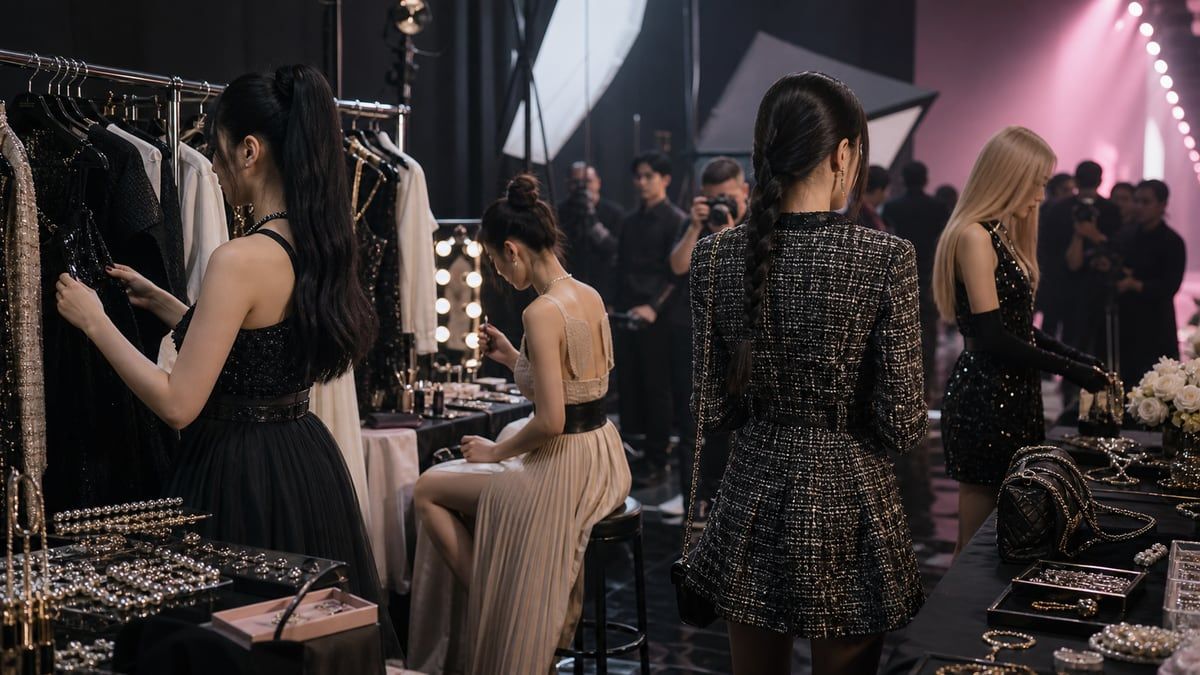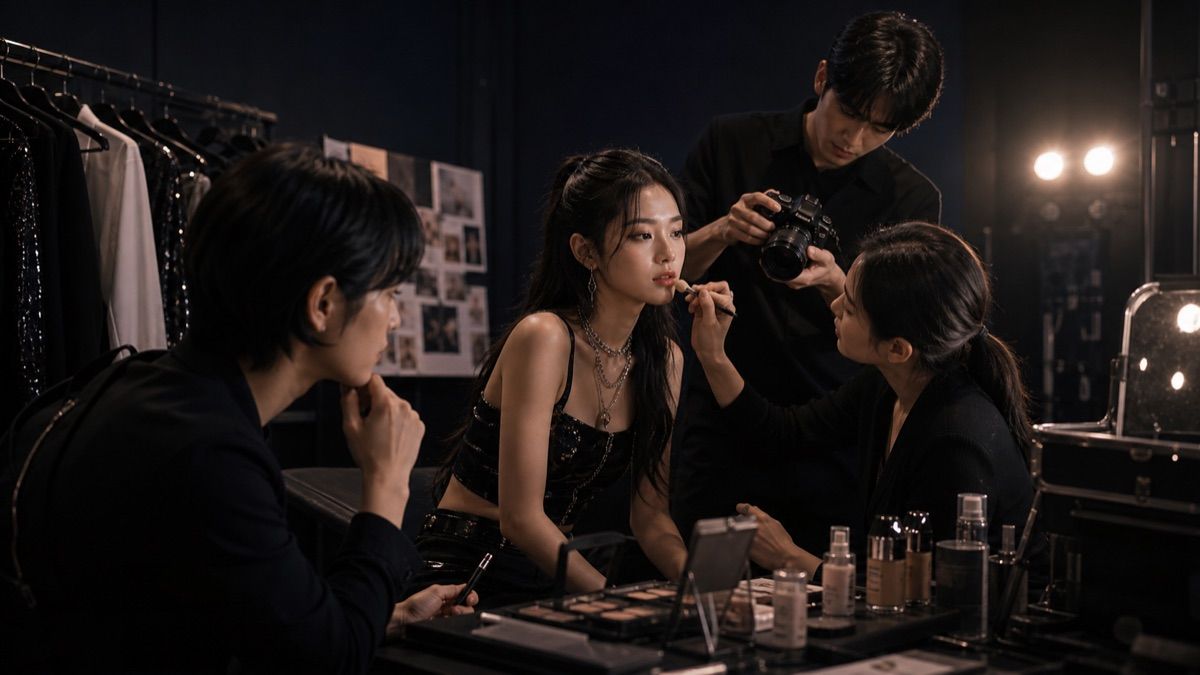
K-beauty and K-pop share cultural momentum, but not every artist can sell every beauty proposition. A framework for evaluating category, audience, market, and creative fit.
K-beauty and K-pop look like a natural partnership. Both travel through visual culture, creator ecosystems, fandom, and Korean cultural influence. Both can turn discovery into ritual and product collection.
That apparent fit creates a dangerous shortcut: choose the largest available artist and assume attention will become demand.
The better approach begins with the beauty proposition.
“Beauty” is not one category
A dermatologist-led skincare brand, a playful color-cosmetics label, a luxury fragrance house, and a mass-market sun-care product solve different customer problems.
Before evaluating talent, define:
- Product category and hero SKU.
- Customer age and life stage.
- Price position.
- Clinical versus expressive brand identity.
- Market priority.
- Purchase frequency.
- Distribution channel.
An artist who is perfect for expressive makeup may be wrong for a clinical trust proposition. A luxury ambassador may create aspiration but weak conversion for an accessible mass product.
The five dimensions of fit
1. Audience fit
Start with who the artist reaches in the markets that matter.
Evaluate:
- Age and gender composition.
- Geographic concentration.
- Purchasing power.
- Beauty-category interest.
- Platform behavior.
- Existing overlap with the brand customer.
Follower totals flatten these differences. Two artists with similar reach can have very different commercial value to the same brand.
2. Image fit
What does the artist mean to the audience?
Relevant associations may include:
- Experimental style.
- Natural or minimal beauty.
- Luxury and exclusivity.
- Performance and durability.
- Wellness and self-care.
- Youthful playfulness.
- Mature credibility.
The task is not to force a brand message onto the artist. It is to identify where the artist’s existing meaning and the product truth reinforce each other.
3. Behavior fit
Does the artist’s content behavior support the campaign?
A beauty partnership may require close-up product use, tutorials, routine storytelling, live interaction, retail appearances, or long-form content. Some artists and agencies are comfortable with those formats; others are better suited to high-concept campaign imagery.
Contracted deliverables should match natural content strengths. A format that feels unnatural will look like advertising even to supportive fans.
4. Market fit
An artist’s strongest market may not match the brand’s distribution.
Check:
- Where products are actually available.
- Local retailer and e-commerce readiness.
- Shade, formulation, climate, and regulatory relevance.
- Market-specific search and conversation.
- Language and localisation requirements.
Demand without availability creates frustration. Availability without local audience relevance creates wasted reach.
5. Risk and portfolio fit
Beauty partnerships need category clarity.
Review:
- Existing and recent beauty endorsements.
- Category exclusivity.
- Conflicts across skincare, makeup, fragrance, hair, and wellness.
- Overexposure across brand partnerships.
- Reputation and operational risk.
- Fit with other ambassadors in the brand portfolio.
The question is not only whether the artist can represent the product. It is whether the market can clearly remember which product the artist represents.
Group versus member strategy
A group partnership offers broad reach and collective fandom energy. A member-level partnership can offer sharper category positioning.
Choose a group when:
- The brand needs mass awareness.
- The creative platform benefits from multiple personalities.
- The product has broad relevance.
- The rights support a large regional campaign.
Choose an individual member when:
- The proposition depends on a specific style or identity.
- Luxury or category exclusivity matters.
- The brand needs more focused storytelling.
- Budget and rights require precision.
Member-level strategy should not be treated as a cheaper substitute. It is a different architecture.
Design the conversion path before the campaign
Beauty has an advantage over many entertainment categories: the product can be tried, reviewed, repurchased, and collected.
Build a path from attention to action:
If the partnership stops at discovery, the brand is buying attention while leaving the category’s strongest commercial advantages unused.
Build the rights around the customer journey
Beauty assets often need to work harder and longer than a launch post.
Consider rights for:
- E-commerce and retailer product pages.
- Paid social and performance media.
- In-store displays and digital screens.
- Sampling and pop-up environments.
- Tutorials and cut-down content.
- Regional language adaptations.
- Before-and-after or product-demonstration formats, where appropriate and compliant.
Rights should reflect where conversion happens. A beautiful campaign that cannot appear at the point of sale is commercially constrained.
Measurement beyond engagement
Track the full beauty funnel:
| Objective | Measures |
|---|---|
| Awareness | Qualified reach, search lift, share of conversation |
| Association | Message recall, artist-brand linkage, category attribution |
| Consideration | Product-page visits, shade/ingredient exploration, sampling |
| Conversion | Sales, redemption, retailer traffic, basket composition |
| Retention | Repeat purchase, replenishment, loyalty enrolment |
Artist content engagement is useful, but it is not the final score. A commercially strong partnership transfers attention to product understanding and repeatable customer behavior.
A pre-selection scorecard
Weight each candidate against the business objective:
- Audience fit: 25%
- Image and proposition fit: 20%
- Market and distribution fit: 20%
- Content behavior fit: 15%
- Risk and exclusivity: 10%
- Commercial and rights feasibility: 10%
The weights should change by brand. A clinical skincare launch may increase credibility and education. A color-cosmetics drop may increase creative and participation fit.
The point is not the exact percentage. The point is to prevent fame from becoming the only criterion.
Build a creative system, not one hero asset
A beauty partnership needs multiple jobs from its content.
The identity asset
Establishes the visual world and makes the artist-brand connection memorable. This is the campaign film or image people recognise immediately.
The proof asset
Shows texture, shade, routine, ingredient, durability, or another product truth. It helps the audience understand why the product belongs inside the partnership.
The participation asset
Gives creators and customers a format they can use: a look, routine, challenge, filter, prompt, or retail experience. Participation should be optional and adaptable rather than tightly scripted.
The conversion asset
Works at the point of sale. It explains the offer, product, availability, and next action clearly. It may be less glamorous than the hero film and more commercially important.
The retention asset
Extends the story after purchase through product education, a new chapter, loyalty access, or replenishment.
When the brand buys only the identity asset, it is asking one piece of content to create awareness, credibility, education, conversion, and retention at once.
Common K-beauty partnership mistakes
Choosing global fame without local availability. Fans discover a product they cannot buy, while the brand pays for unusable demand.
Confusing visual fit with product credibility. An artist may look perfect in campaign imagery but have no natural connection to the product benefit.
Overloading the launch with claims. Fans remember the artist, campaign aesthetic, ingredient story, technology, product range, and promotion only when the hierarchy is clear.
Ignoring retailer execution. A campaign can dominate social conversation while product pages, search, sampling, stock, and store displays remain disconnected.
Using the same asset in every market. Beauty standards, product priorities, shade relevance, language, platform, and regulation vary.
Ending the relationship at launch. Beauty is often a repeat-purchase category. A one-day reveal leaves the strongest customer economics unused.
A disciplined selection process
- Define the product and customer problem.
- Rank markets by commercial readiness.
- Create a longlist using audience evidence.
- Score image, behavior, market, and risk fit.
- Validate association with target customers.
- Model rights and activation cost—not talent fee alone.
- Design the conversion and retention journey.
- Negotiate deliverables against that journey.
This process may still lead to an S-tier artist. The difference is that the choice can be explained, measured, and defended without using follower count as the strategy.
Final principle
K-beauty and K-pop create powerful shared momentum, but cultural adjacency is only the starting condition.
The partnership works when the artist’s audience, meaning, behavior, market strength, and rights all connect to a product truth the customer can act on.
Follower count tells you how loud the launch could be. Fit tells you whether the launch can build a beauty business.
Related reading: Fandom-to-checkout funnel · Sponsorship measurement
Choose the artist who can move the product, not only the feed.
Talk to WENOTIFT about audience fit, cultural association, market readiness, rights, and conversion for your next K-beauty partnership.