Fandom attention does not automatically become revenue. A practical commerce funnel for moving entertainment audiences from cultural participation to measurable customer action.
Fandom can move at astonishing speed. A teaser appears, communities translate it, clips spread across platforms, group orders form, and products sell out.
But none of this is automatic for the brand.
Fans are highly capable participants, not passive media inventory. They decide what deserves attention, which moments carry meaning, and whether a commercial activation contributes to the culture or merely extracts from it.
The commercial task is therefore not “monetise the fanbase.” It is to design a path where cultural participation and customer value reinforce each other.
Attention is only the first input
The global recorded music economy reached US$31.7 billion in 2025, according to IFPI, with subscription streaming revenue continuing to expand. Asia remains structurally important to the industry, including as a major physical market.
Those numbers show the scale of music consumption. They do not tell a brand how to convert an artist audience into its own customer base.
A useful funnel has six stages:
Each stage can fail independently.
Stage 1: cultural permission
Before a fan clicks, the partnership must make sense.
Permission comes from fit:
- The artist’s public identity aligns with the category.
- The product has a credible role in the story.
- The creative respects the community’s language and behavior.
- The brand contribution feels additive.
This is why a smaller, better-aligned artist can outperform a larger name. The first hurdle is not awareness. It is whether the audience accepts the brand’s presence.
Stage 2: qualified attention
Reach should be filtered through customer relevance.
Ask:
- What share of the audience is in the target market?
- Does the age and purchasing profile match the product?
- Which platforms carry active rather than passive fans?
- How much attention is driven by the artist alone versus the partnership idea?
Qualified attention is narrower than total reach, but much more useful. A brand cannot build a commerce model around audiences it cannot serve.
Stage 3: participation
Fandom becomes powerful when people have something to do.
Participation mechanics may include:
- Voting or unlocking.
- Collecting.
- Creating and remixing.
- Attending.
- Joining a waitlist or community.
- Completing a challenge.
- Coordinating a group purchase.
The strongest mechanic reflects existing fan behavior instead of asking the community to learn an artificial one.
Participation also creates a measurement bridge. It identifies the people moving from broad exposure into active interest.
Stage 4: value exchange
A commercial ask needs a clear return.
Value may be functional:
- Early access.
- Priority inventory.
- A useful product bundle.
- Member pricing.
Or emotional:
- Collectible design.
- Status inside the community.
- Access to a meaningful moment.
- A contribution to a shared fan goal.
Scarcity can help, but artificial scarcity can damage trust. The offer should feel special because it is thoughtfully connected to the partnership, not because the checkout experience is frustrating.
Stage 5: conversion
Conversion design is operational, not glamorous.
Check:
- Does the landing page load quickly in the target markets?
- Are local payment methods available?
- Are shipping, tax, and inventory rules clear?
- Does the product page preserve the partnership story?
- Can the source of traffic and transaction be measured?
- Is there a fallback if demand exceeds supply?
Many entertainment campaigns lose revenue here. The creative succeeds, but the commerce infrastructure cannot absorb the attention.
Use market-specific links, product codes, tagged QR journeys, and retailer data agreements. Avoid forcing every market through one global funnel if the buying behavior is local.
Stage 6: retention
A first purchase is not the end of the partnership. It is a new customer signal.
Retention can include:
- Post-purchase content.
- Loyalty recognition.
- Early access to the next activation.
- Category education.
- Community-safe CRM journeys.
- Product replenishment or repeat purchase.
The brand must avoid pretending it owns the fandom. It owns a customer relationship only when that customer has knowingly opted into one.
Four commerce architectures
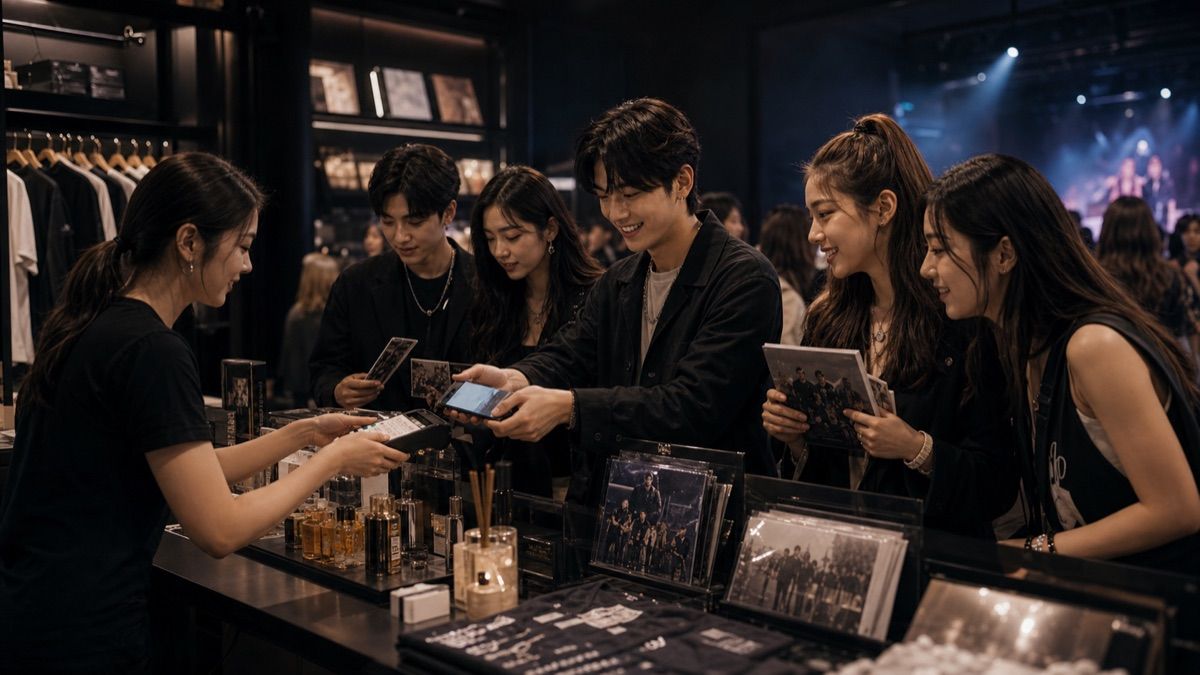
The collectible drop
Best for products with visual or physical collectability. Success depends on design quality, inventory planning, and a fair purchase process.
The access bundle
Combines product with priority access, content, or an experience. Best when the benefit is genuinely scarce and contractually secured.
The retail quest
Turns stores or digital touchpoints into a sequence of participation. Best for brands with strong distribution and measurable footfall.
The long-term ambassador platform
Uses repeated chapters rather than one launch. Best for categories where customer education and repeat purchase matter.
Measure the whole funnel
| Stage | Useful measures |
|---|---|
| Permission | Sentiment, fit perception, message association |
| Attention | Target reach, completion, search lift |
| Participation | Sign-ups, submissions, unlocks, saves |
| Value exchange | Product interest, waitlist quality, offer uptake |
| Conversion | Conversion rate, revenue, basket size, acquisition cost |
| Retention | Repeat purchase, opt-in, churn, lifetime value |
Do not optimise only the easiest number. A viral participation mechanic that attracts non-buyers may look excellent and produce weak commerce. A smaller activation can be commercially stronger if every stage is aligned.
Localise the funnel, not only the campaign
Asian entertainment audiences may share content across borders while buying through very different systems. A campaign can therefore be regionally visible and commercially local at the same time.
Southeast Asia
Design for mobile-first discovery, marketplace behavior, local wallets, social commerce, and market-specific logistics. The same artist may have strong audiences across Indonesia, Thailand, the Philippines, Malaysia, and Singapore, but price acceptance and retail structure will differ.
Japan and South Korea
Physical collecting, membership, retail partnerships, and market-specific platforms may play a larger role. Global campaign assets still need local release timing, product availability, and rights.
Greater China
Platform, regulatory, agency, and commerce requirements demand a separate operating model. A global social plan should never be assumed to cover the market.
GCC
Arabic and English journeys, cross-border tourism, premium experience, local payments, and seasonal event calendars can all affect conversion. Saudi Arabia and the UAE should be modeled separately.
Localisation is not a final creative adaptation. It changes the economics of the funnel.
The pre-launch commerce checklist
Before the first teaser goes live, confirm:
- Inventory by market and channel.
- Customer-facing total price.
- Local payment coverage.
- Delivery promise and returns.
- Tagged links and product codes.
- Retailer data-sharing cadence.
- Customer-service escalation.
- Queue and fraud controls for limited drops.
- Consent language for CRM capture.
- A plan for excess demand and excess inventory.
This checklist can feel less exciting than talent selection. It is also where a large share of commercial value is either protected or lost.
Three failure patterns to watch
The souvenir trap. The product carries campaign imagery but offers no product reason to buy. Fans may collect once; non-fans see little value.
The dead-end activation. Participation generates attention but does not lead naturally to education, trial, or purchase.
The one-day customer. A drop converts strongly, but the brand has no permission-based plan for retention. Revenue spikes while customer value remains temporary.
The answer is not to make every fan journey aggressively transactional. It is to ensure that people who want to move closer to the product can do so without friction.
Commerce teams and cultural teams should review this journey together. The cultural team protects relevance and community trust; the commerce team protects availability, economics, and customer experience. When either works alone, the campaign tends to become culturally exciting but commercially fragile, or commercially efficient but culturally forgettable. The funnel is the shared operating model between them.
Final principle
Fandom is not a shortcut around product-market fit. It is an amplifier.
When the product, artist, market, offer, and checkout journey fit together, fandom can compress the distance between culture and commerce. When they do not, attention simply exposes the mismatch faster.
Related reading: Saudi Arabia vs the UAE · Sponsorship measurement
Sources
Turn cultural attention into a measurable customer journey.
Talk to WENOTIFT about designing the participation, value exchange, conversion, and retention system behind your next entertainment partnership.