A concert sponsorship contract buys permissions; activation turns those permissions into fan value and measurable business outcomes. This guide maps the rights, production, data, and evidence required before doors open.
Concert sponsorship activation is the work of turning contracted sponsorship rights into a real fan-facing experience and a measurable business result. The rights may include presales, premium seating, hospitality, signage, naming, content, pouring rights, digital media, or on-site space. Activation decides how those permissions will actually be used.
The distinction matters because a signed sponsorship is not a finished campaign. It is an inventory of possibilities with deadlines, approval rules, production dependencies, and limits. A logo on a screen may fulfil a visibility obligation; it does not automatically help a fan or change customer behaviour.
Strong activation begins with one outcome and one fan need. It then connects the rights, creative, operations, consent, and measurement around that exchange.
Why concert sponsorship activation deserves operating discipline
Live music is a large and growing commercial environment. Live Nation reported that 159 million fans attended its shows in 2025. Its Sponsorship & Advertising segment generated US$1.329 billion, up 11% from 2024, and worked with more than 1,500 sponsors. Those are company-specific figures, but they show how substantial the operating category has become.
The same annual report describes sponsorship inventory as multi-element agreements. It names ticket presales, beverage pouring rights, venue naming rights, media campaigns, signage, website advertising, digital content, and custom experiences. Each element can have a different delivery date and standalone value.
That is why activation is not just a creative task. It is a cross-functional delivery programme involving the brand, promoter, artist team, venue, ticketing provider, production suppliers, hospitality, security, legal, privacy, and measurement teams.
Start with an outcome hierarchy
A useful brief distinguishes three levels:
- Business outcome: acquisition, retention, product trial, transaction value, membership growth, hospitality value, or market entry.
- Fan behaviour: register, purchase, arrive earlier, use a benefit, participate, share, redeem, or return.
- Experience mechanism: presale, fast lane, lounge, utility station, sampling, content capture, digital keepsake, premium seat, or after-show benefit.
The order matters. Starting with “build a booth” commits to a format before the team knows the job. Starting with “increase qualified card usage among music fans” leaves room to choose presale access, preferred seating, a payment benefit, or a hospitality journey according to the rights available.
The official Mastercard–Live Nation partnership announcement offers a clear example of objective-to-mechanic fit: cardholder value is expressed through presale tickets, premium seats, and VIP experiences. A 2026 South Africa programme extended that logic with a 48-hour cardholder presale and preferred seating. The benefit is legible before a fan sees the campaign creative.
Build the rights inventory before the idea
A sponsorship rights list should become a working register, not remain buried in the contract. For every right, record:
- the exact asset or permission;
- territory, event, channel, and validity period;
- category exclusivity and prohibited uses;
- artist, promoter, venue, platform, and third-party approvals;
- production specifications and delivery deadline;
- included inventory and any additional cost;
- data that can be collected or reported;
- evidence required to prove delivery;
- owner and contingency.
This exercise reveals gaps early. “Artist content” may not include a new shoot. “Hospitality” may include tickets but not a branded lounge. “Digital rights” may allow event-site placement but not use of the artist’s likeness in paid social. “On-site space” may exclude power, connectivity, storage, rigging, or security.
The contract names what is permitted. The activation plan defines what will be produced, who will approve it, and how anyone will know it worked.
The six-layer rights-to-experience system
This is a sequence, not six independent workstreams. If the rights cannot support the mechanic, revise the idea. If the venue cannot operate it safely, revise the mechanic. If the measurement requires personal data the fan did not agree to provide, revise the measurement.
Match rights to fan value and evidence
| Sponsorship right | Useful activation | Fan value | Evidence |
|---|---|---|---|
| Ticket presale | Limited early-access window for eligible customers | Better access and planning certainty | Eligibility checks, visits, conversion, ticket mix |
| Premium seating or hospitality | Curated guest journey with clear service standards | Comfort, access, recognition | Attendance, utilisation, guest feedback, account outcomes |
| Venue space | Utility-led station, sampling, participation, or keepsake | Solves a need or creates a memory | Footfall, dwell, completion, redemption, consented follow-up |
| Content rights | Useful guide, artist-approved story, or event recap | Information, anticipation, cultural relevance | Completion, saves, qualified traffic, search response |
| Naming and signage | Consistent wayfinding and recognisable presence | Navigation and sponsor recognition | Verified delivery, prompted awareness, recall study |
| Pouring or category exclusivity | Product availability, service design, or responsible trial | Convenience and relevant product experience | Units, trial, waste, satisfaction, incremental sales where measurable |
| Digital media | Event information, benefit discovery, and post-event continuity | Timely access to useful action | Viewability, clicks, registration quality, redemption |
The table is a planning framework. The actual rights, fan needs, and available evidence differ by event and contract.
Design for the full fan journey
Concert sponsorship is often planned as an on-site moment even though the fan journey begins weeks earlier and continues after the show.
Before the event
Use rights to reduce uncertainty or improve access. Presales, ticket education, travel information, accessibility guidance, benefit registration, and expectation-setting can be more valuable than a dramatic reveal. Ticketmaster’s official presale guidance notes that presales may come from artists, venues, fan clubs, sponsors, or platforms and that access does not guarantee a ticket. Clear eligibility, inventory language, timing, and support therefore matter.
During arrival
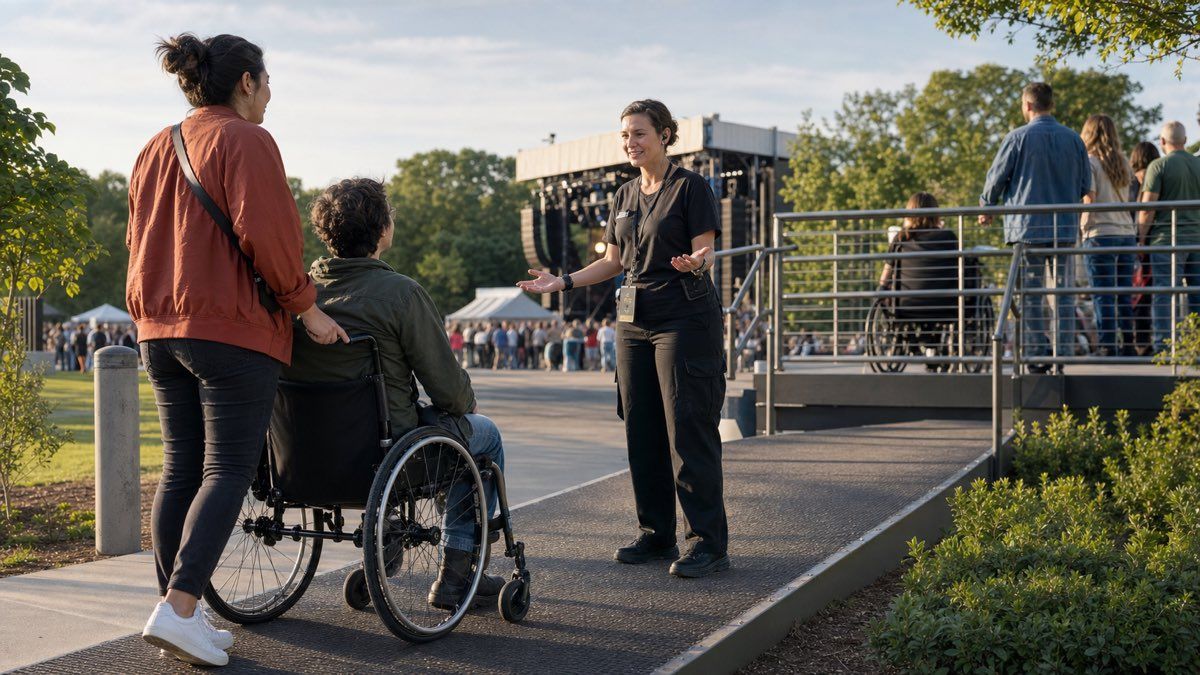
Arrival contains predictable tensions: queues, wayfinding, charging, weather, payment, bag rules, and locating friends. A sponsor can solve one well. The experience should not create a second queue merely to advertise a solution to the first.
Inside the venue
Participation mechanics need fast comprehension. A fan should understand the value, required action, data request, and wait time from several metres away. Staff must be able to explain the experience without a script longer than the interaction.
After the show
Follow-up should deliver what was promised: a photo, receipt, content, benefit, survey, or loyalty outcome. Consent for event fulfilment is not automatically consent for ongoing marketing. Separate the choices and honour them.
The activation production timeline
Twelve to sixteen weeks out
Lock the objective, rights register, target fan, concept, preliminary budget, data flow, and approval map. Check whether artist likeness, music, or content production requires separate negotiation.
Eight to twelve weeks out
Confirm venue footprint, technical production, staffing, accessibility, safety, ticketing integration, hospitality inventory, measurement design, and creative development. Prototype the fan interaction.
Four to eight weeks out
Secure approvals, manufacture, configure forms and redemption, train customer support, confirm logistics, and test analytics. Build a fallback that still delivers value if connectivity, weather, inventory, or artist availability changes.
Event week
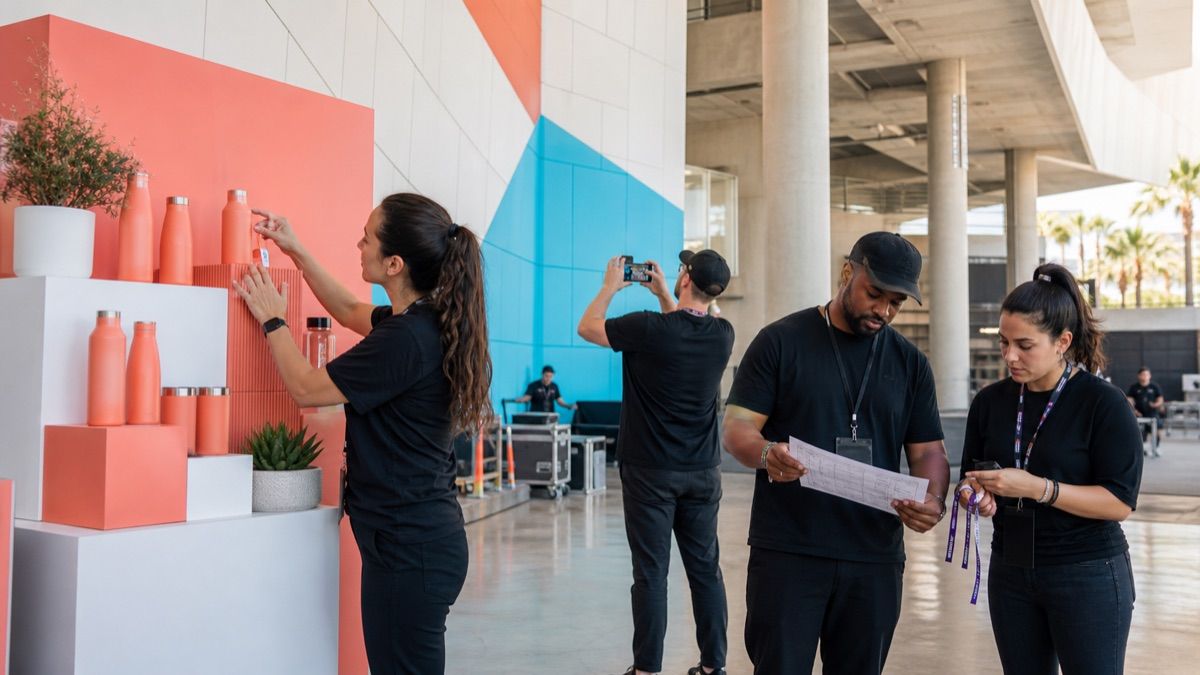
Run a cross-functional readiness review. Verify stock, power, network, queue plan, signage, data notices, staff roles, escalation contacts, photography permissions, evidence capture, and teardown.
Within ten working days after
Reconcile delivery, participation, costs, incidents, data quality, and business outcomes. Separate observed facts from interpretation. Document what to repeat, stop, and test next.
Measurement: prove more than delivery
An activation scorecard should preserve the difference between outputs and outcomes.
- Rights delivery: assets appeared in the agreed place, format, and time.
- Experience quality: wait time, completion, staff quality, accessibility, satisfaction, and failure rate.
- Participation: eligible fans, footfall, starts, completions, redemptions, and repeat use.
- Brand response: awareness, association, consideration, or trust measured with an appropriate design.
- Business response: qualified registrations, card or member activity, product trial, sales, retention, or account movement.
- Learning: which audience, timing, mechanic, and operating choices changed the result.
Do not convert every visitor into an “impression” and call it impact. Do not claim incremental sales without a valid baseline or comparison. Do not mix hospitality value, media value, and consumer conversion into one unexplained ROI number.
Where identity data is involved, define the controller, processor, purpose, retention, security, and deletion path before collection. Gather the minimum needed to deliver the benefit and answer the business question.
Common failure modes
Buying rights without an activation budget
The fee secures permission; it rarely covers all creative, production, media, staffing, technology, hospitality, travel, research, and contingency. Reserve the activation budget before signing.
Maximising visibility instead of usefulness
More surfaces do not guarantee more meaning. A small benefit that removes a real pain point can create stronger memory than a large branded structure fans walk around.
Designing in isolation from operations
Concept art can ignore queue capacity, power, weather, accessibility, venue rules, and staff training. Operations should shape the idea early, not approve it at the end.
Asking for too much data
A long form destroys participation and trust. Collect only what is required for the promised benefit and a defined, lawful next step.
Reporting only the best number
High footfall can hide low completion. Strong completion can hide poor data quality. Positive social posts can coexist with weak sales. Report the full chain.
An illustrative activation example
Consider a financial-services sponsor whose objective is to increase active card usage among existing young customers. The package includes a presale, preferred seats, venue space, event-site media, and hospitality.
The team could build one joined journey: eligible customers receive clear presale access; preferred-seat buyers see a simple pre-event service guide; the venue space offers a fast charging and hydration utility with an optional digital keepsake; hospitality is reserved for priority relationships; and post-event reporting connects eligibility, purchase, redemption, and subsequent card activity under agreed privacy controls.
This example is illustrative, not a performance benchmark. Its strength is structural: every right has a role, every action has an owner, and every measure maps to the objective.
The strategic takeaway
Concert sponsorship activation is not the decorative layer after a deal. It is the system that makes the deal real. The best programmes begin with the business outcome, solve a genuine fan tension, use only the rights they control, operate safely, and capture evidence without overstating it.
A rights package can buy presence. A thoughtful activation can earn participation, memory, and a relationship worth continuing.
Related reading: The entertainment sponsorship measurement stack · From fandom to checkout · Event demand forecasting · Entertainment infrastructure
Sources
- Live Nation Entertainment — 2025 Form 10-K
- Live Nation Entertainment — 2025 full-year results
- Mastercard — Global Live Nation partnership
- Mastercard — 2026 South Africa concert cardholder access
- Ticketmaster — How ticket presales work
Turn a rights package into a fan experience and an evidence plan.
Talk to WENOTIFT about objectives, rights architecture, fan journeys, activation mechanics, production governance, and measurement.