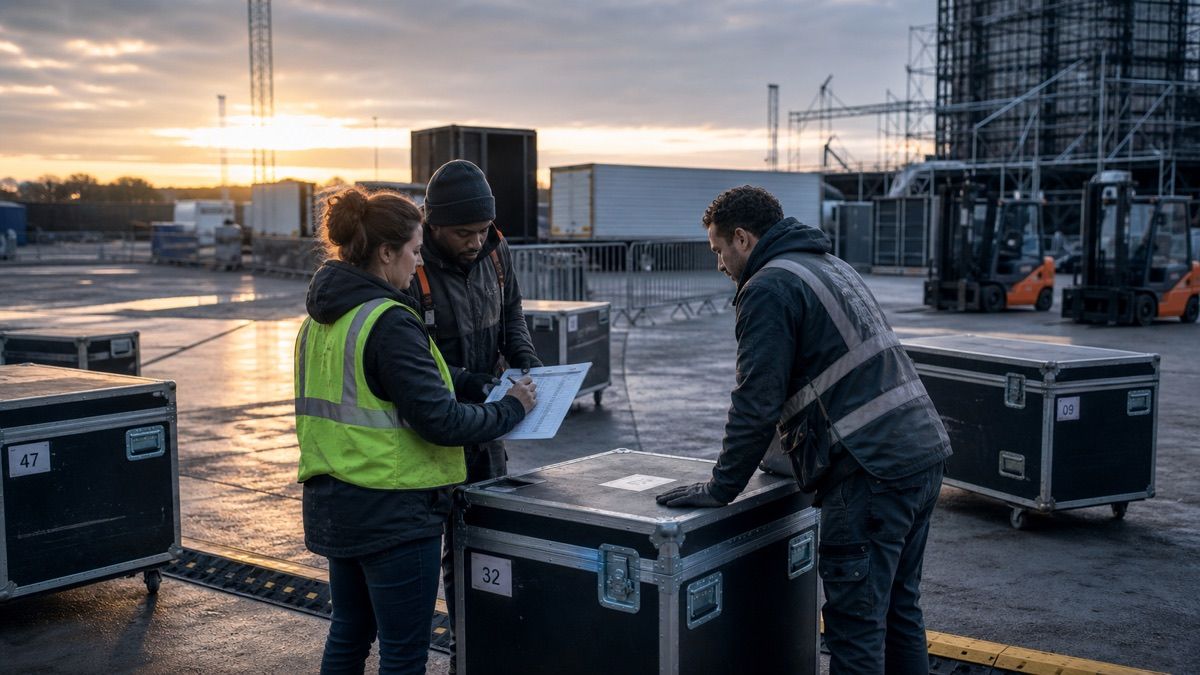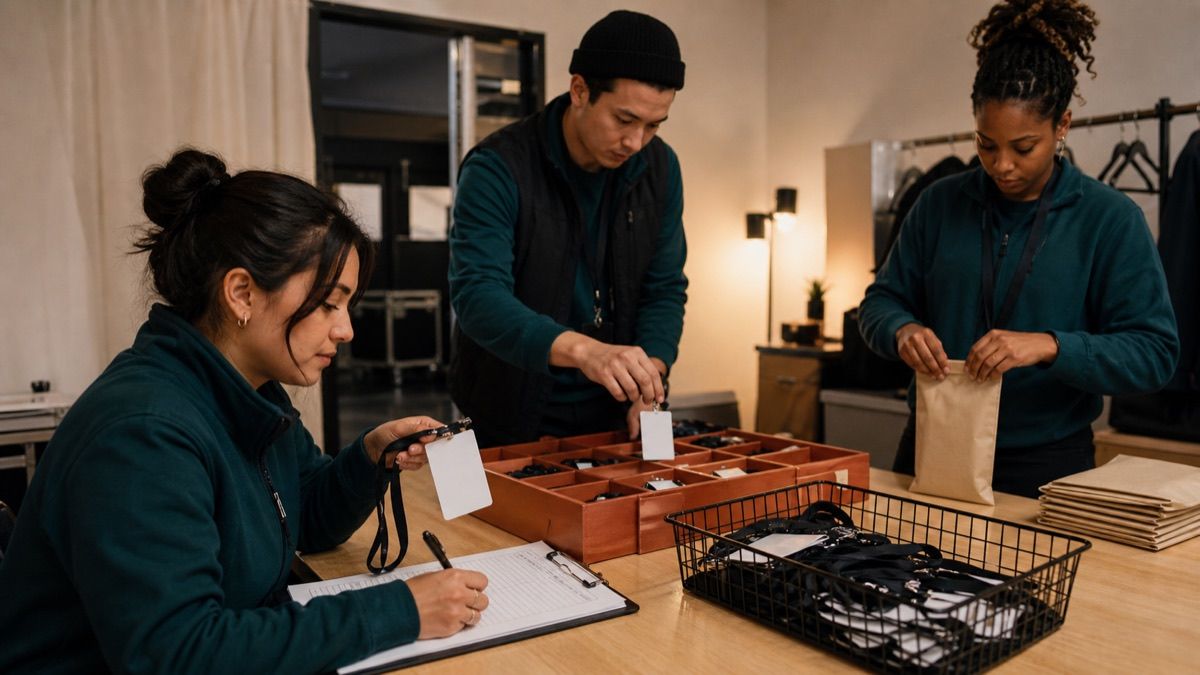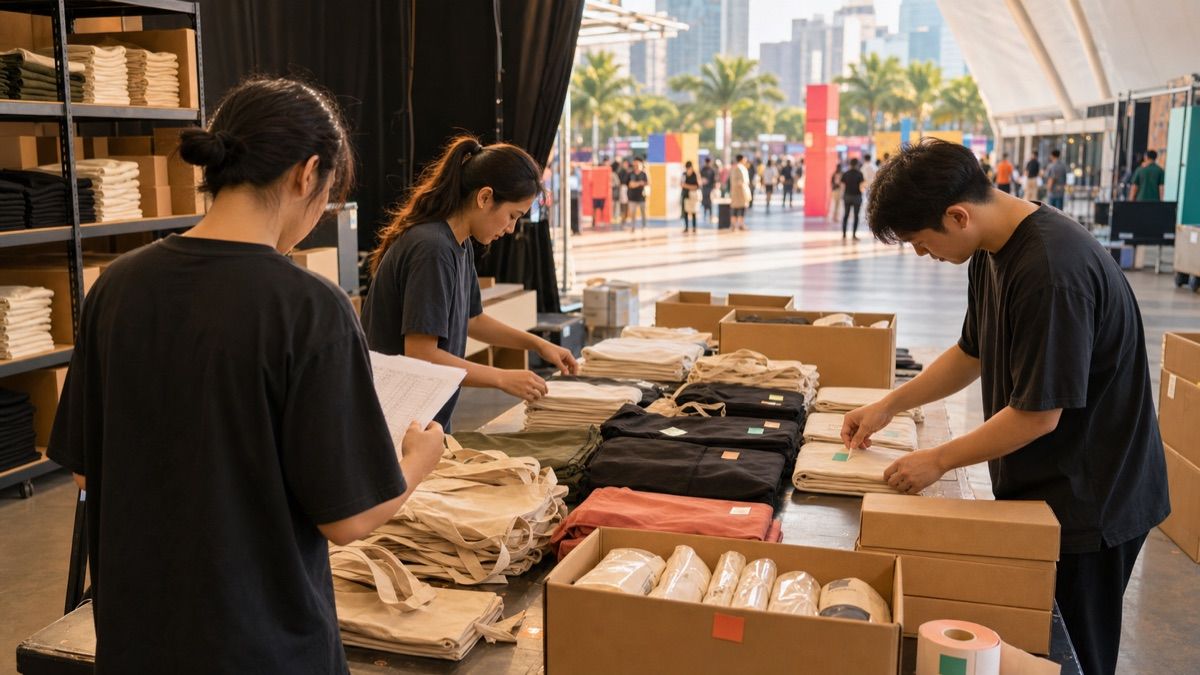
Tour merchandise localization connects rights, assortment, sizing, price, production, import, venue retail and fan support market by market. Use this Southeast Asia guide to build the operating plan.
Tour merchandise localization is the work of adapting an artist's official merchandise programme to the rights, products, sizes, prices, languages, payment methods, import rules, venue conditions, service expectations, and fan behaviours of each market. It is not simply translating product names or printing a city on the same global range.
For Southeast Asia, the important word is market. ASEAN creates regional cooperation, but it is not one customs, tax, consumer, product, currency, or venue regime. A shirt sold in Singapore, Indonesia, Thailand, or the Philippines can pass through different importers, declarations, labels, taxes, payments, returns, and local support routes.
The operating goal is to make official merchandise authentic, lawful, findable, fairly priced, available in useful sizes, and supportable after purchase—without creating stock and production complexity that the tour cannot control.
What should be localized in a tour merchandise programme?
Localize the decisions that change demand, compliance, service, or economics. These usually include:
- the product and size assortment;
- rights, artwork, territory, term, and approval;
- materials, labelling, packaging, and product-safety requirements;
- local production versus cross-border import;
- currency, displayed price, tax, fees, and payment methods;
- pre-order, pickup, venue sale, e-commerce, and post-show fulfilment;
- queue, purchase-limit, accessibility, and sold-out communication;
- customer support, exchanges, returns, defects, and complaints;
- inventory allocation, settlement, anti-counterfeit evidence, and reporting.
Localization does not mean inventing a completely new range in every city. It means holding the global identity constant while adapting the operating layer deliberately.
Start with the rights and product authority
Official merchandise may use an artist name, stage name, logo, tour title, album identity, photograph, artwork, lyric, character, sponsor mark, venue mark, or collaborator's design. Each element can have a different owner and permitted use.
The World Intellectual Property Organization's music trademark guidance notes that stage names, band logos, album titles, lyrics used in merchandise, and tour names may function as trademarks. WIPO's Making a Mark guide describes merchandising as a use of trademark, copyright, design, or personality rights on products and stresses prior authorisation.
Those are general IP principles, not a substitute for market-specific advice. The working rights schedule should still identify:
- the exact marks, images, artwork, phrases, and designs approved;
- product categories and materials;
- territories, channels, venues, dates, and sell-off period;
- who may manufacture, import, distribute, sell, promote, and fulfil;
- design, sample, packaging, price, campaign, and re-order approvals;
- quality control, inspection, rejected stock, overruns, seconds, and destruction;
- royalties, revenue share, settlement evidence, and audit rights;
- sponsor, venue, label, publisher, photographer, designer, and other third-party permissions.
A global artwork approval is not automatically a local right to manufacture, import, advertise, and sell every product in every channel.
The nine-layer tour merchandise localization system
These layers form the Rights-to-Receipt Chain. A product is not market-ready because the artwork file and factory sample exist. It is ready when the rights, goods, border, venue, transaction, service, and settlement describe the same unit.
Build the assortment from evidence, not stereotypes
Avoid reducing Southeast Asia to “hot climate, smaller sizes, lower prices.” Markets and fandoms are more varied than those assumptions, and a tour audience is not a national average.
Start with evidence the programme can legitimately use:
- size and product sell-through from comparable stops;
- ticket-buyer geography and purchase timing;
- official fan-club or pre-order signals;
- customer-service requests and historical exchanges;
- venue attendance, counter capacity, and opening hours;
- weather and material suitability for the show period;
- approved local partner knowledge;
- tested interest in products, not social engagement alone.
Record confidence beside each assumption. “Black tour shirt likely highest volume based on the last three comparable shows” is more useful than “fans here prefer black.” The first statement is testable and scoped; the second turns a limited observation into a cultural claim.
Use a global core / local layer / test layer structure:
- Global core: the identity products expected across the tour, with consistent quality and branding.
- Local layer: justified adaptations such as sizes, lightweight fabric, market-specific utility, currency-ready bundles, or a properly approved city item.
- Test layer: a small controlled quantity used to learn without distorting the whole buy.
Choose the production and import model market by market
| Model | Best suited to | Control advantage | Main risk | Evidence required |
|---|---|---|---|---|
| Central production and import | Consistent global range, protected materials, sufficient lead time | Strong sample and identity control | Freight, customs delay, tax, classification and unsold transfers | Commercial documents, declarations, landed cost, receipt and stock reconciliation |
| Regional hub and allocation | Several nearby dates with planned consolidation | Pooled inventory and replenishment options | Re-export, split allocation, storage and cross-border complexity | Market ownership, transfer records, importer/exporter roles and allocation log |
| Approved local production | Bulky basics, tight freight economics, repeat local demand | Shorter domestic movement and possible faster replenishment | Quality drift, unauthorised overrun, material inconsistency and IP leakage | Approved supplier, samples, source files, production count, QC and disposal evidence |
| Pre-order with local fulfilment | Demand capture before production or venue congestion reduction | Better size signal and lower speculative stock | Delivery promise, cancellations, identity matching and split systems | Order record, production lock, pickup or shipping proof, exceptions and refunds |
| Hybrid | Core imported range plus selected local or pre-order products | Balances identity and adaptation | Multiple systems and settlement paths | Unit-level source, channel, tax, rights and fulfilment traceability |
The model should follow the rights and landed economics. Local manufacturing is not automatically cheaper once approvals, samples, minimums, quality control, packaging, royalties, tax, and unsold stock are included. Importing is not automatically safer if the importer, classification, documents, or timeline are unresolved.
Treat ASEAN as a verification network, not one rulebook
The ASEAN Trade Repository explains that non-tariff measures can include technical regulations, standards, customs rules, and other market requirements, and that member states maintain their own measures. The ASEAN Single Window enables exchange of certain trade documents among national systems; it does not turn the region into one import procedure for tour merchandise.
Create a market verification sheet for every stop:
- legal seller and contracting entity;
- importer of record and declaring agent;
- HS classification and product description;
- customs value, origin, duty, tax, and currency basis;
- restricted or controlled materials and product categories;
- product-safety, textile, fibre, care, origin, language, packaging, or price-display requirements;
- commercial invoice, packing list, transport and permit documents;
- venue receiving window, storage, inspection, security, and unsold-stock route;
- record-retention and settlement owner.
Use the responsible national authority and qualified advisers for the current rule. For example, Singapore Customs' import overview, updated 11 June 2026, states that imported goods are regulated under Singapore laws, are subject to GST and/or duty, and require a customs permit to account for import and tax. Its temporary hand-carried goods guidance distinguishes non-commercial event equipment from commercial hand-carried goods. Sale stock should not be declared as performance equipment merely because it travels with the tour.
That example is specific to Singapore. It demonstrates why each market needs a named customs route; it should not be copied into another country.
Price the fan's transaction, not only the factory cost
The fan sees one price. The programme sees several cost and value layers:
Landed unit economics may include manufacturing, packaging, rights or royalty, freight, insurance, duty, import tax, broker fees, warehousing, domestic delivery, venue commission, payment cost, staffing, loss, defects, returns, and unsold-stock treatment.
Build the price after these assumptions are visible. Then test affordability, comparable official products, bundle logic, cash handling, change, local payment methods, and whether the price shown includes mandatory charges.
Do not promise “regional price parity” without defining parity. Currency conversion alone ignores tax, landed cost, local income, channel, product specification, and service. Instead, document the pricing objective—accessibility, consistency, margin, premium collectible value, or another priority—and the compromises accepted.
The ASEAN Guidelines on Consumer Protection in E-Commerce call for clear, truthful information about products, pricing, shipping, returns, origin, quality, and safety, while recognising that national implementation varies. The same transparency discipline improves pre-orders and online tour drops even where the exact legal obligation is market-specific.
Connect pre-order, pickup, venue sale and post-show support
A tour can operate several channels, but fans should not have to discover their boundaries at the counter.
Pre-order
State whether the order guarantees product, size, pickup location, or delivery date. Explain taxes, fees, limits, cancellation, missed pickup, identity checks, transfer, and support.
Venue retail
Publish opening hours, queue rules, payment methods, purchase limits, accessibility support, bag policy, and whether a concert ticket is required. Test counter throughput, connectivity, receipts, stock visibility, and the sold-out process.
Pickup
Separate pickup capacity from sales capacity. Design identity matching, delegated pickup, order exceptions, damaged goods, uncollected orders, and closing time.
E-commerce and post-show fulfilment
Make the seller, territory, fulfilment origin, price, tax, shipping, returns, customer-support route, and delivery promise clear. Do not use the tour's social channel as the only complaint system.
WENOTIFT's K-pop pop-up store operating guide provides a deeper access, queue, inventory, and temporary-retail framework. The fan community platform guide explains why a platform audience is not automatically a transferable customer database.
Plan inventory as a controlled range, not one forecast number
Build low, base, and high demand cases by product, size, market, and channel. Connect each case to a decision: initial buy, re-order deadline, transfer option, purchase limit, reservation rule, or post-show sale.
Retain a unit-level chain:
- approved quantity;
- produced quantity;
- accepted quantity after quality control;
- imported or locally received quantity;
- channel allocation and transfers;
- sold, held, damaged, returned, missing, and remaining units;
- cash and payment reconciliation;
- royalty and partner settlement;
- authorised sell-off, transfer, donation, recycling, or destruction.
Do not treat a queue as proof of under-supply without checking service capacity, opening time, stock visibility, purchase limits, and checkout speed. A long line can indicate demand, friction, or both.
Measure the programme without inventing a benchmark
Useful measures include:
- availability by product and size at opening and close;
- sell-through by market, channel, day, product, and size;
- gross sales, net sales, tax, fees, royalties, and settlement by defined basis;
- average items and transaction value, with refund treatment stated;
- queue time, service time, payment failure, and abandonment where measured responsibly;
- pickup completion, shipping completion, defect, exchange, return, and complaint rates;
- stock variance, damage, and unauthorised-sale or counterfeit reports;
- forecast error and which assumption caused it.
There is no universal “good” merchandise conversion or sell-through rate that applies across artists, markets, products, prices, venues, and channel rules. Use the programme's own comparable evidence and label differences before drawing a conclusion.
The market-ready gate
Before approving production or shipment, confirm:
- Rights cover the product, market, channel, term, assets, and manufacturer.
- Samples, materials, sizes, packaging, labels, and quantities are approved.
- The seller, importer, declarant, venue, fulfilment partner, and support owner are named.
- Current customs, tax, product, consumer, payment, privacy, and record rules are verified locally.
- Landed economics and displayed fan prices reconcile.
- The allocation, re-order, transfer, returns, and unsold-stock plan is controlled.
- Pre-order, pickup, venue, and online promises agree.
- The reporting and royalty trail can reconcile units to money.
If one of these is unresolved, the product may be creatively finished but it is not market-ready.
Localised merchandise is a partnership deliverable like any other. WENOTIFT is an AI-powered brand-partnership platform — a real-time partnership dashboard brands, promoters and event partners use to track rights, approvals and activation across every market on a tour.
Sources
- WIPO — Music trademarks
- WIPO — Making a Mark: An Introduction to Trademarks
- ASEAN Trade Repository — Non-tariff measures
- ASEAN Single Window — What is the ASEAN Single Window?
- ASEAN Committee on Consumer Protection — Guidelines on Consumer Protection in E-Commerce
- Singapore Customs — Import Procedures Overview, updated 11 June 2026
- Singapore Customs — Temporary Importation or Exportation of Hand-carried Non-commercial Goods, updated 24 February 2026
Turn the global range into a market-ready fan retail system.
Talk to WENOTIFT about rights, assortment, Southeast Asia market evidence, production, import, venue retail, fulfilment, inventory and settlement for your next tour.