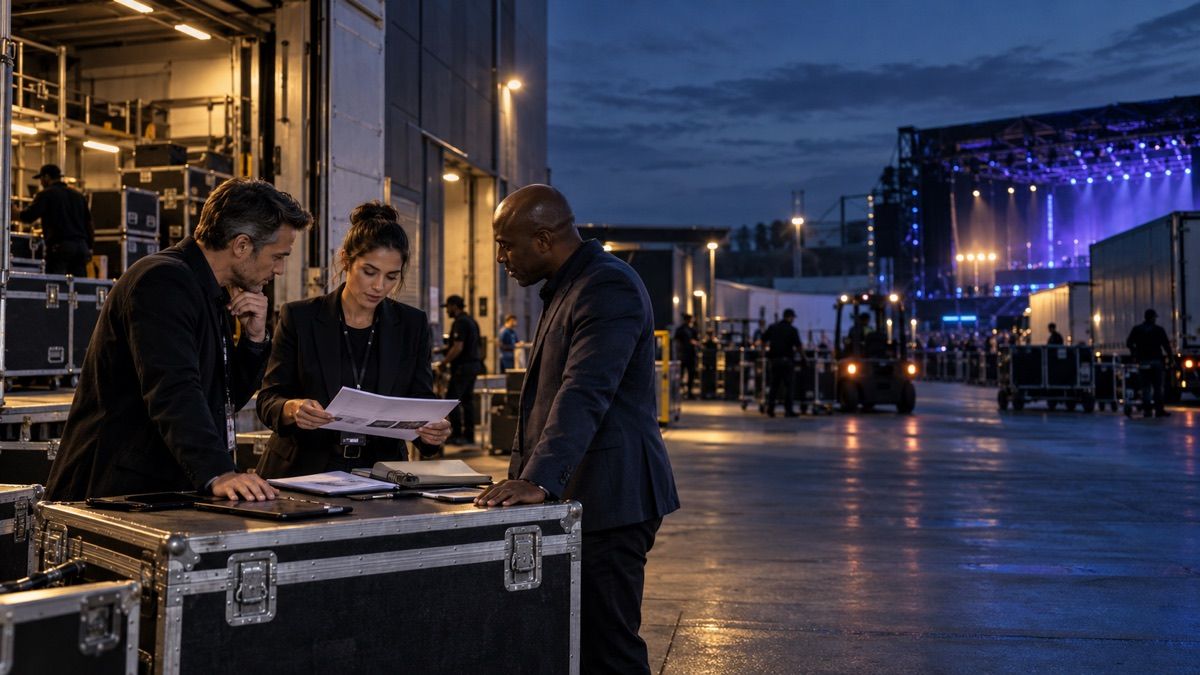
The real work of a sponsorship starts after the deck: a shared operating record keeps discovery, decisions, delivery and proof connected.
Most entertainment partnerships begin with a compelling deck. It names the audience, the property, the creative idea and a set of promised outcomes. But a deck cannot own a decision, route an approval, show which commitment is overdue or prove what was delivered.
The work begins when the presentation ends. A brand, partner and partnerships desk need a way to carry the same context from the first opportunity through signing, activation and closeout. That is an operating system for the partnership—not another place to store slides.
A campaign deck captures intent. An operating system carries responsibility.
The difference is not semantic. A deck is designed to persuade. A partnership record is designed to operate.
| A campaign deck | A partnership operating system |
|---|---|
| Makes the opportunity understandable | Keeps the next owner and decision visible |
| Freezes a commercial moment | Follows the agreement into live work |
| Is revised and re-sent | Preserves the current context and decision trail |
| Ends at approval | Connects approval, delivery, evidence and closeout |
The goal is not to replace creative thinking with process. It is to make sure a strong creative idea can survive the real work required to deliver it.
Where partnerships lose their shape
The usual failure is not one dramatic error. It is a chain of small reconstructions: a partner sends an updated inventory note, a brand keeps approvals in a separate thread, the desk remembers a commercial caveat from a call, and production receives an old version of the scope. An operating system creates continuity, making the record durable enough to outlast the deck, the meeting and the first person who knew all the context.
The four jobs the record must do
| Job | What it keeps connected | Question it answers |
|---|---|---|
| Discover | Opportunity, brief and commercial origin | Why is this partnership in the room? |
| Decide | Qualification, proposal, negotiation and signature | What has been agreed, and by whom? |
| Deliver | Commitments, owners, approvals and timing | What needs to happen next? |
| Prove | Evidence, confirmation and closing report | What was actually delivered? |
The order matters. A post-event recap cannot repair an unclear scope. A beautiful activation plan cannot substitute for a decision trail. Reporting should be built from confirmed delivery—not from a presentation written after the fact.
One record, different workspaces
No single screen needs to show every detail to every participant. The better model is one connected record with the right workspace for each responsibility. Vella is the commercial side: brands and partners use it to discover opportunities, work through a desk-reviewed match, receive a quote and sign the sponsorship letter.
After the desk countersigns, the agreement becomes live. The brand works in Patron; the partner works in Scena. Vella remains the commercial layer for status, money and workspace links rather than duplicating either side’s delivery tools. Cross-party activity stays in Vella; Patron and Scena each concentrate on the signed partnership from their side.
What a useful operating rhythm looks like
- Start with the opportunity’s real context: inventory, audience, market, timing, rights and the commercial objective.
- Keep qualification, proposal and the sponsorship letter in the desk-led commercial flow.
- Turn every signed commitment into an owned item with a visible state, then attach approvals and evidence to the commitment they affect.
- Build the closeout from confirmed rows, not assumptions or retrospective claims.
Better partnership work is less about more dashboards
Most teams do not need a larger collection of tools. They need fewer places where a promise can become detached from its owner, context or evidence. An operating system creates a disciplined path from request to match, agreement, delivery and proof.
Move your next partnership from deck to delivery without losing the thread.
Talk to WENOTIFT about running your next entertainment partnership through Vella, Patron and Scena.