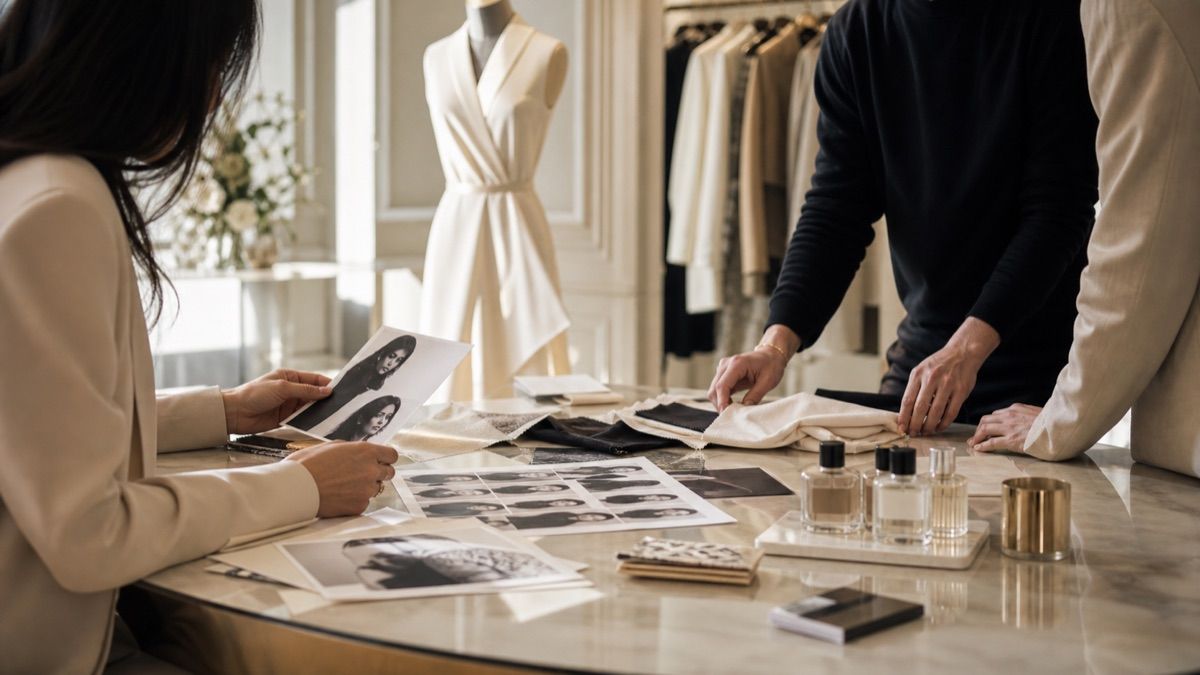
How Chanel and luxury houses use brand ambassadors as strategy — the selection logic behind each face, the assets an ambassador carries, and why cultural fit consistently beats raw fame.
A luxury house does not appoint a face the way a mass-market brand books a spokesperson. When a house like Chanel names an ambassador, it is making a public statement about who the brand is, who it is for, and what it considers relevant. The face becomes part of the brand's identity for the duration of the relationship, and every observer reads the pairing as a signal.
That is why ambassador selection at the luxury tier is a strategic decision rather than a media buy. The right appointment can extend a house into a new generation or a new region without diluting what made it desirable. The wrong one can make a heritage brand look like it is chasing attention. This piece breaks down the logic — how a house of this kind chooses its faces, what an ambassador actually carries, and the framework other brands can borrow from the playbook.
Why a luxury house keeps its roster small
The instinct of a scaling brand is to add faces. More ambassadors, more reach, more categories covered. Luxury houses tend to do the opposite, and the restraint is deliberate.
Scarcity is part of the product. A house that sells exclusivity cannot hand its identity to a crowd of endorsers without contradicting the thing it sells. A small, curated set of ambassadors keeps each association meaningful. When a face is one of only a handful, the appointment reads as a considered choice; when it is one of dozens, it reads as a transaction. The roster itself communicates the brand's standards.
A tight roster is also easier to govern. Each relationship can be deep, long, and closely managed, rather than shallow and interchangeable. That depth is what allows an ambassador to become genuinely associated with the house rather than momentarily attached to it.
The selection logic: fit over fame
The most common mistake outside the luxury tier is to rank candidates by reach. Houses that choose well rank them by fit first, and treat reach as a qualifier rather than the objective. Four criteria tend to sit underneath a strong appointment.
Identity fit. Does the person already embody something the house wants to stand for — a register of taste, a point of view, a way of carrying themselves? An ambassador who has to be reshaped to fit the brand will always read as borrowed. One whose existing image overlaps with the house feels inevitable.
Exclusivity. A luxury face should not also be the face of five competing categories. The value of the association depends partly on its rarity. A person who endorses everything endorses nothing in particular.
Register. The tone matters as much as the reach. A house cultivating quiet authority needs a face that carries it. Volume and controversy can generate attention while actively working against the brand's positioning.
Longevity over virality. A viral moment fades in a quarter. A house is building an association meant to compound over years. The better question is not "who is peaking right now" but "who will still make sense for this brand in three years."
A luxury ambassador is not rented attention. The house is buying a long-term association, and the only associations worth buying are the ones that will still make sense when the current news cycle has moved on.
What an ambassador actually carries
It helps to be precise about what a house is acquiring when it appoints a face. An ambassador is not one asset but a bundle of them, and different appointments emphasise different parts of the bundle.
| Asset | What it delivers | Where it matters most |
|---|---|---|
| Attention | Immediate visibility and search interest around the brand | Launches, new-market entry |
| Association | Transfer of the person's meaning and taste onto the house | Repositioning, premium reinforcement |
| Mobilisation | An audience that acts — shows up, engages, advocates | Events, drops, regional activation |
| Rights | Contracted use of image across campaigns and channels | Sustained, controllable presence |
A house that understands the bundle appoints against the asset it actually needs. If the goal is credibility in a new region, association and mobilisation matter more than raw attention. If the goal is a single launch, attention may carry the campaign. Naming a face without knowing which asset you are buying is how brands overpay for reach they cannot use.
Why luxury houses increasingly appoint K-pop and Asian faces
The move toward K-pop and broader Asian talent among luxury houses is not a trend-chase. It follows the commercial map. Three forces sit behind it.
Regional growth
A large and rising share of luxury demand comes from Asian markets. Appointing faces who are already central to culture in those markets is how a European house earns local relevance rather than assuming it. The ambassador becomes a bridge into an audience the house wants to serve directly.
Participatory fandoms
K-pop fandoms are unusually organised and engaged. They amplify, translate, and archive brand moments as a matter of habit, and they turn up for activations in person. For a house that runs events, drops, and campaigns, that mobilisation is a distinct asset — the difference between an audience that watches and one that acts.
Cultural relevance
Appointing a face who genuinely shapes the current cultural conversation keeps a heritage house contemporary without abandoning its codes. The most cited illustration of this pairing is the long-standing, widely known association between Jennie of BLACKPINK and Chanel — an example of how a house can attach itself to a globally resonant figure whose image sits comfortably within the brand's own register. The point is the mechanism, not the terms: cultural fit, not fame alone, is what makes such a pairing hold.
Portfolio discipline
Once a house holds several ambassadors, the roster has to be managed as a portfolio rather than a list of individual deals. The discipline is mostly about avoiding self-inflicted collisions.
Portfolio thinking is what separates a house with a strategy from a house that simply signs whoever is available.
The risks a house has to price in
Every appointment carries exposure, and mature houses plan for it rather than hope it away. Four risks recur.
- Misfit. A face that does not genuinely align forces the brand to explain the pairing, which is a sign the pairing failed. The cost is credibility, not just budget.
- Over-exposure. A face attached to too many brands dilutes the exclusivity a luxury house is paying for. Even a perfect fit loses value when it is everywhere.
- Fandom backlash. Participatory audiences are powerful and can turn when they read a partnership as inauthentic or a signal as a slight. The same organisation that amplifies can also mobilise against.
- Reputational spillover. An ambassador's public conduct attaches to the house. Contracts and monitoring exist precisely because the association runs both ways.
None of these argue against ambassadors. They argue for choosing deliberately and structuring the relationship so the downside is contained.
A decision framework other brands can borrow
The Chanel-style playbook generalises. Before appointing a face, a brand should be able to answer, in order: which asset are we buying — attention, association, mobilisation, or rights; does this person fit our identity and register before we consider their reach; is the association exclusive enough to stay meaningful; will this still make sense in three years; and where does this face sit in our overall portfolio. A candidate who scores on reach but fails on fit should lose to one who fits, every time.
This is also where scoring the decision, rather than intuiting it, becomes practical. Platforms such as WENOTIFT — an AI-powered brand-partnership platform and real-time partnership dashboard — exist to make artist–brand fit and partnership risk explicit, so a house can weigh association and exposure on evidence rather than instinct before it commits a face to the brand.
Related reading: The BLACKPINK luxury playbook · Thai stars as brand ambassadors · How brands partner with Asian fandoms
Sources
- House and brand official ambassador announcements
- Established luxury and fashion business press
- Industry reporting on global luxury-market demand and regional growth
- IFPI — regional music-market and fandom context
Choose ambassadors for fit, and manage them as a portfolio.
Talk to WENOTIFT about artist–brand fit, audience overlap, and partnership risk before you appoint a face.