Global houses are appointing Thai stars as ambassadors. The logic is fit over reach — the assets a Thai endorsement actually sells, and how brands should price them in 2026.
For most of the last decade, the shortlist for a global luxury or beauty ambassador ran through the same few markets. Thai talent sat outside it — visible regionally, rarely in the room where a house chose its next global face. That has changed, and not by accident. Thai actors and artists now appear in the campaigns, front rows, and beauty roles that define who a brand wants to reach next.
The instinct is to read this as a reach story: bigger followings, bigger markets, sign the biggest name. That instinct is expensive and usually wrong. A Thai ambassadorship is not primarily a reach purchase — it is a fit purchase. Understanding what a Thai endorsement actually sells, and to whom, is the difference between a signing that compounds and one that quietly underperforms its fee.
Why global houses now appoint Thai faces
Three shifts moved Thai talent from regional to global consideration, and none of them is simply "more followers."
The first is screen crossover. Thai series and film travel now in a way they did not five years ago, carried on global streaming platforms into markets that had never scheduled Thai content before. An actor who once reached a domestic audience now reaches a distributed one, and a face that is legible across borders is exactly what a global campaign needs.
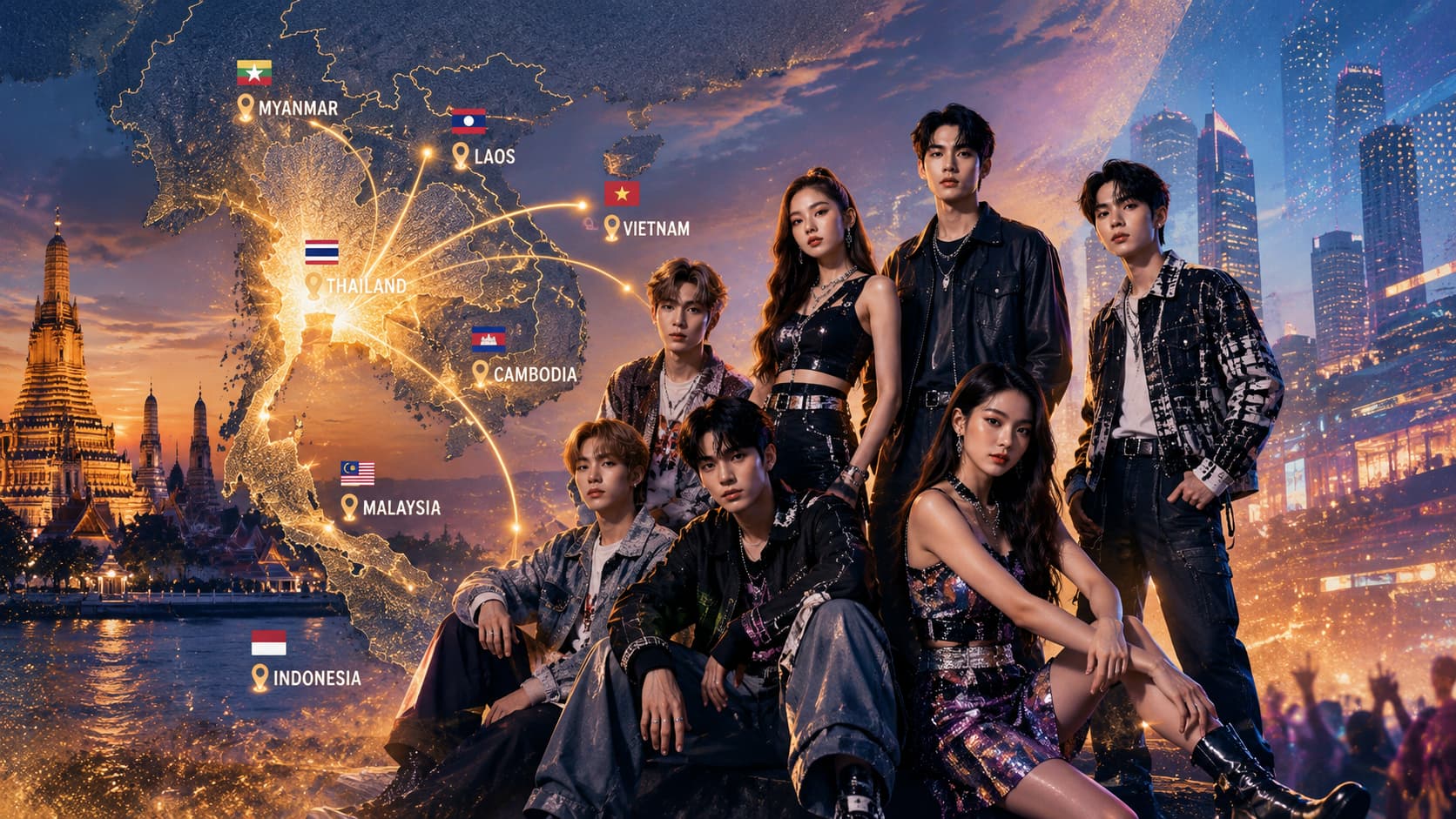
The second is regional pull. Thai talent anchors demand across Southeast Asia and increasingly East Asia — a bloc of young, digital-first, aspirational consumers that luxury and beauty have spent years trying to reach without cheapening the brand. A Thai ambassador is a credible bridge into that bloc rather than a translated afterthought.
The third is the nature of the fandoms. Thai audiences, particularly around series and music, are participatory. They do not just watch; they mobilise — around drops, appearances, and campaign moments — and they do it fast. That behaviour is what turns an appointment into measurable attention.
Fit over reach: the core principle
Reach tells you how many people a face can put in front of a brand. Fit tells you whether those people will read the pairing as true. Only the second one moves the needle, because an audience that senses a mismatch discounts the endorsement automatically — the numbers are large, the effect is thin.
Reach is necessary but not sufficient. The value is never "a Thai star" in the abstract; it is the specific match between a person's public identity and what a house is trying to signal. Get that match right and a modest campaign outperforms a large one. Get it wrong and no follower count rescues it.
This is the same discipline that governs the most-studied endorsement portfolios in the region. The transferable rule is boring and reliable: match identity, then check reach — never the reverse.
The four assets an ambassador actually sells
When a brand pays for an ambassador, it is buying four distinct assets. They are priced together but they are not the same thing, and most weak deals are weak because the brand paid for one and needed another.
A serious brief prices all four. A weak one pays for attention and hopes the other three arrive on their own.
Category fit: where Thai endorsements land
Fit is category-specific. A face that reads perfectly for beauty may be a stretch for heritage watchmaking, and the right question is never "is this person famous" but "is this person legible in this category." The table below is a general map of how Thai talent tends to align, not a scorecard for any individual.
| Category | What the house is signalling | Why Thai talent can fit |
|---|---|---|
| Luxury fashion | Aspiration, taste, cultural currency | Screen crossover and front-row visibility make style legible globally |
| Jewellery & watches | Heritage, precision, quiet status | Works when the person's image reads as timeless rather than trend-led |
| Beauty & skincare | Accessibility, aspiration, routine | Strong regional pull and high engagement suit a category built on repetition |
| Tech & devices | Modernity, everyday relevance | Broad, cross-demographic appeal fits mass-premium positioning |
| Lifestyle & F&B | Warmth, relatability, local trust | Participatory fandoms convert well around accessible price points |
The pattern to read here is that luxury and jewellery reward identity fit above all, beauty rewards engagement and regional pull, and lifestyle rewards mobilisation. A brand should know which lever its category actually pulls before it shortlists anyone.
Exclusivity and portfolio discipline
Houses avoid overlapping faces for a reason, and it is not vanity. When two competing brands share an ambassador, or when one face carries too many deals at once, the association each brand is paying for gets diluted — the audience can no longer tell what the person stands for, so neither can the brand.
Why exclusivity holds value
Exclusivity lets a house claim a face as its own. That claim is a large part of what the fee buys: a clean, uncontested link between person and brand that competitors cannot also assert. Break the exclusivity and the premium leaks out of every deal touching that face.
Reading the whole portfolio
Association is cumulative, which means a new signing never lands in isolation. It lands on top of every other partnership the person already holds. A brand that maps only the deal in front of it — and not the full portfolio around it — will regularly discover a clash or a dilution it could have seen in advance. This is where illustrative cases help: prominent Thai artists such as Lisa of BLACKPINK, who is Thai, have held major global luxury and beauty roles, and the instructive part is the discipline of separation, not the specifics of any current contract.
The risks a brand is actually taking
Three failure modes account for most disappointing endorsements, and all three are foreseeable.
- Misfit. The pairing does not read as true, so association never transfers no matter how large the reach. The campaign generates impressions and little else.
- Over-exposure. The face carries too many deals, and each new one adds less than the last. The audience stops registering any single brand.
- Fandom backlash. A tone-deaf activation, an ignored community, or a partnership that feels extractive can turn mobilisation against the brand. Participatory fandoms amplify criticism as efficiently as praise.
None of these is exotic. Each is visible before signing if the brand does the work of assembling what is already public — the portfolio, the audience overlap, the community's history — rather than reacting to it afterward.
A decision framework for brands
The point of all of the above is a repeatable order of operations. Before a fee is agreed, a brand should be able to answer, in sequence: does the person's identity fit the category and what we want to signal; which of the four assets are we actually buying, and are we paying for the right ones; is the role exclusive enough to be worth its premium; and what does the full portfolio around this person tell us about clash and dilution risk.
This is precisely the kind of assessment that benefits from being assembled rather than assumed. WENOTIFT works as an AI-powered brand-partnership platform — a real-time partnership dashboard for scoring artist fit, audience overlap, and partnership risk from public and clearly-labelled inferred data. It informs the decision; it does not represent talent or negotiate deals. The gap between the story everyone already knows and the analysis almost no one runs before signing is exactly where that layer earns its place.
Done in this order, a Thai ambassadorship stops being a bet on fame and becomes a priced decision — fit first, assets named, exclusivity protected, portfolio read. That is the whole economics of it.
Related reading: Thai BL's global fandom economy · How brands partner with Thai fandoms · The BLACKPINK luxury playbook
Sources
- Brand and house official ambassador announcements
- IFPI — Official Thailand Chart
- Netflix — Thailand content and viewership reporting
- Launchmetrics — Media Impact Value methodology
- Business of Fashion — ambassador and luxury coverage
Buy the right four assets, matched to the message.
Talk to WENOTIFT about artist fit, audience overlap, and partnership risk before you sign a Thai ambassador deal.