Thai BL series built global, highly participatory fan communities that convert into ticket sales, travel, and brand demand. This is the commercial mechanics brands should understand in 2026.
Thai boys' love series, widely known as Thai BL, began as a niche television format and grew into one of the most reliable engines of participatory fandom in Asian entertainment. What makes the category commercially interesting is not the size of the audience alone but the way that audience behaves. Viewers do not simply watch. They translate, clip, organise, travel, and buy. For brands trying to understand where cultural attention converts into demand, Thai BL is a useful case study because the conversion path is unusually visible.
This post is a structural look at how Thai BL fandom functions as an economic system, and what that means for brand decisions in 2026. The intent is to describe mechanisms rather than fabricate figures. Precise numbers move constantly and are often unverifiable, but the underlying commercial logic is stable enough to plan around. Brands that understand the logic can partner well. Brands that treat this audience as generic reach tend to underperform and, occasionally, cause reputational friction.
How Thai BL Built International Fan Communities
Thai BL scaled internationally for a simple reason: it was distributable and it was participatory at the same time. Streaming access, combined with active social platforms, meant a series produced in Bangkok could reach viewers across Southeast Asia, East Asia, Latin America, and the West within the same broadcast window.
The audience did the rest. Fan translators subtitled episodes and social clips into dozens of languages, often within hours of airing. Clippers cut emotionally resonant scenes into short-form content that circulated far beyond the original series. This unpaid distribution layer is central to the category. It means a Thai BL title can build a durable international community without a large formal marketing spend, because the community itself performs the distribution.
For brands, the takeaway is that reach here is earned and networked rather than bought and broadcast. The people amplifying a series are also the people most receptive to what its actors endorse.
The Actor-Pairing Model
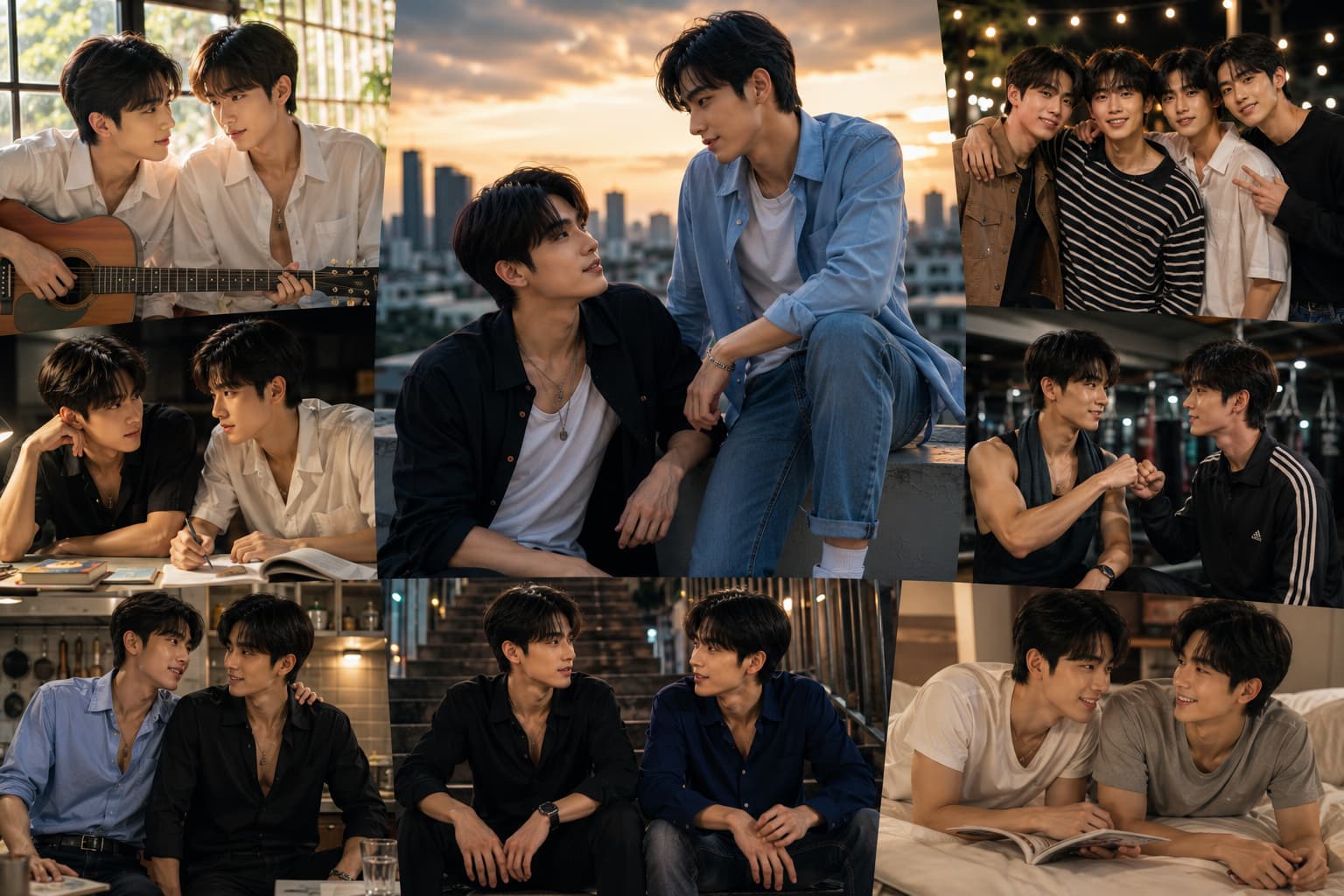
The organising unit of Thai BL fandom is usually not the individual actor but the pairing. In Thai industry language this is often referred to as a "khu jin", loosely a fantasy or shipped couple. Two actors are cast together, build on-screen chemistry, and are then presented as a linked pair across promotion, fan events, and often subsequent projects.
This model has clear commercial consequences.
- Fan attention attaches to the relationship, not only to two separate individuals, so demand is concentrated and easy to locate.
- The pairing becomes a stable unit that can be booked, promoted, and merchandised together across multiple years and titles.
- Endorsements often work best when they respect the pairing, because splitting a well-loved pair can feel to fans like a downgrade.
- Loyalty is high and defensive, which raises both the upside of getting a partnership right and the cost of getting it wrong.
Brands should treat the pairing as the real asset. A campaign built around one half of a beloved pair, or one that ignores the relationship the audience actually cares about, leaves most of the value on the table.
Major Producers and the Supply Side
The category is anchored by established Thai producers and networks, of which GMMTV is the most internationally recognised. At a general level, these companies function as the supply side of the fandom economy: they develop series, manage talent, coordinate fan events, and increasingly build direct commercial relationships between their actors and brands.
Their role matters to partners for a practical reason. Because talent is often managed inside these ecosystems, brand deals are frequently negotiated and activated through the producer or its management arm rather than through fragmented individual representation. This makes campaigns more coordinated, but it also means the producer's own calendar, priorities, and standards shape what is possible.
The healthiest way to read a Thai BL partnership is as an introduction between a brand and a community that a producer and its talent have spent years building. The brand is a guest in that relationship, not the owner of it.
Understanding who controls the calendar and the talent relationships is the first practical step for any brand considering entry.
How Fandom Converts Into Commercial Demand
The defining feature of Thai BL is that attention converts into measurable behaviour through several repeatable channels. Each one is a place where cultural interest becomes spend.
Fan translation and clipping
Volunteer subtitling and clip-making extend a series far beyond its original market and keep older titles alive. This sustains long-tail demand and means an actor's relevance can outlast any single show. For brands, it signals durability: the audience is not purely tied to a broadcast moment.
Fan-meeting and concert ticket sales
Fan meetings and live tours are among the clearest conversion points. Communities that formed online translate into paid, in-person attendance, often across multiple cities and countries. Ticketed events are a strong demand signal because they require money, time, and travel, not just a tap.
Fan-support projects
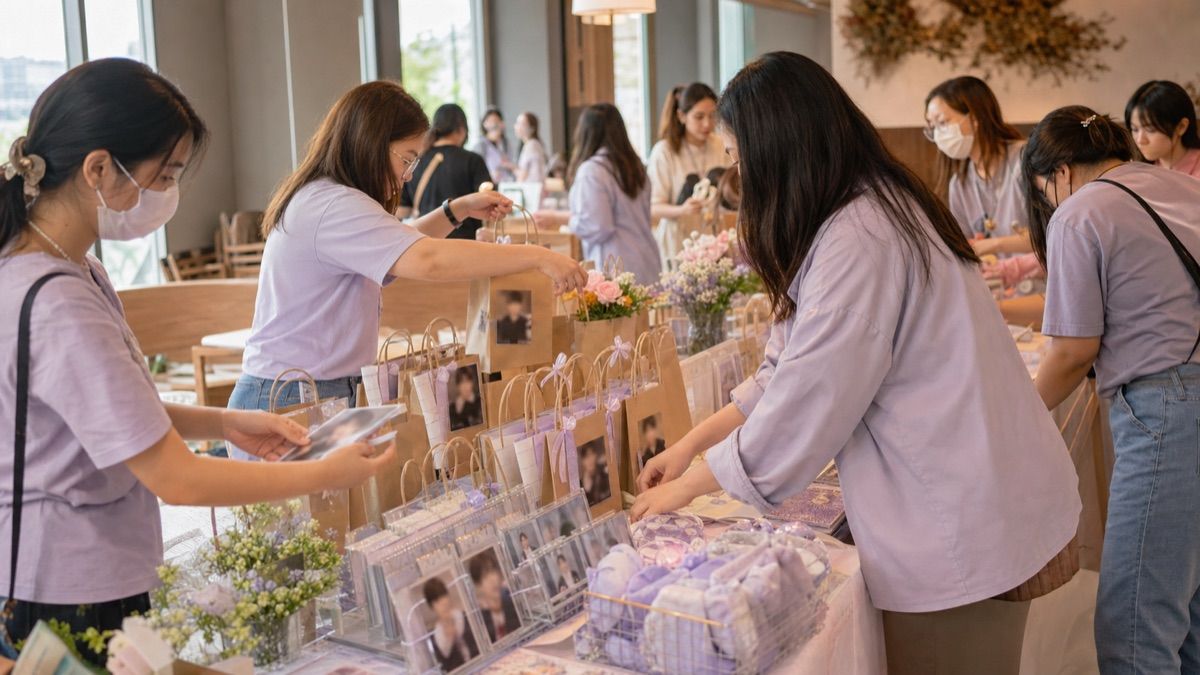
Organised fan support, including coordinated gifts, charity drives, and public displays such as advertising placements funded by fans, shows a community willing to pool resources toward a shared object of affection. This is a level of commitment that ordinary audiences rarely display, and it is a useful proxy for partnership potential.
Travel and tourism demand
Because much Thai BL content is tied to specific locations, and because live events cluster in particular cities, the fandom generates real cross-border travel. Fans plan trips around events and filming locations, which links the category to hospitality, transport, and retail in destination markets.
Taken together, these channels explain why the category punches above its raw audience size. The community is primed to act, not merely to view.
Which Brand Categories Fit
Not every product suits this audience equally. Fit tends to follow the moments where fans already spend, particularly around events, travel, and self-presentation. The table below is a general guide to alignment, not a ranking of guaranteed returns.
| Brand category | Why it tends to fit | What to be careful about |
|---|---|---|
| Beauty and skincare | Strong overlap with actor image and fan self-presentation | Product claims must be credible; avoid tokenism |
| Fashion and apparel | Pairings drive style aspiration and collectible drops | Respect the pairing; avoid splitting a beloved duo |
| Travel and hospitality | Event-driven travel creates natural demand | Deliver real value at the destination, not just logos |
| Retail and lifestyle | Merchandise and collaboration culture is mature | Scarcity and authenticity matter to this audience |
| Mobile and tech | High digital engagement and content creation | Utility should match the fan behaviour, not interrupt it |
The pattern is consistent: categories that support how fans already express affection and identity outperform categories that simply want borrowed attention.
The Risk of Treating a Close Community as Generic Reach
The most common and most costly mistake is to buy Thai BL talent as if it were an interchangeable impression source. This audience is close-knit, attentive, and protective. It notices when a brand understands the relationship it is entering and when a brand is merely renting a face.
Three risks recur. First, treating a pairing as two separable individuals, which reads as ignorance of the thing fans care about most. Second, activating without cultural literacy, which can turn an intended celebration into a perceived slight. Third, extractive campaigns that take attention without offering the community anything of value. Because these fans coordinate, negative sentiment does not stay contained.
The corrective is straightforward: enter as a partner to a community, respect the pairing, and give fans a reason to feel the brand improved their experience rather than intruded on it.
A Practical Framework for Brands
For teams evaluating a Thai BL partnership in 2026, a disciplined sequence keeps decisions grounded.
This is the kind of structured evaluation an AI-powered brand-partnership platform is built to support, giving teams a real-time partnership dashboard to compare talent, track demand signals, and manage activations without guesswork. The discipline the framework enforces is what separates partnerships that convert from those that merely spend.
Thai BL will keep evolving as a format. The commercial system underneath it, participatory fandom that converts attention into tickets, travel, and considered purchases, is stable enough to plan around now. Brands that respect how that system works will find one of the more efficient and loyal audiences in Asian entertainment.
Related reading: Thailand's entertainment industry in 2026 · Thai stars as brand ambassadors · How brands partner with Thai fandoms
Sources
- GMMTV — official channels and announcements
- Netflix — Thailand content and international distribution
- IFPI — Official Thailand Chart and market context
- Tourism Authority of Thailand — event and travel demand context
- Established Thai entertainment press and producer newsrooms — general category reporting
Match the pairing and the moment before you sign.
Talk to WENOTIFT about artist and pairing fit, fandom demand signals, and partnership risk across Thai entertainment.