The Gulf has become one of the world's fastest-growing live-entertainment markets — Saudi Arabia's events sector alone is estimated near US$14.6 billion in 2026. A data-led map of the GCC across Arab, Western, and Asian entertainment: market size, revenue, tours, spending power, and fans.
A decade ago, the Gulf was a place global artists flew over on the way to somewhere else. Today it is a place they route their world tours through — and increasingly, a place they open in. The change is not cultural nostalgia. It is a market that got large, young, and liquid at the same time, and then spent deliberately to build the infrastructure entertainment needs.
This article is a data-led map of that market. Not a single headline number, but the structure underneath it: how big the GCC entertainment economy actually is, where the revenue comes from, who the audience is, and how three very different entertainment worlds — Arab, Western, and Asian — now compete for the same Gulf wallet.
A note on the figures. Market sizing in the region varies by source and definition, so the numbers below are best read as directional estimates, not audited accounts. What is not in doubt is the direction: every credible indicator points up and to the right.
How big is the GCC entertainment market?
Start with the anchor market. Saudi Arabia's entertainment and events market has been estimated at roughly US$12.96 billion in 2025, rising toward US$14.61 billion in 2026, with longer-range projections approaching US$34 billion by 2035 at a compound growth rate around 12.8%. That single national figure is larger than the entire entertainment economy of many mid-sized countries.
Zoom out to the region and the picture holds. The GCC event-management market — the machinery that stages concerts, festivals, and live experiences — has been valued at around US$7.2 billion in 2026, growing toward roughly US$9 billion by 2031. Within it, ticket sales account for more than half of activity, and music concerts and festivals make up around 28% of the Saudi events segment alone. Festivals specifically are among the fastest-growing lines, expanding at a double-digit annual rate.
Three things make these numbers unusual:
- They are policy-backed, not just market-driven. Saudi Vision 2030 and comparable national strategies treat entertainment as economic infrastructure, which means sustained public investment behind the private demand.
- They are concentrated but spreading. Saudi Arabia holds close to 45% of the GCC events market, but the UAE, Qatar, and the smaller states each run distinct, growing calendars.
- They compound fast. Double-digit CAGRs mean this is not a market you can assess once. A read from two years ago is already stale.
The audience: young, urban, and ready to spend
Market size means little without the demand behind it. The Gulf's is structurally strong for entertainment in a way few regions match.
- It is exceptionally young. The GCC's youth population has been reported at around 23.5 million — roughly 38% of the total, and by some counts close to 64% of GCC citizens are under 30. Entertainment is a young person's category, and the Gulf has the demographic tailwind.
- It has spending power. Consumer spending across the GCC has been forecast to outperform global peers, with UAE real consumer spending rising around 5% in a recent year — among the highest rates worldwide. Regional growth is projected to accelerate from roughly 3.2% in 2025 toward 4.5% in 2026.
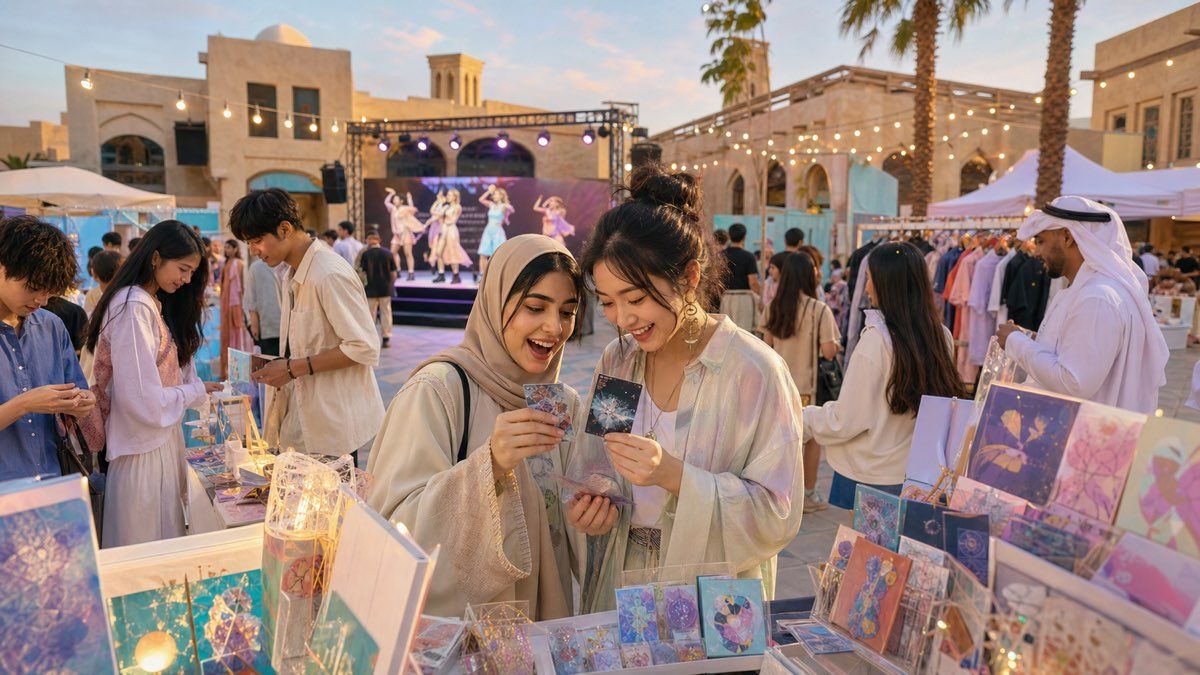
- It is diverse. The Gulf combines a young national population with a large expatriate one — including significant South Asian, Southeast Asian, and East Asian communities. That mix is why so many different entertainment cultures find a live audience here at the same time.
A young, urban, high-spending, internationally mixed audience is close to the ideal customer base for live entertainment. The GCC has all four at once.
Three entertainment worlds, one wallet
What makes the Gulf market genuinely distinctive is that it supports three different entertainment ecosystems simultaneously — and the same consumer often participates in all three.
The strategic point for any brand or promoter is that these are not competing audiences to choose between. They are overlapping appetites inside the same demographic — and the market is now large enough to fund all three.
Reading the GCC market-by-market
The GCC is not one market; it is six, each playing a different role. Sizing every national entertainment economy precisely is difficult with public data, but the roles are clear and stable enough to plan around.
| Market | Strategic role | Signature strength |
|---|---|---|
| Saudi Arabia | Scale and spend leader | Riyadh Season, Soundstorm, the largest anime expo in the region |
| UAE | Regional launchpad and international hub | Abu Dhabi and Dubai arenas, dense event calendar, global connectivity |
| Qatar | Premium events and sport-culture crossover | World-class post-2022 venue and hospitality infrastructure |
| Kuwait | Established, music-literate audience | A long-standing concert-going and music-buying culture |
| Bahrain | Compact, open, festival-friendly | Accessible calendar and cultural programming |
| Oman | Emerging and culture-forward | Growing arts and festival footprint from a lower base |
The planning lesson: choose the Gulf market by the job the activation needs to do — national scale and spend, international launch, premium positioning — rather than treating "the GCC" as a single interchangeable audience.
What the numbers mean for brands and promoters
Put the data together and a few conclusions are hard to avoid.
- The Gulf is a primary market now, not a bonus date. At this size and growth rate, it deserves dedicated strategy, not a copy-paste of a European or Asian plan.
- The audience rewards range. Because the same consumer engages Arab, Western, and Asian entertainment, the winning approach is usually specific and culturally fluent, not a single global asset dropped in.
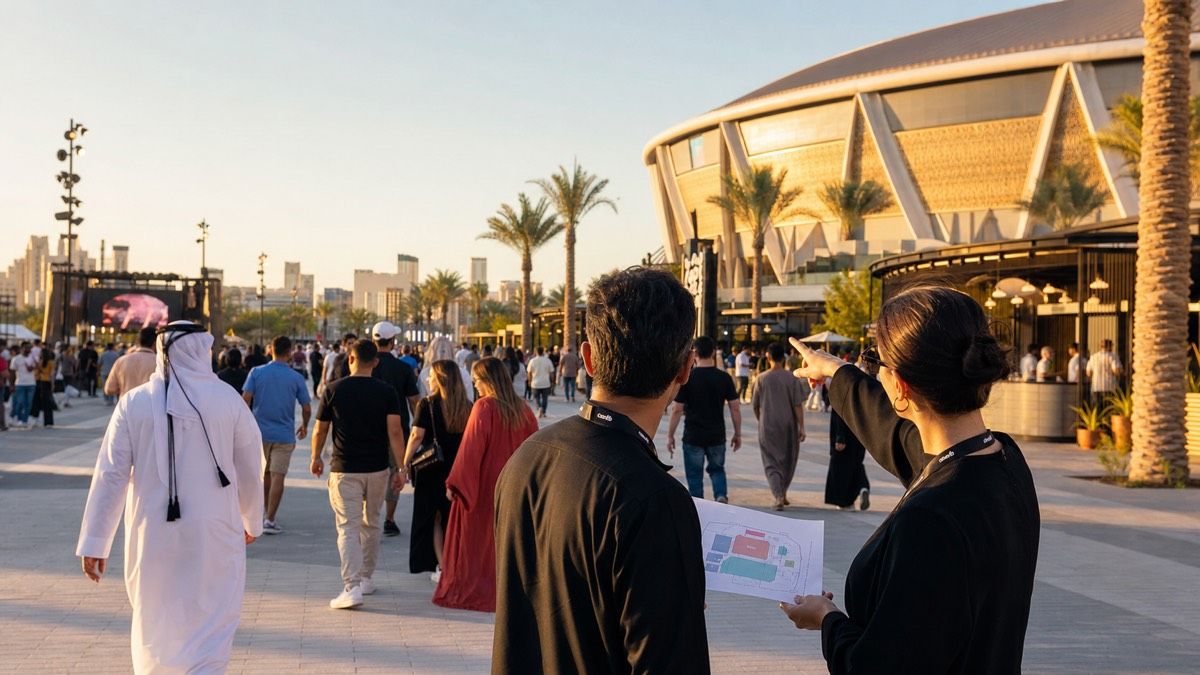
- Infrastructure has caught up to ambition. Venues, ticketing, seasons, and production capacity now exist to absorb genuine scale — which is exactly why sell-outs and record attendances keep happening.
- The window favours early, credible entrants. Double-digit growth and heavy state investment mean the brands that build real relationships now will hold positions that later entrants have to buy their way into.
The takeaway
The GCC entertainment market is no longer an emerging story; it is an arrived one. A Saudi events sector estimated near US$14.6 billion in 2026, a regional events economy above US$7 billion, festival crowds in the hundreds of thousands, and a young, high-spending audience that moves fluidly between Arab, Western, and Asian entertainment — that is a top-tier market by any global standard.
The brands and promoters who treat it that way — with real budget, local fluency, and a strategy built for the Gulf rather than borrowed from elsewhere — will define the next decade of entertainment in the region. The numbers are already there. The question is who reads them first.
Related reading: Saudi Arabia vs the UAE for entertainment partnerships · Asian entertainment meets the Gulf: the opportunity · How Saudi Arabia's entertainment sector is integrating AI
Sources
- Saudi Arabia entertainment and events market — Custom Market Insights
- GCC event management market — Mordor Intelligence
- MDLBEAST Soundstorm attendance and lineup — Time Out Riyadh
- GCC youth population tops 23.5 million — Zawya
- GCC consumer spending set to outperform global peers — Arab News
Related reading: 25 Statistics About K-Pop Brand Partnerships Every Marketer Needs to Know.
Read the Gulf entertainment market before you enter it.
Talk to WENOTIFT about market sizing, audience, tours, and partnership strategy across Saudi Arabia, the UAE, and the wider GCC.