In a 2025 survey across Saudi Arabia, the UAE and Egypt, 87% of Hallyu fans had watched K-dramas and K-pop users jumped 67% in a year. Anime is mainstream, K-pop sells out stadiums, and C-pop is wide open. A guide to the Asian-entertainment opportunity in the Gulf — and how brands should read it.
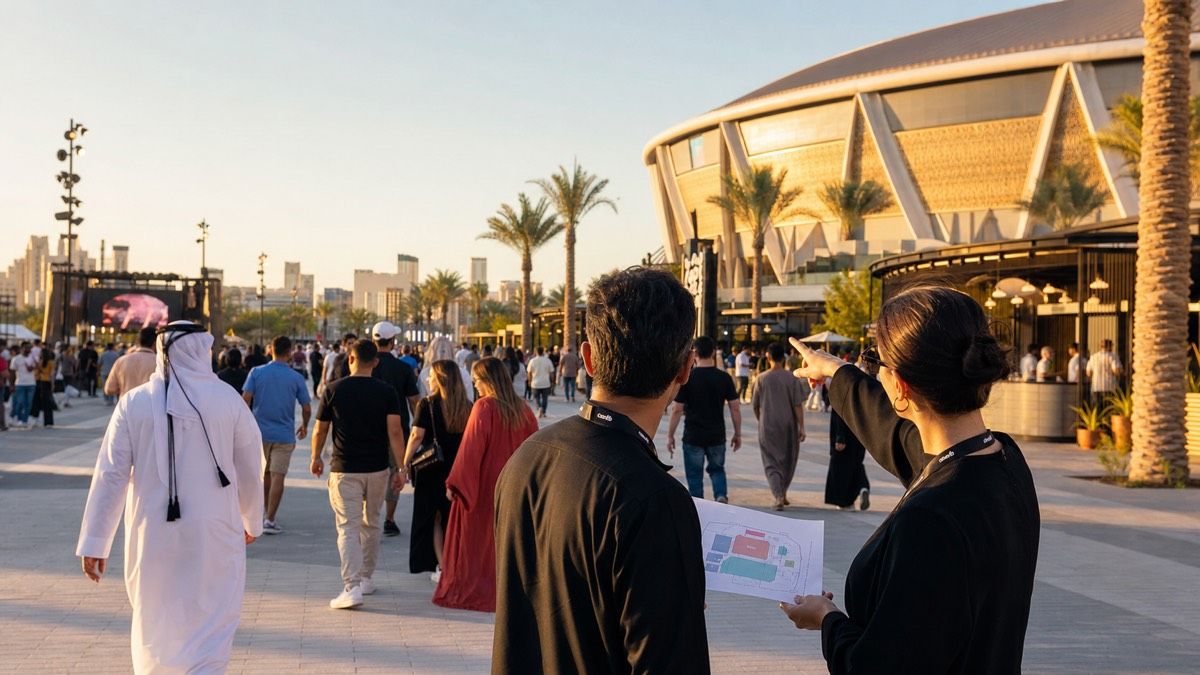
When BTS played Riyadh in 2019, they became the first Korean group — and the first foreign act — to headline a solo stadium show in Saudi Arabia. When Super Junior appeared at Jeddah Season the same year, demand reportedly crashed the ticketing website. When Stray Kids returned to Riyadh, they brought Chungha, the first female K-pop artist to perform in the Kingdom.
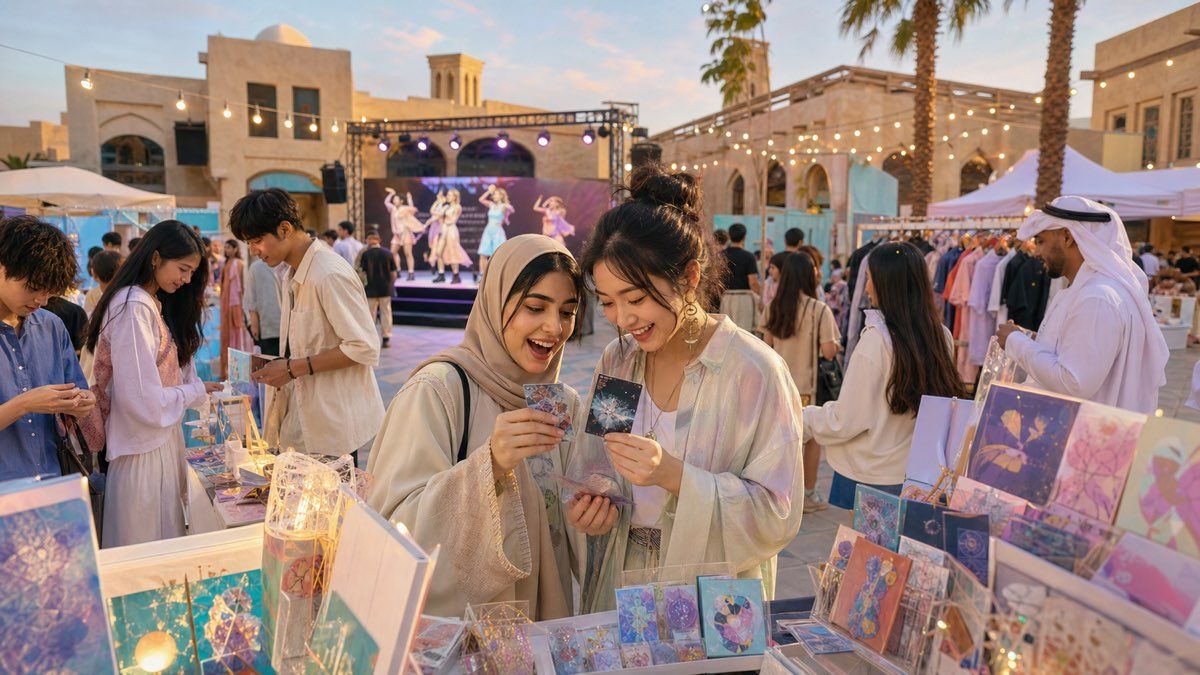
None of that was supposed to happen in a market outsiders still described as "closed." It happened because a young Gulf audience had quietly become one of the most enthusiastic consumers of Asian entertainment anywhere — and the infrastructure finally arrived to serve it.
This is the opportunity most global brands are still under-reading. Not "will Asian entertainment work in the Gulf" — that question is answered. The real question is which layer to enter, how, and how soon.
The demand is already proven
You do not have to speculate about appetite. The data is unusually clear for an emerging market.
In a 2025 overseas Hallyu survey spanning Saudi Arabia, the UAE, and Egypt, the depth of engagement was striking:
- 87% of Hallyu experiencers had watched K-dramas, 73% had engaged with K-pop, and 65% with K-beauty.
- K-pop users surged around 67% year-on-year, and K-beauty spending jumped about 62%.
- Saudi Arabia and the UAE ranked among the top three countries globally for average monthly K-beauty expenditure.
Two forces are compounding this. On the supply side, Korean content reaches the region through Netflix, Shahid, and OSN+ with Arabic subtitles, and the Korean government's "3E" strategy explicitly targets the Middle East. On the demand side, the Gulf's young, high-spending, digitally native audience adopts culture fast and spends on it faster.
This is not a trend to watch. It is a market to enter.
The four Asian-entertainment layers — and how open each one is
"Asian entertainment" is not one opportunity. It is at least four, and they sit at very different stages of maturity in the Gulf. Reading them separately is the whole game.
The mistake is treating these as one bet. The opportunity is choosing the layer whose maturity matches your risk appetite — proven K-pop, institutionalised anime, rising K-drama talent, or wide-open C-pop.
Why the Gulf fits Asian entertainment so well
This is not a coincidence of timing. The structural fit is real, and understanding it is what separates a lucky activation from a repeatable strategy.
- Shared values in the content. Much Asian entertainment — especially K-drama and family-oriented anime — foregrounds themes of family, respect, perseverance, and emotional restraint that resonate strongly with Gulf audiences, often more comfortably than some Western content.
- A young audience that discovers together. Gulf fandoms are highly social and online-native, so adoption moves through communities fast, and a credible cultural moment can scale in days.
- Policy alignment on both sides. Gulf national strategies want world-class cultural programming; Asian governments and studios want new export markets. Activations that serve both agendas find unusual institutional support.
- A commerce bridge already built. K-beauty's retail success — through Sephora, Watsons, Miniso and others — proves the path from Asian cultural affinity to Gulf checkout is open and already converting.
How brands should enter
The opportunity is real, but the Gulf punishes activations that treat it as a backdrop rather than a market. A few principles hold across every layer.
- Match the layer to the objective. Use proven K-pop for reach and certainty, anime for depth and community, K-drama talent for aspirational endorsement, and C-pop for first-mover positioning. Do not buy the whole category as if it were one audience.
- Localise beyond translation. Timing around Gulf seasons and calendars, culturally fluent creative, and Arabic-first digital experiences matter more than budget size.
- Build community, don't rent attention. These fandoms reward brands that show up credibly and consistently, and quickly discount those merely borrowing the culture for one campaign.
- Respect the two-sided cultural bridge. The strongest activations honour both the Asian culture being brought in and the Gulf culture receiving it. Getting either wrong is expensive.
The takeaway
The Gulf's appetite for Asian entertainment is no longer a hypothesis. K-pop sells out stadiums, anime fills the region's largest expo, K-drama and K-beauty engagement runs high, and C-pop sits as open whitespace for whoever moves first. In a market this young, high-spending, and culturally fluent, Asian entertainment is one of the clearest brand opportunities in the region.
The brands that win will not treat "Asian entertainment in the Gulf" as a single trend. They will read it as four distinct layers at four different stages, choose the one that fits their ambition, and build for the Gulf specifically. The demand is proven. The advantage now belongs to whoever is most deliberate.
Related reading: The GCC entertainment market by the numbers · How global brands enter the K-pop fandom market · How K-pop brand ambassadors move markets
Sources
- 2025 overseas Hallyu survey — Reso Insights
- Is the Middle East the land of opportunity for K-pop? — The Korea Herald
- Saudi Anime Expo, the largest in the region — Arab News
- Saudi Arabia's new journey in anime (Manga Productions) — CSIS
Enter the Gulf’s Asian-entertainment market with a plan, not a guess.
Talk to WENOTIFT about K-pop, C-pop, J-pop, anime, and Asian celebrity strategy for brands entering the GCC.