AboutInsights
LoginSign Up
← Insights·Chinese Drama

Why Censorship Matters for Brands: Managing Government Risk in Chinese Entertainment Partnerships

China’s regulated entertainment environment makes partner selection a risk decision. A scandal or regulatory action can erase an actor — and a brand’s visibility — overnight. Here’s how the risk works and how to manage it.

Why Censorship Matters for Brands: Managing Government Risk in Chinese Entertainment Partnerships
W
WENOTIFT
June 7, 2026 · 9 min read
TL;DR

China’s regulated entertainment environment makes partner selection a risk decision. A scandal or regulatory action can erase an actor — and a brand’s visibility — overnight. Here’s how the risk works and how to manage it.

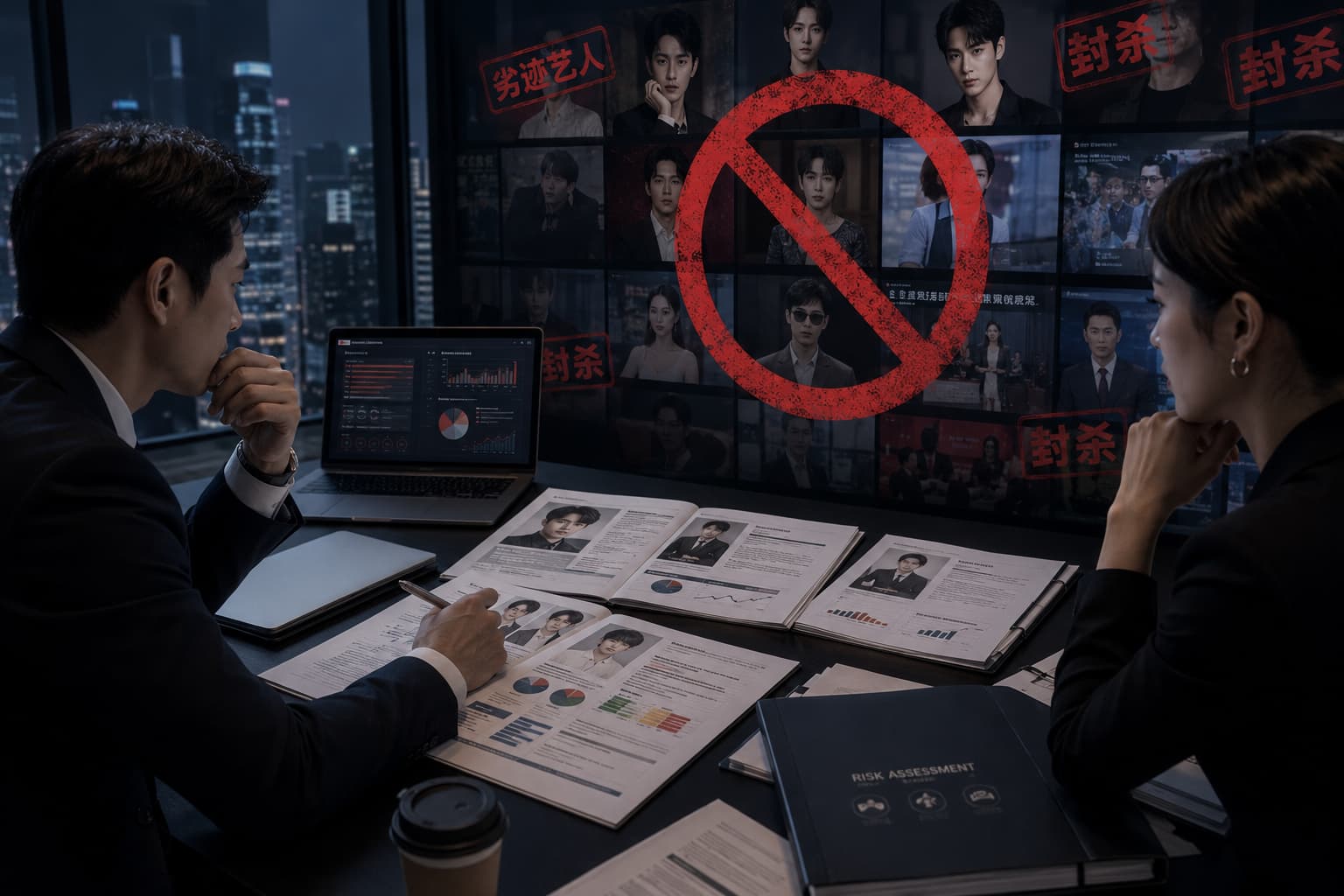
Chinese entertainment operates in a tightly regulated environment, and that single fact reshapes brand partnerships. Unlike self-regulated K-entertainment or court-governed Western markets, content and talent in China are overseen by the state — and a scandal or regulatory action can remove an actor, and everything they've endorsed, from public view almost overnight.

Quick Overview
The Difference
A state-regulated environment — partner risk works unlike K-entertainment or Western markets.
The Stakes
An actor can be erased overnight — content pulled, deals cancelled, with no slow news cycle to manage.
The Response
Treat partner selection as risk management — due diligence, contract clauses, and monitoring.
Takeaway: in Chinese entertainment, brand safety isn’t a checkbox — it’s the core of partner selection.

How the environment works

Content is regulated through bodies such as the National Radio and Television Administration (NRTA), with dramas reviewed before and after production and platforms required to enforce standards. For talent, the 2021 "qinglang" campaign tightened scrutiny of celebrity conduct and fan culture. The practical effect for brands is that an actor's standing can change with regulatory or public sentiment — fast, and without warning.

Risk 1

Conduct & moral risk

Personal scandals can trigger a rapid loss of standing — enforcement is real and not always predictable.

→ Reputation
Risk 2

Compliance risk

Tax and legal compliance is enforced; the 2021 tax-evasion enforcement saw actors penalised and removed from platforms.

→ Legal
Risk 3

Statement & political risk

Public statements read as sensitive can end a partnership immediately, even when ambiguous.

→ Sentiment
Risk 4

Speed of impact

When action comes, content is pulled and deals cancelled within hours — there is no slow news cycle to manage.

→ Velocity
Summary: the risk isn’t only that something happens — it’s how fast and how completely it happens when it does.

What the risk looks like in practice

Recent, well-documented cases make the stakes concrete. In 2021, actress Zheng Shuang was penalised by tax authorities and effectively removed from the industry; the same year, several high-profile figures were pulled from streaming platforms following conduct or compliance issues — including drama lead Zhang Zhehan, whose work was removed and endorsements cancelled within days. For a brand mid-campaign, that means the face of the partnership — and the visibility paid for — can disappear before a response is even drafted.

Managing the risk

You can't eliminate the risk, but disciplined brands contain it.

Do the due diligence
Vet conduct history, compliance record, and sentiment trajectory before signing — not after a problem surfaces.
Structure for exit
Build termination and morality clauses so a regulatory or conduct event lets the brand exit cleanly.
Diversify and monitor
Spread across several partners and safe genres, and monitor sentiment continuously rather than setting and forgetting.

In Chinese entertainment, the most important question about a partner isn’t how big they are — it’s how safe.

Lower-risk routes exist too: international distribution (covered in our Chinese drama global-expansion guide) and safe genres like historical and xianxia reduce exposure. Mapping regulatory risk across partnerships is exactly what WENOTIFT's intelligence layer is built for.

Risk Management

Make Chinese entertainment partnerships safely.

Talk to WENOTIFT about due diligence, contract structure, and monitoring for Chinese drama partnerships — so a regulatory event never becomes a brand crisis.


WENOTIFT // Culture–Commerce Intelligence Layer
WENOTIFT structures how global brands enter, evaluate, and scale within Asia’s fandom economies — connecting strategy, intelligence, and commercial execution across K-Pop, C-Pop, J-Pop, Thai and Chinese entertainment.
System Layers
Korea // Entertainment Layer
China // Entertainment Layer
Japan // Entertainment Layer
Thailand // Entertainment Layer
Content // Studio Layer
Live // Activation Layer
System Role: Architecting brand participation across Asian entertainment ecosystems.
FAQ

Frequently asked questions

Why is censorship a risk for brands in Chinese entertainment?+

Because content and talent are overseen by the state, an actor’s standing can change with regulatory or public sentiment overnight. If a partner is removed, the content they appear in is pulled and the brand visibility paid for disappears — often within hours and with no appeals process.

How does China regulate entertainment?+

Through bodies such as the National Radio and Television Administration (NRTA), with dramas reviewed before and after production and platforms required to enforce content standards. The 2021 “qinglang” campaign further tightened scrutiny of celebrity conduct and fan culture.

What happens to brands when a Chinese actor is cancelled?+

The actor’s content is typically removed from platforms and endorsement deals are cancelled, often within days. Documented 2021 cases — including actress Zheng Shuang and drama lead Zhang Zhehan — show how quickly a partner, and a brand’s visibility, can be erased.

How can brands manage censorship and controversy risk in China?+

By treating partner selection as risk management: thorough due diligence on conduct and compliance before signing, termination and morality clauses for clean exit, diversification across several partners and safe genres, and continuous sentiment monitoring rather than set-and-forget.

Are international Chinese drama partnerships less risky than domestic ones?+

Often, yes. Partnerships built around internationally-distributed dramas on platforms outside the mainland, consumed by audiences less attuned to domestic controversies, can carry less exposure than domestic-only deals — though they are not risk-free.

More articles that will interest you

View all →
Ready to activate your brand in Asia?
← More Insights