
AboutInsights
LoginSign Up
← Insights·Chinese Drama

From Domestic Dominance to Global Streaming: How Chinese Drama Is Becoming International Entertainment

Chinese dramas are moving from domestic dominance to global streaming via Netflix, WeTV, iQiyi, and YouTube. For brands, that opens cross-border partnerships with Chinese actors — often at lower risk and cost than domestic-only deals.

From Domestic Dominance to Global Streaming: How Chinese Drama Is Becoming International Entertainment
W
WENOTIFT
June 6, 2026 · 8 min read
TL;DR

Chinese dramas are moving from domestic dominance to global streaming via Netflix, WeTV, iQiyi, and YouTube. For brands, that opens cross-border partnerships with Chinese actors — often at lower risk and cost than domestic-only deals.

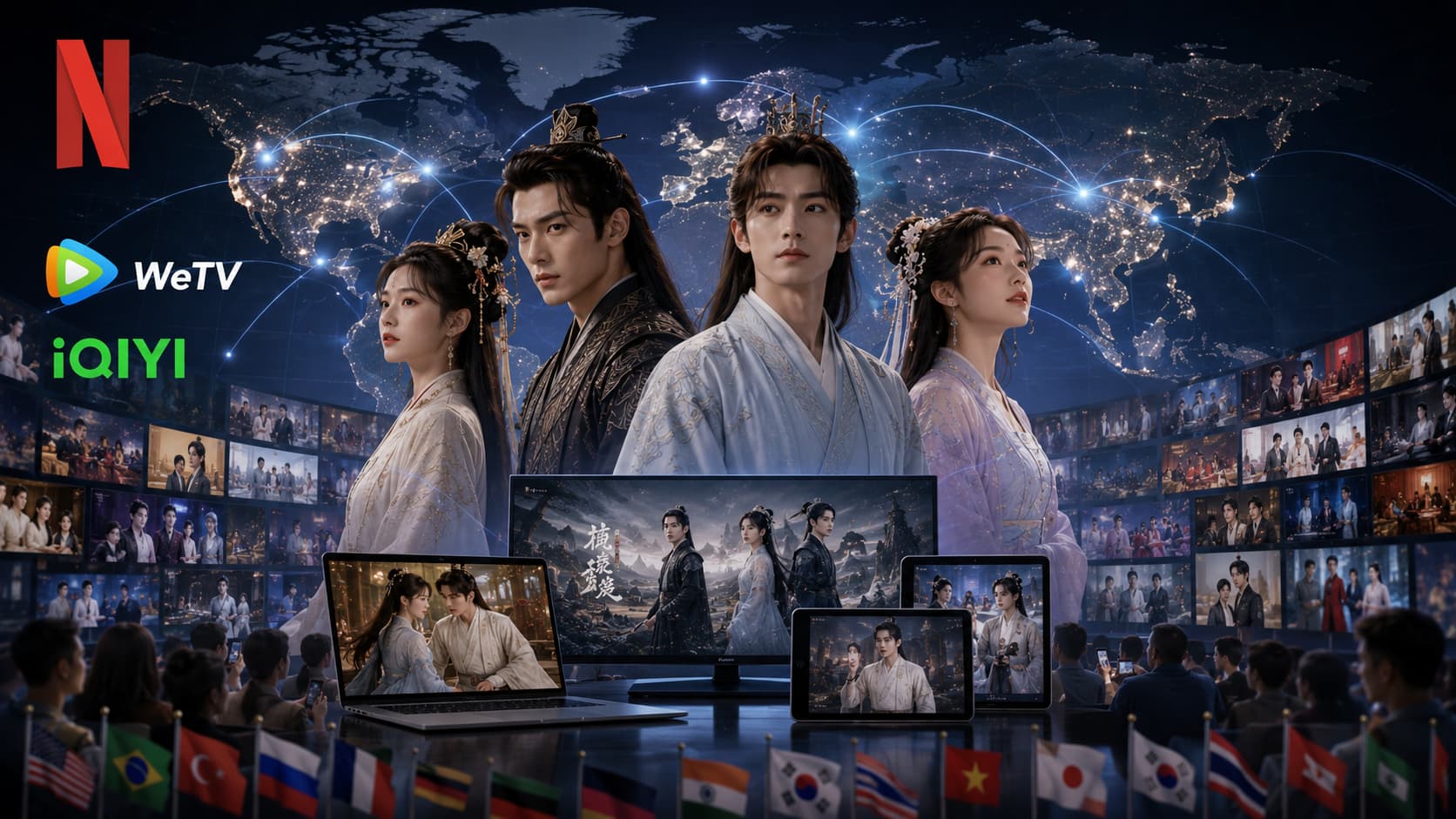
For most of its history, Chinese drama was a domestic story. That's changing fast. Netflix, Tencent's WeTV, iQiyi, and YouTube are pushing Chinese dramas to global audiences, and Chinese actors are gaining international visibility for the first time. For brands, that creates a new category of cross-border partnership — and, counter-intuitively, often a lower-risk one.

Quick Overview
The Wave
Chinese drama is going global via Netflix, WeTV, iQiyi, and YouTube.
The Reach
Actors gain international visibility — and brands can run cross-border campaigns with them.
The Twist
International partnerships can be lower-risk than domestic-only ones, and cheaper than Western equivalents.
Takeaway: Chinese drama’s global expansion opens efficient, often lower-risk cross-border partnerships before the market saturates.

The distribution platforms

Four channels carry Chinese drama to the world, each with a different footprint.

Directional view of international distribution — based on public licensing and platform reach, not exact figures.
PlatformFocusBrand angle
NetflixHistorical and xianxia dramas, multi-language subtitlesMaximum global reach
WeTV (Tencent)All genres, aggressive Southeast Asia pushStrong APAC footprint
iQiyi InternationalBroad library across Southeast AsiaGrowing regional reach
YouTubeSubtitled, partly-licensed, globalDiaspora + emerging markets

Why international can mean lower risk

There's a counter-intuitive dynamic here. Domestic partnerships carry the full weight of China's regulatory environment; international partnerships, distributed on platforms outside the mainland and consumed by audiences less attuned to domestic controversies, can carry less exposure. An actor with a genuine international profile also has more leverage and continuity. It isn't risk-free — but for many brands, a Chinese actor in a Netflix-distributed drama is a more stable bet than a domestic-only deal.

Where Chinese drama is winning

The international footprint is uneven — and that's an opportunity to target.

Where It’s Growing
The regions adopting Chinese drama fastest.
01
Southeast Asia & India
The strongest and fastest-growing markets — xianxia and historical dramas are especially popular across Thailand, Vietnam, Indonesia, the Philippines, and India.
02
Latin America
Rapidly growing and less saturated by K-drama, with both diaspora and general audiences driving adoption.
03
Europe
Smaller but steady, with Netflix distribution driving discovery in the UK, France, Germany, and Spain.
04
Global diaspora
Chinese communities worldwide form a built-in, affluent audience and a cultural bridge for brands.
Takeaway: a single Chinese-actor partnership can reach Southeast Asia, India, Latin America, and the diaspora at once — efficient cross-border scale.

The window

The timing matters. K-drama is comparatively saturated and expensive; Chinese drama is fresher, cheaper, and not yet crowded with global brands — but pricing is rising as demand grows, which makes this an entry window rather than a permanent state. For the demographic backdrop, see why ASEAN is the world's most valuable fandom market. Mapping international expansion opportunities is part of WENOTIFT's intelligence layer.

Cross-Border Strategy

Reach the world through Chinese drama’s global rise.

Talk to WENOTIFT about cross-border Chinese drama partnerships — global reach via Netflix and WeTV, lower-risk international structures, and efficient emerging-market scale.

WENOTIFT // Culture–Commerce Intelligence Layer
WENOTIFT structures how global brands enter, evaluate, and scale within Asia’s fandom economies — connecting strategy, intelligence, and commercial execution across K-Pop, C-Pop, J-Pop, Thai and Chinese entertainment.
System Layers
Korea // Entertainment Layer
China // Entertainment Layer
Japan // Entertainment Layer
Thailand // Entertainment Layer
Content // Studio Layer
Live // Activation Layer
System Role: Architecting brand participation across Asian entertainment ecosystems.
FAQ

Frequently asked questions

How are Chinese dramas distributed internationally?+

Through four main channels: Netflix (maximum global reach, focused on historical and xianxia), Tencent’s WeTV (all genres, strong Southeast Asia push), iQiyi International (broad regional library), and YouTube (subtitled, partly-licensed, reaching diaspora and emerging markets).

Are international Chinese drama partnerships less risky than domestic ones?+

Often, yes. International partnerships are distributed on platforms outside the mainland and consumed by audiences less attuned to domestic controversies, so they can carry less regulatory exposure than domestic-only deals — and an actor with a genuine international profile has more continuity. They are not risk-free, but frequently more stable.

Which countries are adopting Chinese drama fastest?+

Southeast Asia and India are the strongest and fastest-growing markets, especially for xianxia and historical dramas. Latin America is growing rapidly and is less saturated by K-drama; Europe is smaller but steady; and the global Chinese diaspora forms a built-in audience.

Why should brands partner with Chinese drama actors now?+

Because the international market is fresh and under-contested: K-drama is comparatively saturated and expensive, while Chinese drama is cheaper and less crowded with global brands. Pricing is rising as demand grows, so the efficiency advantage is a time-limited entry window.

Is Chinese drama cheaper than K-drama for brands?+

Generally, yes — Chinese drama actors and drama sponsorships tend to be more affordable than comparable K-drama equivalents, partly because the international market is less saturated by global brands. That gap is narrowing as demand and pricing rise.

More articles that will interest you

View all →
Ready to activate your brand in Asia?
← More Insights