AboutInsights
LoginSign Up
← Insights·J-Pop & Anime

J-Pop’s Creator Economy: How Independent Artists Are Outpacing Major Labels (and Why Brands Should Care)

J-Pop’s economics differ from K-Pop’s: independent and semi-independent artists thrive, not just major-label acts. That changes the partnership model — faster deals, more creative freedom, and an authenticity premium brands can’t get elsewhere.

J-Pop’s Creator Economy: How Independent Artists Are Outpacing Major Labels (and Why Brands Should Care)
W
WENOTIFT
June 14, 2026 · 7 min read
TL;DR

J-Pop’s economics differ from K-Pop’s: independent and semi-independent artists thrive, not just major-label acts. That changes the partnership model — faster deals, more creative freedom, and an authenticity premium brands can’t get elsewhere.

K-Pop runs on major labels. A handful of agencies control most of the top talent, and partnering with that talent means working through their machinery. J-Pop is wired differently — and for brands, the difference is an advantage hiding in plain sight.

In J-Pop, a large share of successful artists are independent or semi-independent. That single structural fact reshapes how partnerships get done.

The Shift
K-Pop
Major-label dominance. A few agencies control most top talent and deal flow.
J-Pop
Independent artist success. Indie and semi-indie acts sit among the most influential.
For Brands
Different dynamics. Faster deals, more creative freedom, an authenticity premium.
Takeaway: J-Pop’s indie economics make partnerships more agile and authentic than the major-label model brands are used to.

Why J-Pop has more independent artists

Three forces combine. Historically, the J-Pop industry consolidated less than K-Pop, leaving room for artist independence and fragmented labels rather than dominant mega-agencies. Structurally, streaming and creator tools let artists distribute, market, and monetise directly — through fan clubs, memberships, and merchandise — without a label gatekeeping the route to audience. Culturally, creative autonomy is read as artistic credibility, and fans often prefer artists who own their work.

The three tiers — and what each means for a deal

Not every J-Pop artist is independent, and the tier you partner with shapes the entire relationship.

Artist Tiers
Tier 01
Indie
Fully independent
No label affiliation; self-funded production and direct fan monetisation through streaming, memberships, and concerts.
Why it works
Direct negotiation, flexible deal structures
Advantage
Creative control + authenticity premium
Tier 02
Hybrid
Semi-independent
Label handles distribution while the artist controls the creative; revenue split favours the artist more than a traditional deal.
Why it works
Less bureaucracy, faster to move
Advantage
Label support with indie control
Tier 03
Label
Traditional major label
Full label management and infrastructure, with the largest reach but the least creative latitude for partnerships.
Why it works
Major-label resources and scale
Trade-off
Slower, more rigid deals

Why this matters for brands

Independent and semi-independent partners offer things the major-label model structurally can't: direct negotiation without a middle layer, the agility to try non-traditional partnership formats, an authenticity that audiences trust precisely because there's no corporate shadow, and frequently better value because there's no label cut to cover. The trade-off is reach and predictability — which is why the partner tier should match the objective, not the other way around.

The influencer–artist blend

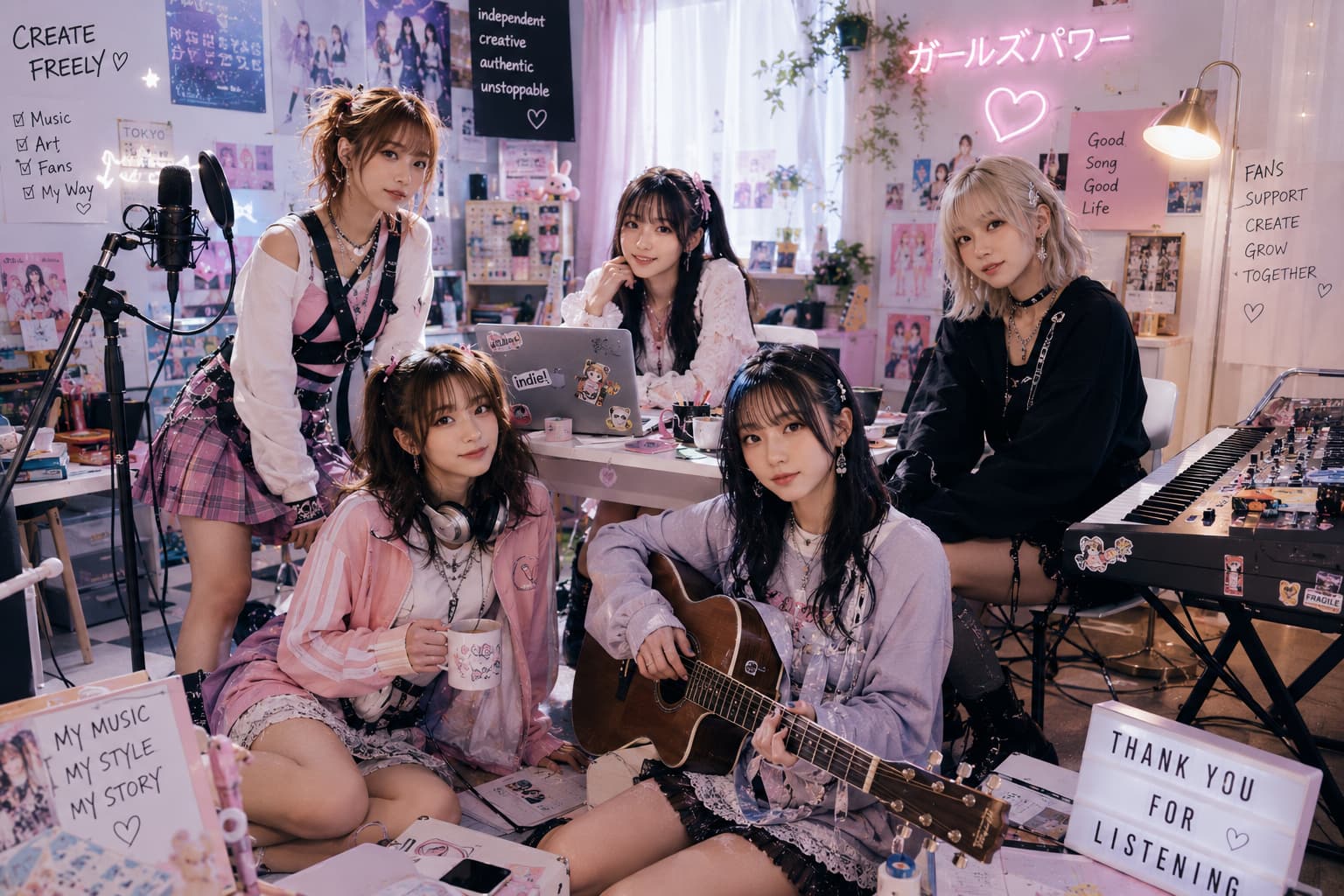
Independent J-Pop artists are increasingly creator-first: they build communities and produce content across YouTube, TikTok, and Instagram, not just music. For brands, that blurs the line between influencer and artist and opens collaborative-content partnerships — co-creation rather than endorsement — with multi-channel reach and a community that behaves like a peer group, not a passive audience.

Indie partnerships can move at the speed of a creator deal while carrying the cultural weight of an artist deal — a combination the major-label model rarely offers.

Understanding artist economics — who owns the music, who controls the deal, where authenticity actually lives — is part of the same intelligence discipline behind our culture-commerce framework. The artist matters; the structure behind them matters just as much.

Artist Economics

Find agile, authentic J-Pop partners.

Talk to WENOTIFT about matching the right artist tier — indie, semi-indie, or major label — to your objective, budget, and appetite for creative collaboration.
WENOTIFT // Culture–Commerce Intelligence Layer
WENOTIFT structures how global brands enter, evaluate, and scale within Asia’s fandom economies — connecting strategy, intelligence, and commercial execution across K-Pop, C-Pop, J-Pop and Thai entertainment.
System Layers
Korea // Entertainment Layer
China // Entertainment Layer
Japan // Entertainment Layer
Thailand // Entertainment Layer
Content // Studio Layer
Live // Activation Layer
System Role: Architecting brand participation across Asian entertainment ecosystems.
FAQ

Frequently asked questions

Why does J-Pop have more independent artists than K-Pop?+

Three reasons: the J-Pop industry consolidated less than K-Pop (no dominant mega-agencies), streaming and creator tools let artists distribute and monetise directly, and Japanese music culture treats creative autonomy as artistic credibility. The result is that indie and semi-indie artists sit among the most influential.

What are the artist tiers in J-Pop?+

Fully independent (no label, self-funded, direct fan monetisation), semi-independent (label handles distribution while the artist keeps creative control and a larger revenue share), and traditional major label (full management and the largest reach, but the least creative latitude for partnerships).

Why should brands partner with independent J-Pop artists?+

Indie and semi-indie partners offer direct negotiation without a middle layer, agility to try non-traditional formats, an authenticity audiences trust, and often better value with no label cut. The trade-off is smaller reach and less predictability, so the tier should match the objective.

Are independent J-Pop artists cheaper than major-label acts?+

Often, yes — because there is no label overhead to cover, independent and semi-independent artists can be more flexible on deal structure and pricing. But value depends on fit and growth trajectory, not headline cost alone.

What is the influencer–artist blend in J-Pop?+

Independent J-Pop artists are increasingly creator-first, building communities and producing content across YouTube, TikTok, and Instagram beyond their music. For brands, this enables collaborative-content partnerships and co-creation rather than simple endorsement, with multi-channel reach.

More articles that will interest you

View all →
Ready to activate your brand in Asia?
← More Insights