AboutInsights
LoginSign Up
← Insights·J-Pop & Anime

How Anime + J-Pop Is Becoming the Next Entertainment Boom — and Why Western Brands Are Sleeping on It

Anime and J-Pop are converging in ways K-Pop and C-Pop don’t — shared audiences, OP/ED theme culture, rhythm games, and conventions. For brands that understand the ecosystem, it’s the least-saturated partnership opportunity in Asian entertainment.

How Anime + J-Pop Is Becoming the Next Entertainment Boom — and Why Western Brands Are Sleeping on It
W
WENOTIFT
June 15, 2026 · 8 min read
TL;DR

Anime and J-Pop are converging in ways K-Pop and C-Pop don’t — shared audiences, OP/ED theme culture, rhythm games, and conventions. For brands that understand the ecosystem, it’s the least-saturated partnership opportunity in Asian entertainment.

K-Pop gets the headlines. C-Pop gets the market-size reports. Meanwhile, one of the most commercially interesting convergences in Asian entertainment is happening largely unnoticed by Western brands: the fusion of anime and J-Pop into a single, self-reinforcing fandom economy.

This convergence is structurally different from anything in K-Pop or C-Pop — and that difference is exactly where the opportunity sits.

Quick Overview
The Convergence
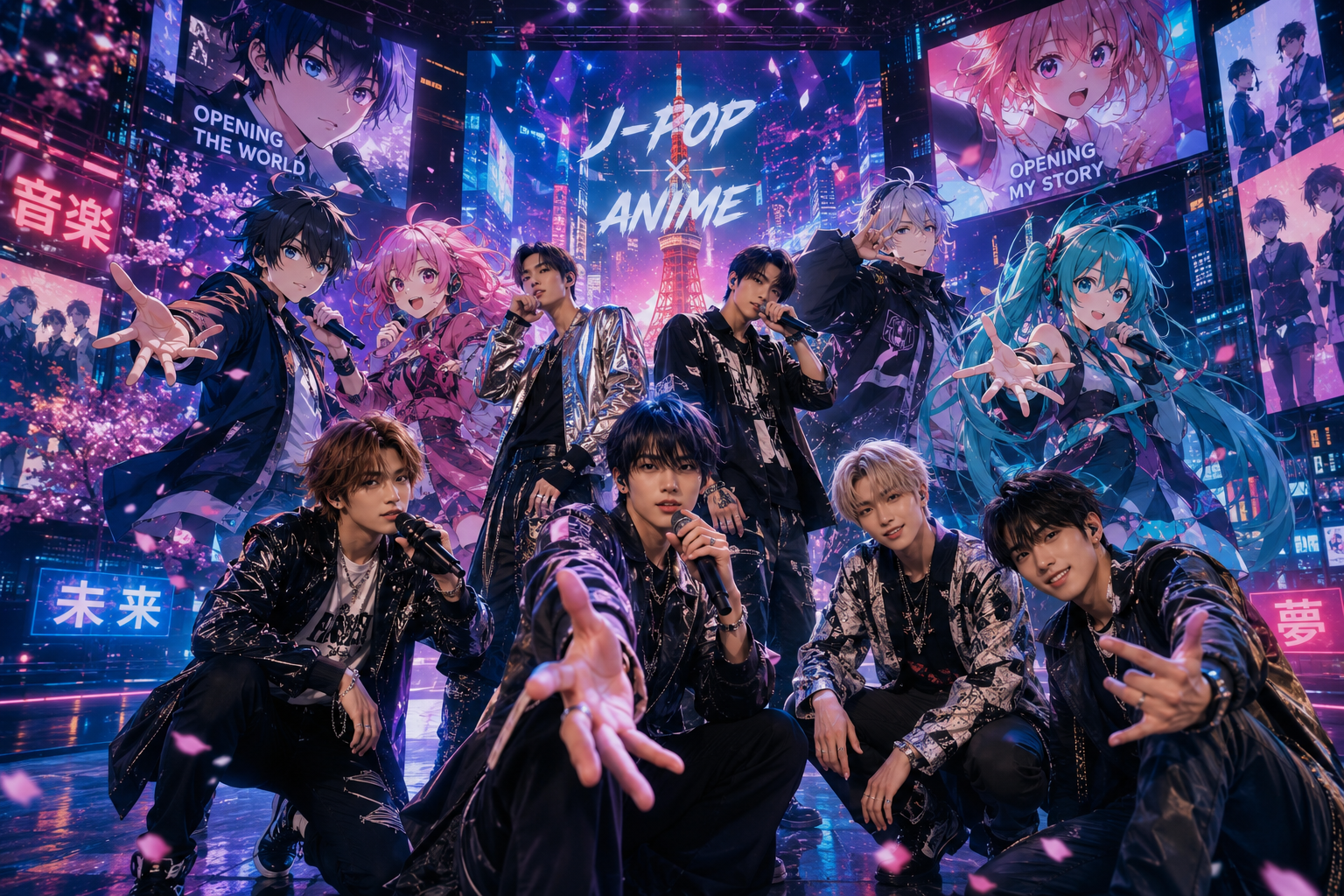
Anime and J-Pop feed each other — artists write opening/closing themes, and anime fans become music fans through them.
Why It’s Unique
J-Pop is native to anime in a way K-Pop and C-Pop are not — the anime ecosystem is Japan-centred.
The Gap
Most Western brands aren’t here yet, making anime–J-Pop less saturated than K-Pop for partnerships.
Takeaway: The anime–J-Pop ecosystem is a built-in, cross-loyal audience — and brands that understand it find next-generation opportunities before the crowd.

The anime–J-Pop symbiosis

In Japan, an anime series almost always carries an opening (OP) and closing (ED) theme, and those themes are a recognised career path for J-Pop artists. A popular anime OP can pull tens to hundreds of millions of views on YouTube, and a meaningful share of those viewers go on to explore the artist's wider catalogue. The result is a discovery pipeline that K-Pop and C-Pop simply don't have natively — the anime is the funnel, and the music is the destination.

Cross-loyalty is the defining trait: fans follow an artist across anime, music, touring, and merchandise, and they follow anime into the music. The two fandoms are, in large part, the same people.

Where brands can actually partner

The convergence creates concrete entry points — most of them less contested than a headline K-Pop ambassadorship.

Convergence Points
Four places the anime–J-Pop audience concentrates — and where brands can meet it.
01
Anime conventions
Hundreds of conventions run globally each year, with J-Pop performances as a major draw and highly engaged attendee bases — strong territory for experiential activations and sponsorships.
02
Rhythm games
Japanese rhythm games command tens of millions of players worldwide, with J-Pop catalogues native to the format and in-game integration that feels like content, not ads.
03
Streaming exclusives
Anime streaming platforms are investing in original music content and exclusive J-Pop performances — a route to branded concerts and platform tie-ins.
04
Festival circuit
Anime-and-music festivals blend screenings with live performance, opening title-sponsor and cross-branded event opportunities.
Takeaway: You don’t partner with anime–J-Pop the way you partner with a single K-Pop act — you partner with the ecosystem’s gathering points.

Why this is different from K-Pop and C-Pop

It matters that this is structural, not stylistic. Three things make anime–J-Pop a distinct playbook.

Anime is the native platform
J-Pop artists build careers partly through anime soundtrack work; K-Pop and C-Pop reach the anime audience only as outsiders, if at all.
Gaming is built in
Rhythm games emerged from Japanese arcade culture with J-Pop embedded from the start — a monetisation surface K-Pop entered late.
The audience is cross-loyal
Anime, music, and gaming fandoms overlap heavily, so a single well-placed partnership can compound across all three.

Western brands are leaving an entire entertainment ecosystem uncontested — not because it’s inaccessible, but because they’ve never been shown the map.

The entry window

Anime continues to grow globally on the back of streaming, J-Pop's anime tie-ins are expanding, and brand partnerships in the space are still early. That combination — rising audience, deepening integration, low brand saturation — is the classic shape of a first-mover window. Mapping entertainment convergences like this is exactly what WENOTIFT's intelligence layer is built to do. For the wider context on how Asia's fandom genres differ, see our comparison of K-Pop, C-Pop, J-Pop and Thai fandom economies.

Entertainment Convergence

Map the anime–J-Pop opportunity before your competitors do.

Talk to WENOTIFT about where anime, J-Pop, and gaming audiences converge — and how to build a partnership that compounds across all three.
WENOTIFT // Culture–Commerce Intelligence Layer
WENOTIFT structures how global brands enter, evaluate, and scale within Asia’s fandom economies — connecting strategy, intelligence, and commercial execution across K-Pop, C-Pop, J-Pop and Thai entertainment.
System Layers
Korea // Entertainment Layer
China // Entertainment Layer
Japan // Entertainment Layer
Thailand // Entertainment Layer
Content // Studio Layer
Live // Activation Layer
System Role: Architecting brand participation across Asian entertainment ecosystems.
FAQ

Frequently asked questions

What is the connection between anime and J-Pop?+

J-Pop is native to the anime ecosystem: artists write the opening and closing themes for anime series, and those themes act as a discovery pipeline that turns anime viewers into music fans. The two fandoms overlap heavily, creating cross-loyalty across anime, music, gaming, and merchandise.

Why is anime–J-Pop different from K-Pop for brand partnerships?+

K-Pop and C-Pop reach the anime audience only as outsiders, while J-Pop is embedded in it through soundtrack work and rhythm games. That makes anime–J-Pop a distinct, less-saturated ecosystem — you partner with its gathering points (conventions, games, streaming, festivals) rather than a single headline act.

How can brands partner in the anime–J-Pop ecosystem?+

The main entry points are anime conventions (experiential sponsorships), rhythm games (native in-game integration), anime streaming exclusives (branded concerts and platform tie-ins), and the anime-and-music festival circuit (title sponsorships).

Is the anime–J-Pop market saturated by brands yet?+

No. Most Western brands are not yet active in the space, while the anime audience keeps growing through streaming and J-Pop’s anime tie-ins expand. That combination of rising audience and low brand saturation is a classic first-mover window.

Who should care about anime–J-Pop partnerships?+

Consumer tech and gaming brands (rhythm games and devices), beverage and F&B brands (convention and festival sponsorships), and entertainment or streaming brands looking to reach a young, cross-loyal, highly engaged audience that traditional advertising rarely converts.

More articles that will interest you

View all →
Ready to activate your brand in Asia?
← More Insights