K-Pop endorsement pricing is one of the least transparent markets in global entertainment. WENOTIFT breaks down the real cost by tier.
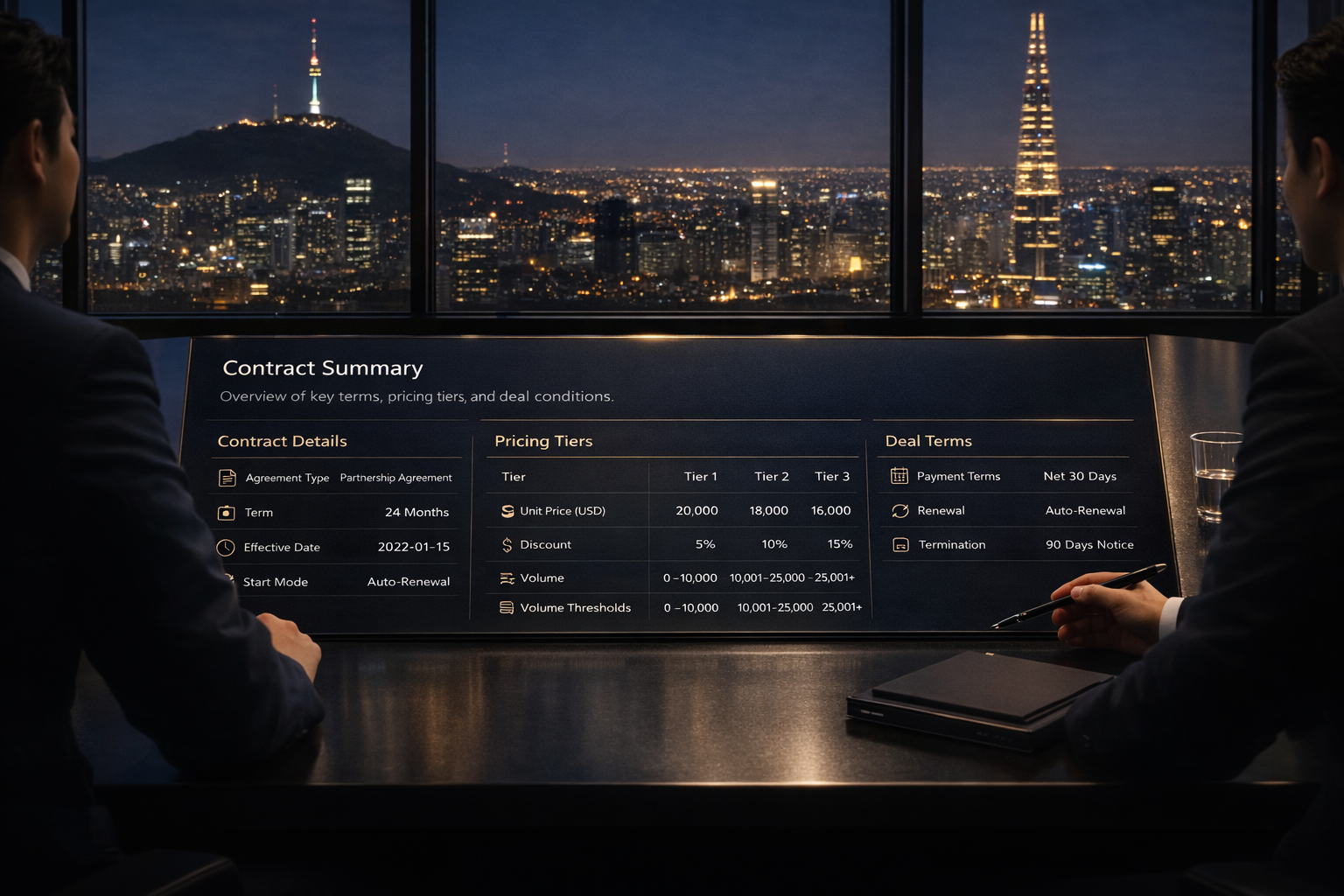
K-Pop endorsement pricing operates across three tiers — Tier 1 global acts commanding multi-million-dollar contracts, Tier 2 regional acts ranging from $500K–$2M per cycle, and Tier 3 emerging artists accessible from $50K — a range brands rarely understand before entering negotiations, leading to systematic budget misallocation.
Ask any brand manager who has tried to price a K-Pop endorsement deal and you will hear the same answer: nobody tells you the number until you are already in the room. K-Pop partnership pricing remains one of the least transparent markets in global entertainment — and that opacity costs brands millions in misallocated spend every year. This guide changes that.
What follows is WENOTIFT's 2026 breakdown of K-Pop endorsement costs: how deals are structured, what each tier actually costs, what brands receive at each price point, and the hidden costs that most budget frameworks fail to account for. By the end, you will have a clear, actionable pricing framework for building realistic K-Pop partnership budgets.
Why K-Pop Endorsement Pricing Is So Hard to Find
The opacity in K-Pop endorsement pricing is not accidental. It serves the agencies and management companies that control deal flow. When pricing is opaque, brands cannot benchmark what they are paying against market rates, talent agencies retain maximum negotiating leverage, and brands with less market access pay premiums that well-connected brands do not.
WENOTIFT's intelligence work across the ASEAN, APAC and GCC markets has produced the most comprehensive picture currently available of K-Pop endorsement market rates. What follows is based on that analysis — synthesized from observed deal structures, agency market intelligence, and brand partnership outcome data across 2023–2025.
K-Pop endorsement pricing remains fragmented and opaque — with no unified system, brands operate with incomplete information and inconsistent benchmarks.
K-Pop Endorsement Deal: A contractual brand partnership arrangement in which a K-Pop artist or group provides promotional services — content creation, event appearances, social media posts, campaign fronting — in exchange for a fee, usage rights license, and/or equity-based compensation, typically managed through the artist's talent agency.
How K-Pop Brand Deals Are Structured
Before pricing, structure matters. K-Pop brand deals are not a single type of arrangement — they are a spectrum of partnership models, each with different cost profiles, deliverable sets, and commercial outcomes. Brands that conflate these structures systematically overpay for what they actually need or underpay in ways that limit commercial outcomes.
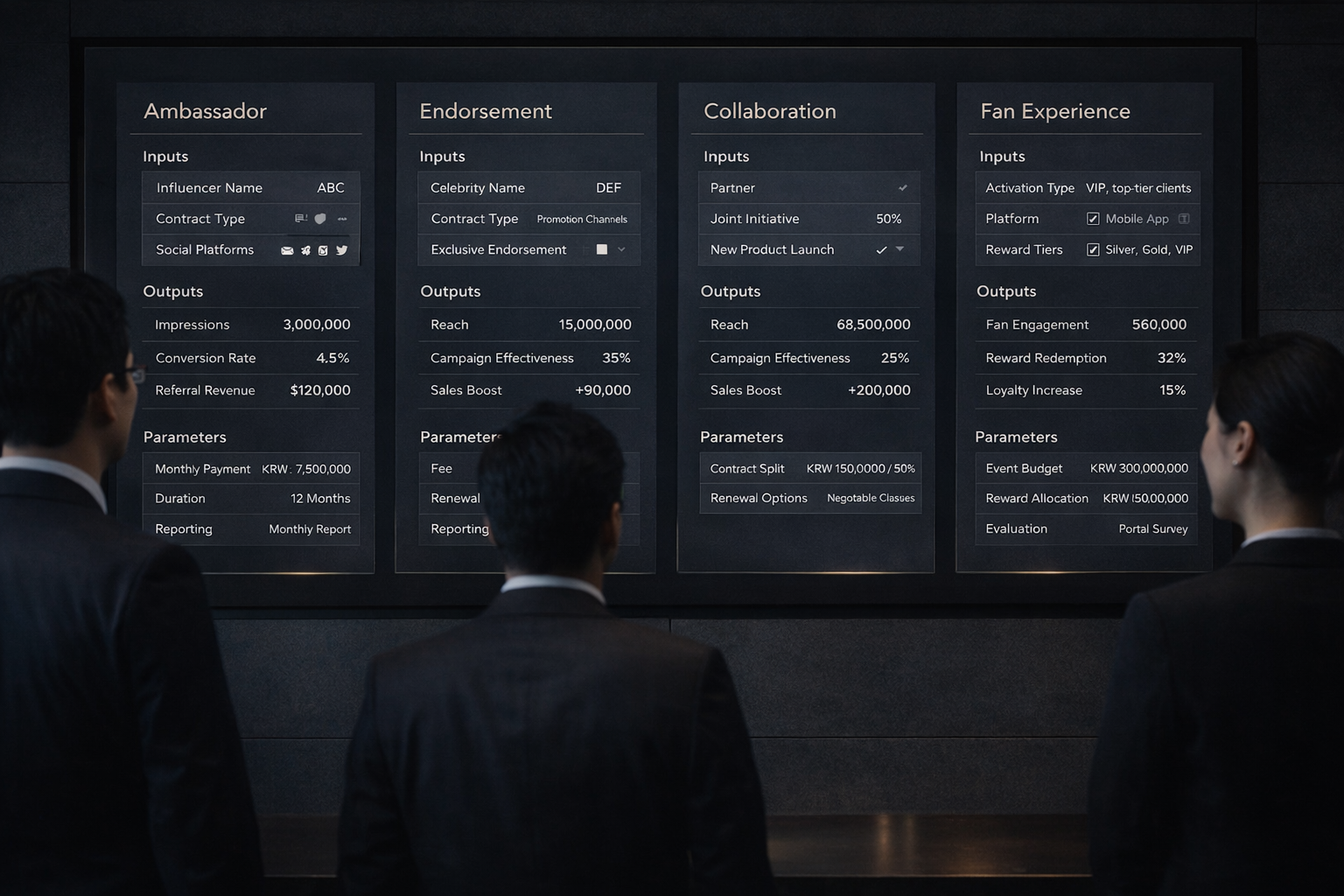
K-Pop brand partnerships operate across multiple structured models — understanding the system behind each deal type prevents costly misalignment.
Ambassador Deals
The most comprehensive arrangement. The artist becomes the official face of the brand for a contracted period — typically 12–24 months. Deliverables include print and digital content production, social media posts, event appearances, and exclusivity clauses in specified categories. Ambassador deals command the highest fees because they include exclusivity provisions that restrict the artist from partnering with competing brands.
Endorsement-Only Deals
The artist endorses specific products or campaigns without the full exclusivity of an ambassador arrangement. Typically shorter duration (3–6 months), lower fee, and narrower content deliverable set. Useful for brands testing K-Pop partnership strategies before committing to full ambassador investment.
Collaboration Deals
Product co-creation partnerships in which the artist's identity, aesthetic, or input is incorporated into product design, packaging, or limited-edition runs. Collaboration deals generate the highest community engagement rates because fans are buying something the artist had creative involvement with — not just something they posed next to.
Fan Experience Partnerships
Partnerships structured around fan community experiences — branded concerts, fan meet events, exclusive fan community activations — rather than content production. Often lower base fee than ambassador deals but generate disproportionately high earned amplification because fan community experiences are organically documented and shared at scale.
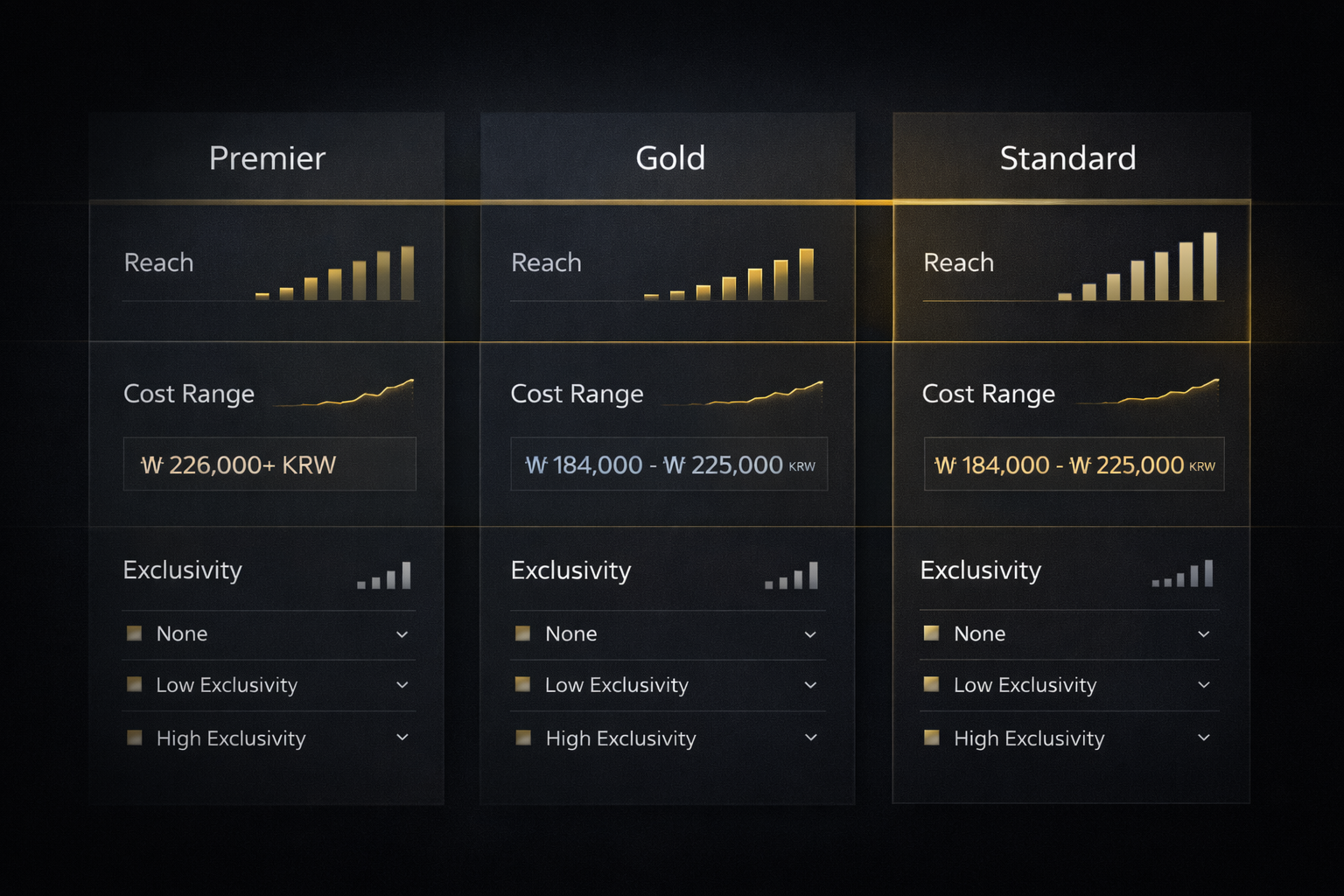
K-Pop Endorsement Investment Tiers: What Brands Actually Pay
WENOTIFT's analysis consistently shows that Tier 3 K-Pop acts and Thai/C-Pop Tier 2 acts deliver the highest commercial outcomes per dollar invested — not because their reach is larger, but because their fandom communities have higher activation rates, lower saturation, and more authentic brand receptivity.
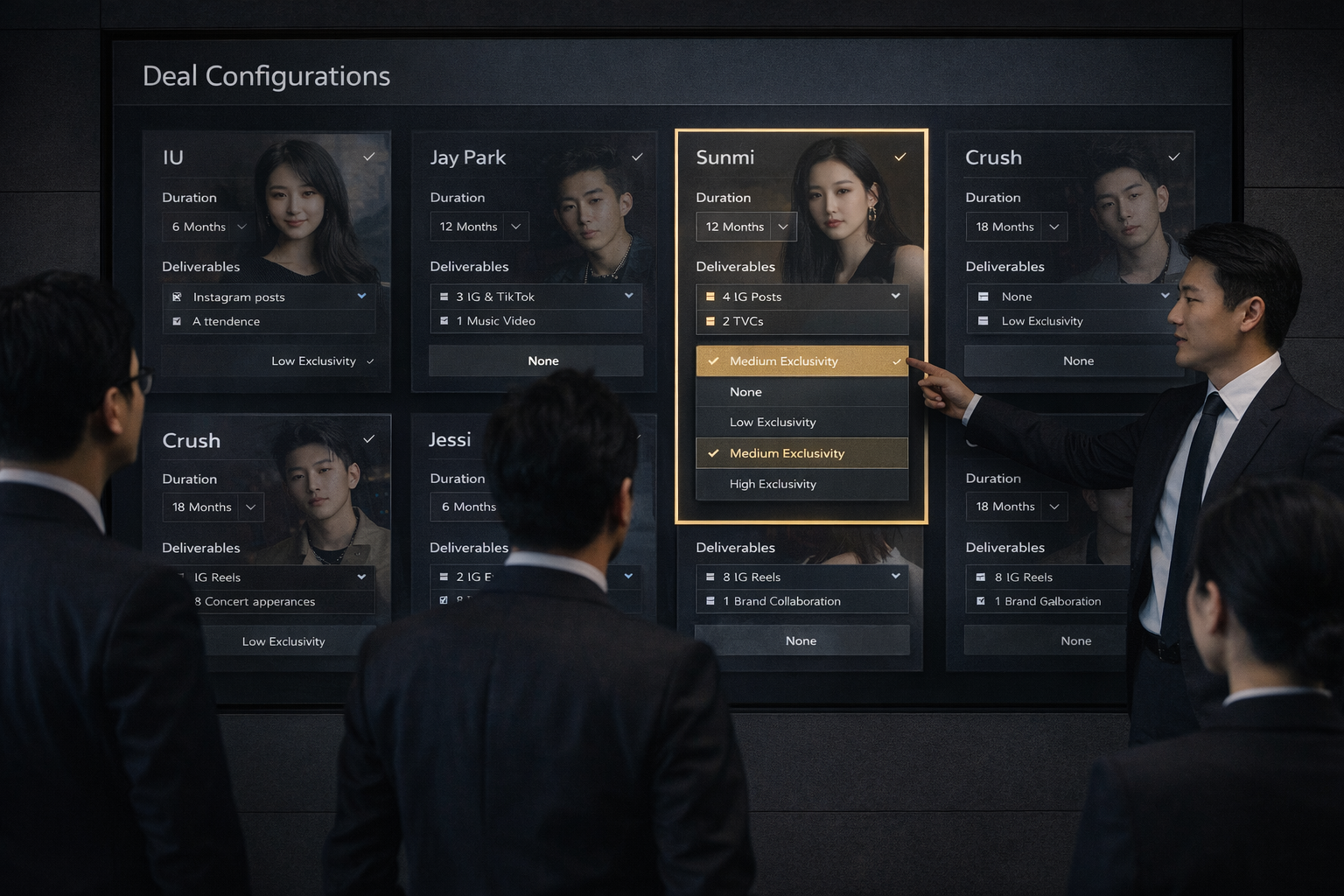
The difference between overspending and outperforming often comes down to how decisions are structured — not how much is spent.
For a full guide on how K-Pop brand partnerships are structured end-to-end, see: How K-Pop Brand Partnerships Work in 2026
What Brands Get for Their Investment
Standard Content Deliverables by Tier
At Tier 1, brands typically receive: 12–24 months exclusivity in their category, 2–4 campaign content shoots per year, 12–24 contracted social posts, event appearance commitments, and global usage rights for campaign creative. At Tier 2: 6–12 months regional exclusivity, 1–2 content shoots, 8–16 social posts, regional appearances. At Tier 3: category endorsement for 6 months, 1 content shoot, 4–8 social posts, optional fan event participation.
Usage Rights Licensing — Often Misunderstood
A critical cost component that brands frequently under-budget is usage rights licensing. The base endorsement fee covers the artist's promotional services. Usage rights — the license to use produced content in paid advertising, OOH, digital media, and retail — are typically licensed separately. Usage rights can add 30–60% to the base deal cost depending on the scope of distribution channels and geographic markets covered.
Hidden Costs Brands Systematically Miss
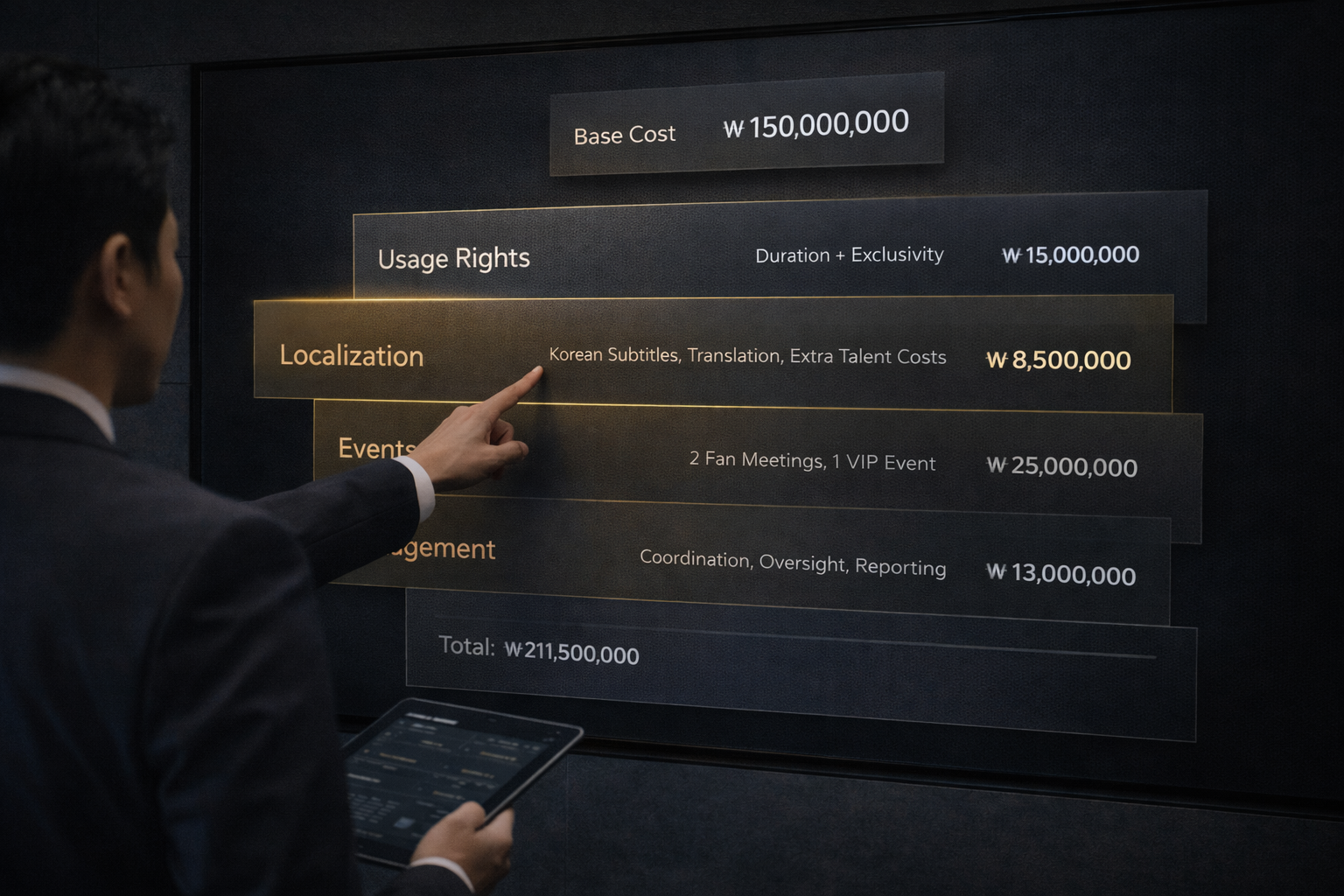
The base fee is only the entry point — the real cost of K-Pop partnerships emerges through layered components most brands fail to model upfront.
- Cultural adaptation costs: Campaign creative produced in Korea requires localization for each target market. Indonesian, Thai, GCC, and other ASEAN market adaptations add $20K–$100K per market depending on scope.
- Fan event costs: Fan-facing brand activations — which generate the highest earned amplification — require separate event budgets typically ranging $50K–$300K per event, not included in the base endorsement fee.
- Community management: The community management cost of a live K-Pop brand partnership — monitoring fan sentiment, responding to community concerns, managing fan-brand interaction — requires dedicated resource typically estimated at $5K–$15K per month.
- Agency and intermediary fees: Most K-Pop endorsement deals are executed through intermediaries (local entertainment agencies, brand consultancies). Intermediary fees typically range 10–20% of the total deal value on top of the artist fee.
- Cultural intelligence investment: Brands that invest in market intelligence before artist selection — fandom analysis, community sentiment mapping, brand-fandom fit assessment — typically spend $15K–$50K on intelligence services. This cost prevents mismatched partnerships that cost multiples more to exit from.
ROI Expectations by Deal Structure

ROI in fandom-driven partnerships is not linear — it depends on structure, activation, and alignment with community dynamics.
The highest ROI structures consistently observed in WENOTIFT's brand partnership analysis are not the highest-investment tiers. They are the structures that optimize for community activation over reach:
- Collaboration deals + fan experience activations generate the highest earned amplification rates (350%+ of paid reach on average) and the highest community sentiment scores.
- Tier 3 artist partnerships in undercompeted categories generate 3–6x ROI when brand-fandom fit is correctly assessed — outperforming Tier 1 ambassador deals in the same categories.
- Thai entertainment and C-Pop deals in ASEAN and GCC currently generate the highest ROI per dollar invested of any fandom commerce category, driven by low competition and high community activation rates.
For the broader fandom market data that contextualises these spend figures, see: Fandom Commerce in Numbers: ASEAN, APAC and GCC Market Size Report 2026
Is There a Better Way to Match Brand Budget to Artist?
The fundamental problem in K-Pop endorsement budget allocation is that most brands set budgets before understanding the market. They commit to a tier based on what competitors have done, or what agencies recommend, rather than on a systematic assessment of which artist community represents the optimal commercial match for their specific brand, category, and market target.
The result is a market where brands with $2M budgets achieve moderate results while other brands with $200K budgets — deployed into the right Tier 3 community with the right activation mechanics — generate superior commercial outcomes.
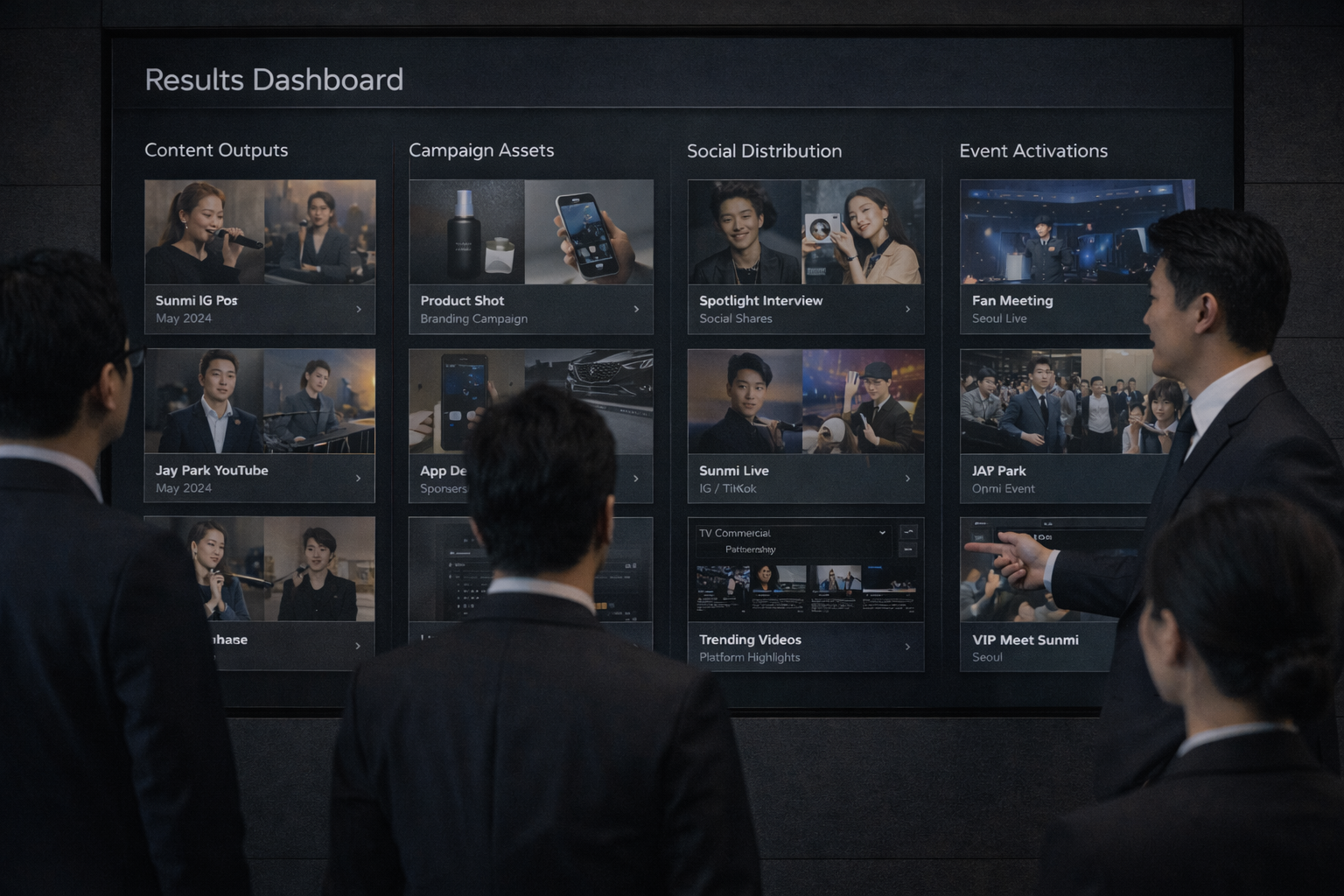
What brands receive is not just visibility — it is a system of content, distribution, and fan-facing outputs that drive real engagement.
This is the problem WENOTIFT's platform is designed to solve: systematic brand-fandom fit assessment that matches brand budget to the optimal artist community, not to the most expensive artist available.
Let's turn cultural insight into partnership strategy.
Talk to WENOTIFT about the right artist, market, and commercial structure — and how to build partnerships that compound brand equity across ASEAN, APAC, and GCC.