The K-Pop brand partnership market has a structural problem: there is no reliable way for most brands to find the right artist partner without knowing the right people.
The K-Pop brand partnership market suffers from three structural gaps: information asymmetry, no standardized fit criteria, and no market infrastructure for brands outside the major agency network — a problem that costs global brands an estimated $2B+ in misallocated partnership spend annually.
If you are a global brand that wants to partner with a K-Pop artist in 2026, your options are surprisingly limited. You can call the talent agency — if you know which one represents the artist you want. You can hire a consultant — if you can find one with genuine market access. Or you can attend the right conference and hope someone introduces you. For a market this size, in an industry this commercially mature, that is a remarkable structural gap. And it is one that the industry has accepted for too long.
How K-Pop Brand Deals Actually Get Made Today
In practice, most K-Pop brand partnerships still move through informal networks, limited visibility, and uneven access to information — not through a structured commercial system.
Artist choice happens first
A brand’s marketing team or agency identifies K-Pop as a strategic opportunity and selects a target artist, usually based on name recognition, visibility, and social media metrics.
The brand searches its network
The brand then contacts its existing entertainment network — regional agencies, brand consultancies, or direct Korean entertainment contacts — to find out who actually represents the artist.
Routing and pricing are opaque
If a connection exists, an introduction can happen. If not, months may pass trying to route the request through the correct agency channels. Initial pricing conversations begin without standardised benchmarks — the agency knows the market, the brand usually does not.
The deal reflects access more than fit
A deal is then structured, often without systematic fit assessment, using terms that reflect the information imbalance of the earlier steps more than the brand’s actual commercial objectives.
This process works reasonably well for large brands with established Korean entertainment agency relationships and experienced marketing teams. It systematically excludes every brand outside that network — which is the majority of brands globally that would benefit from K-Pop partnership access.
The Three Structural Gaps in the K-Pop Brand Partnership Market
Gap 1: Information Asymmetry
Talent agencies and entertainment companies hold comprehensive data on artist commercial performance, partnership histories, community sentiment, and market rates. Brands hold almost none of this data before entering negotiations. This asymmetry is the primary reason brands systematically overpay, underperform, or make mismatched partnership selections — not because they make bad decisions, but because they make uninformed ones.
The commercial cost of information asymmetry in K-Pop brand partnerships is estimated at 30–50% of total brand investment being suboptimally deployed — either into the wrong artist tier, the wrong community, or the wrong partnership structure — relative to what optimal placement would have achieved with equivalent budget.
Gap 2: No Standardized Fit Criteria
In virtually every other commercial category where brands select partners — media buying, influencer marketing, event sponsorship — there are standardized criteria and benchmarks. Agencies have audience data. Platforms have engagement rate norms. Pricing has market references.
K-Pop brand partnerships have none of this. There is no industry-standard framework for brand-fandom fit assessment. There is no benchmark for community activation potential relative to deal investment. There is no standardized measurement system connecting partnership activity to commercial outcomes. Every brand that enters the market builds these frameworks from scratch — or does not build them at all.
Gap 3: No Market Infrastructure for Smaller Brands
The current K-Pop brand partnership market is effectively tiered: large brands with established Korean entertainment relationships, significant budgets, and experienced teams can access it. Everyone else cannot access it efficiently.
This exclusion is commercial, not cultural. A mid-sized beauty brand from Germany, a regional F&B company from the Middle East, or a tech startup from Southeast Asia — any of which might have genuine brand-fandom fit with a specific K-Pop or Thai entertainment community — has no systematic route to identify, approach, and structure a partnership with that community's artist. The market infrastructure simply does not exist at the access level they require.
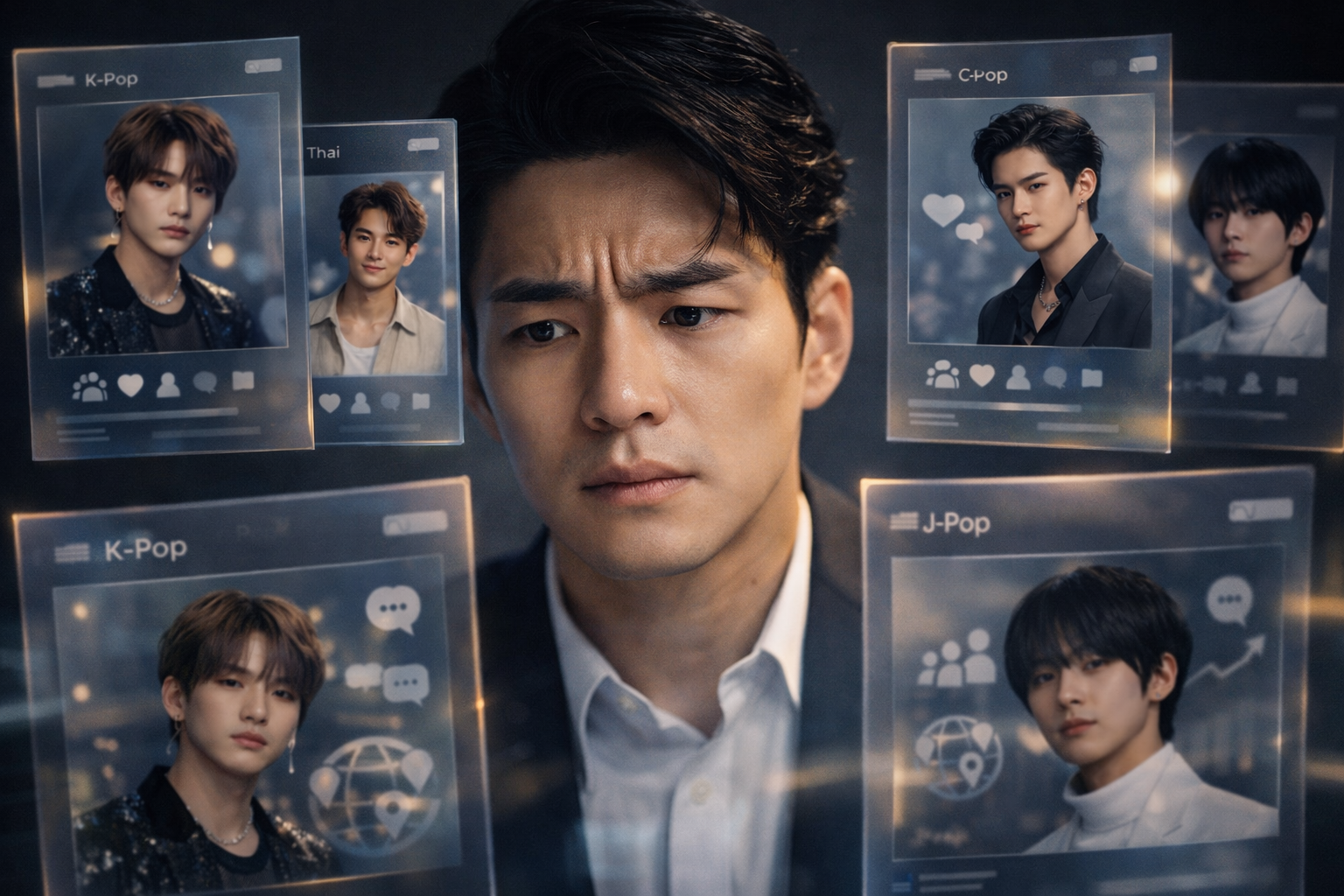
More options do not create better outcomes. Without structured evaluation frameworks, expanding artist choices increases decision noise — not decision quality — for brand teams entering the fandom economy. Source: WENOTIFT 2026.
For a full breakdown of how K-Pop brand partnerships are structured and what brands should expect, see: How K-Pop Brand Partnerships Work in 2026
What Brands Are Losing Because of These Three Gaps
The aggregate commercial cost of these three structural gaps is significant. WENOTIFT estimates that the information asymmetry gap, the absence of standardized fit criteria, and the access infrastructure gap together account for an estimated $2B+ in annual misallocated brand investment across the ASEAN, APAC and GCC K-Pop brand partnership markets.
This misallocation takes three forms: brands investing at the wrong tier for their budget and objectives, brands investing in mismatched artist-fandom communities that fail to generate community adoption, and brands that never enter the market at all because the access barrier is too high — foregoing commercial opportunities that competitors with better networks are capturing.
What a Purpose-Built Solution Needs to Do
Closing these three gaps requires a system that solves all three at the same time — not as separate features, but as connected infrastructure.
Three connected layers
A real solution must combine intelligence, fit logic, and access infrastructure into one usable system.
A systematic intelligence infrastructure should map artist community data, fan spending behaviour, brand partnership histories, community sentiment, and market rates — making this information available to brands before negotiations begin.
A structured brand–fandom fit framework should evaluate cultural, community, and commercial fit dimensions — then produce a scored match between a brand’s specific profile and the artist communities available in the market.
A platform layer should allow brands of any size — not only those with existing Korean entertainment agency relationships — to discover, assess, and initiate contact with suitable artist communities and their management.
This is the design brief that WENOTIFT's FanMatch platform is being built against. Each of the three layers addresses one of the three structural market gaps — and together, they represent the market infrastructure that K-Pop brand partnerships have needed for a decade.
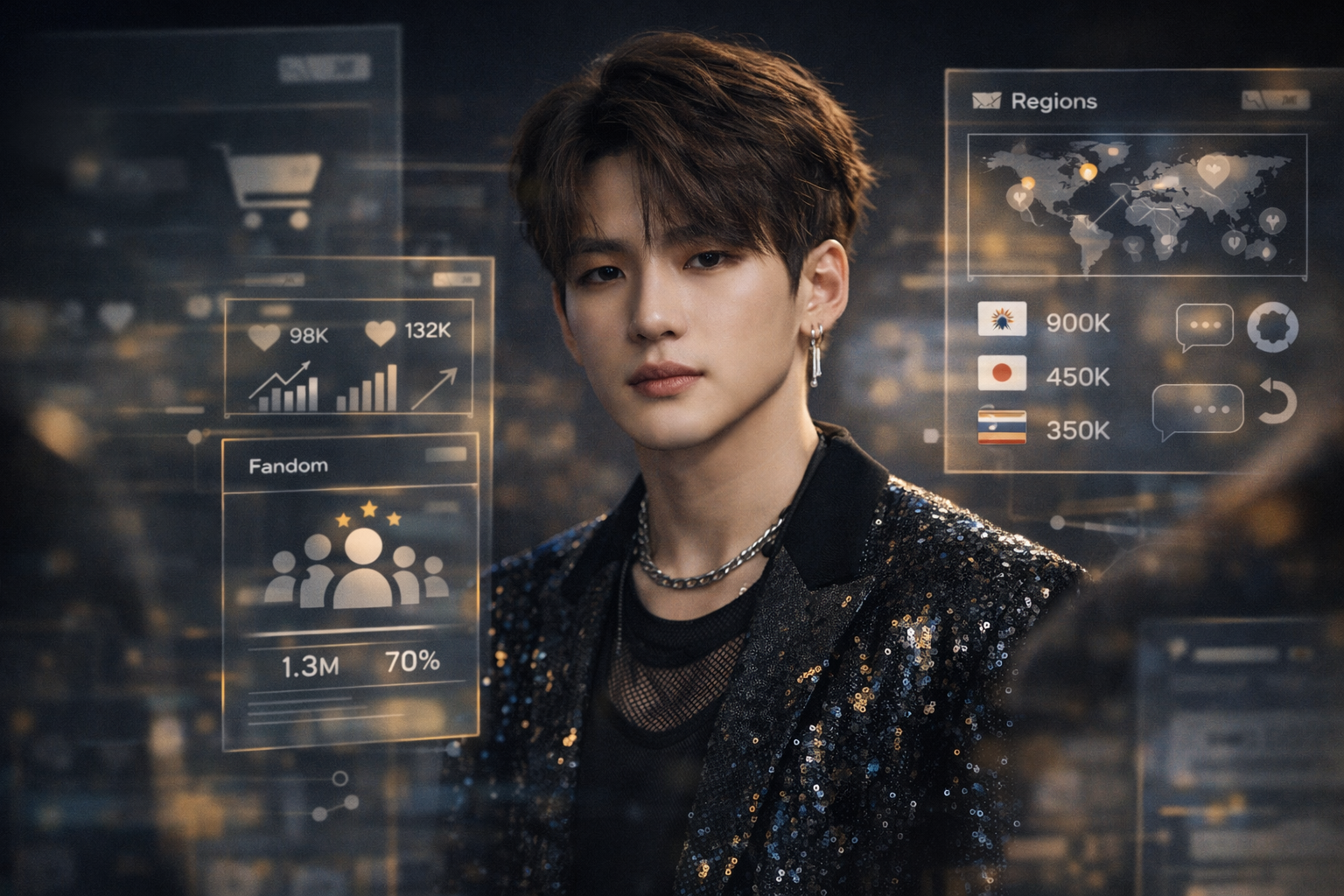
The data imbalance is structural: agencies hold complete visibility on artist performance and fandom behaviour, while brands enter negotiations with limited information — driving systematic inefficiency in partnership decisions. Source: WENOTIFT 2026.
Why This Problem Is Now Solvable
The convergence of fandom data at scale, AI-powered community analysis capabilities, and WENOTIFT's accumulated intelligence from years of brand partnership work across ASEAN, APAC and GCC makes this problem solvable now in a way it was not in 2020 or 2022.
Fan community data is now available at scale through social platforms, fandom-specific platforms, and streaming analytics. Machine learning approaches can process this data into community sentiment maps, engagement cycle analysis, and brand fit scoring at a speed and scale no human analyst team could match. And WENOTIFT's proprietary database of brand partnership outcomes — what worked, what did not, and why — provides the training data that makes fit scoring increasingly accurate over time.
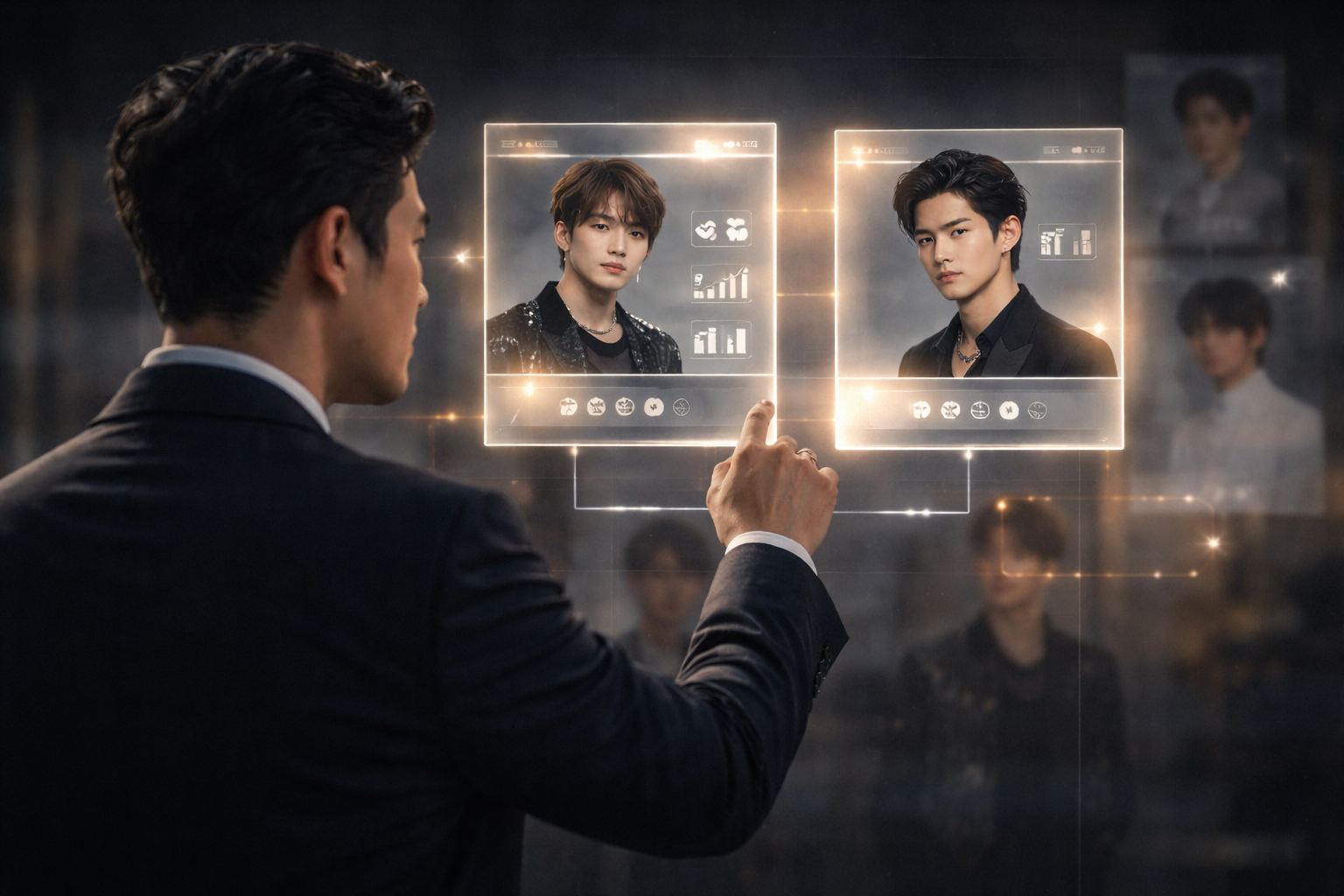
FanMatch by WENOTIFT is being built to close the three structural gaps — information asymmetry, no standardized fit criteria, and limited access infrastructure — that prevent most global brands from accessing the K-Pop partnership market efficiently. Source: WENOTIFT 2026.
For a detailed look at what brands actually spend on K-Pop endorsements by artist tier, see: How Much Do Brands Spend on K-Pop Endorsements? A 2026 Market Breakdown
Let's turn cultural insight into partnership strategy.
Talk to WENOTIFT about the right artist, market, and commercial structure — and how to build partnerships that compound brand equity across ASEAN, APAC, and GCC.